Posture Corrector Sizing: Measure These Three Things First
Most posture correctors are returned because they did not fit, not because they did not work. Three measurements sort that out before you spend anything.
By Nadia Feld, writer, evidence and movement
Published May 21, 2026 · reviewed Sep 4, 2026 · 9 min read
- Updated September 4, 2026
- 9 min read
In this guide
Read the one-star reviews on any posture corrector and a pattern shows up within about twenty of them. Very few say the product did nothing. Most say it dug in, rode up, would not tighten enough, or would not loosen enough. Those are fit complaints wearing the costume of efficacy complaints.
This is a solvable problem and it costs nothing to solve. What follows is the three measurements that actually determine fit, why the S/M/L label on most listings will not tell you, and how to read a sizing chart that is deliberately vague.
Why the size label is close to useless
A posture corrector is not clothing. It is a tension device that has to sit in one specific place on your torso and stay there while you move. The variables that decide whether it does are underbust circumference, shoulder breadth and torso length, and shirt size correlates weakly with all three.
Two people who both wear a men's large can differ by four inches of chest circumference and three inches of torso length. On a t-shirt that difference disappears into the drape. On a figure-eight strap it is the difference between a brace that sits across the mid-scapula where it belongs and one that rides up into the armpits by lunchtime.
The brands that publish real measurements are telling you something about themselves. BackEmbrace maps its sizes to underbust measurements in inches rather than to XS/S/M/L alone, which is the single most useful thing on its product page. A listing that gives you only a letter has either not done the work or does not want you to discover the product is one-size-fits-nobody.
The three measurements
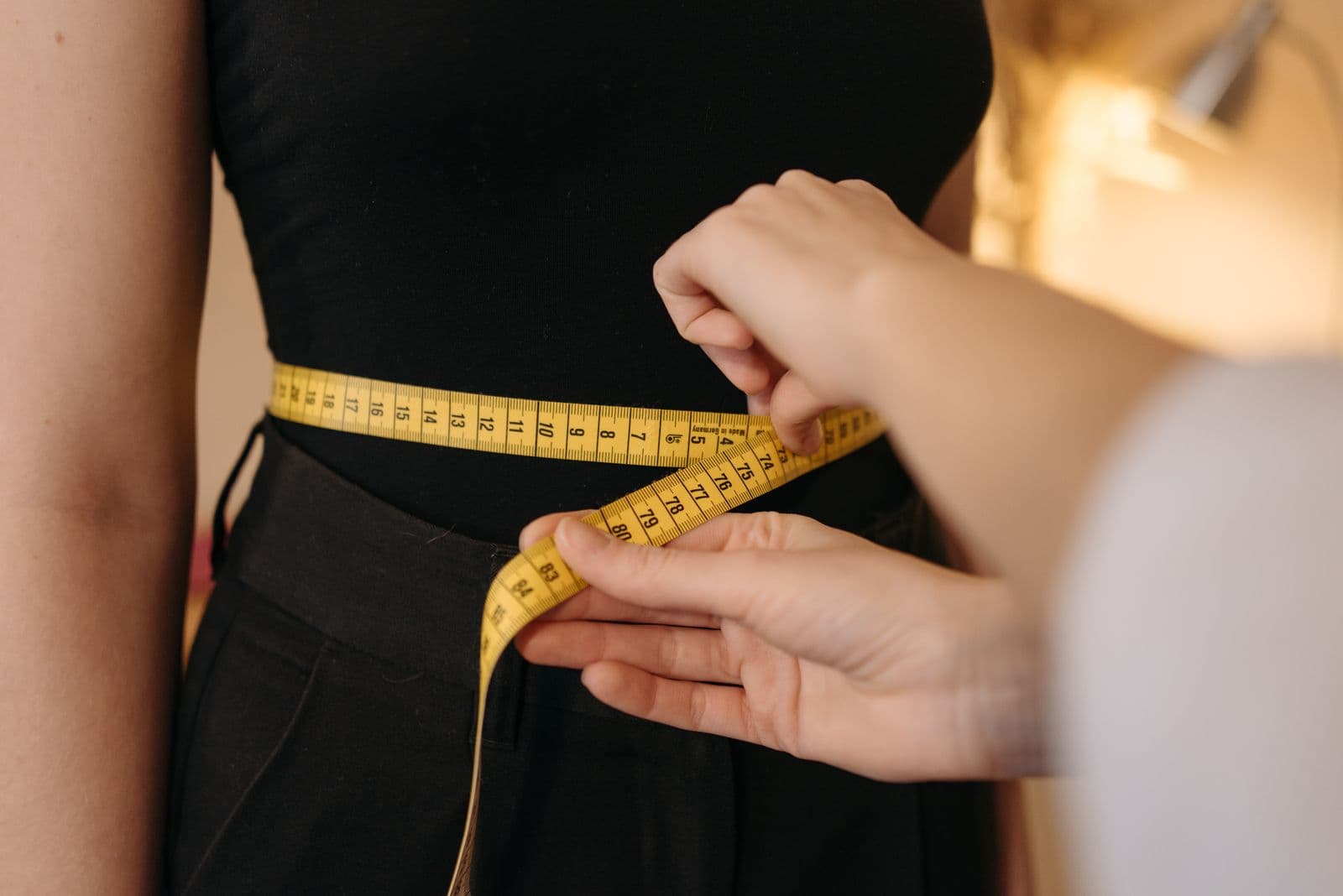
You need a soft tape measure and a mirror. Do these over a thin layer, not over a jumper, and do not hold your breath in.
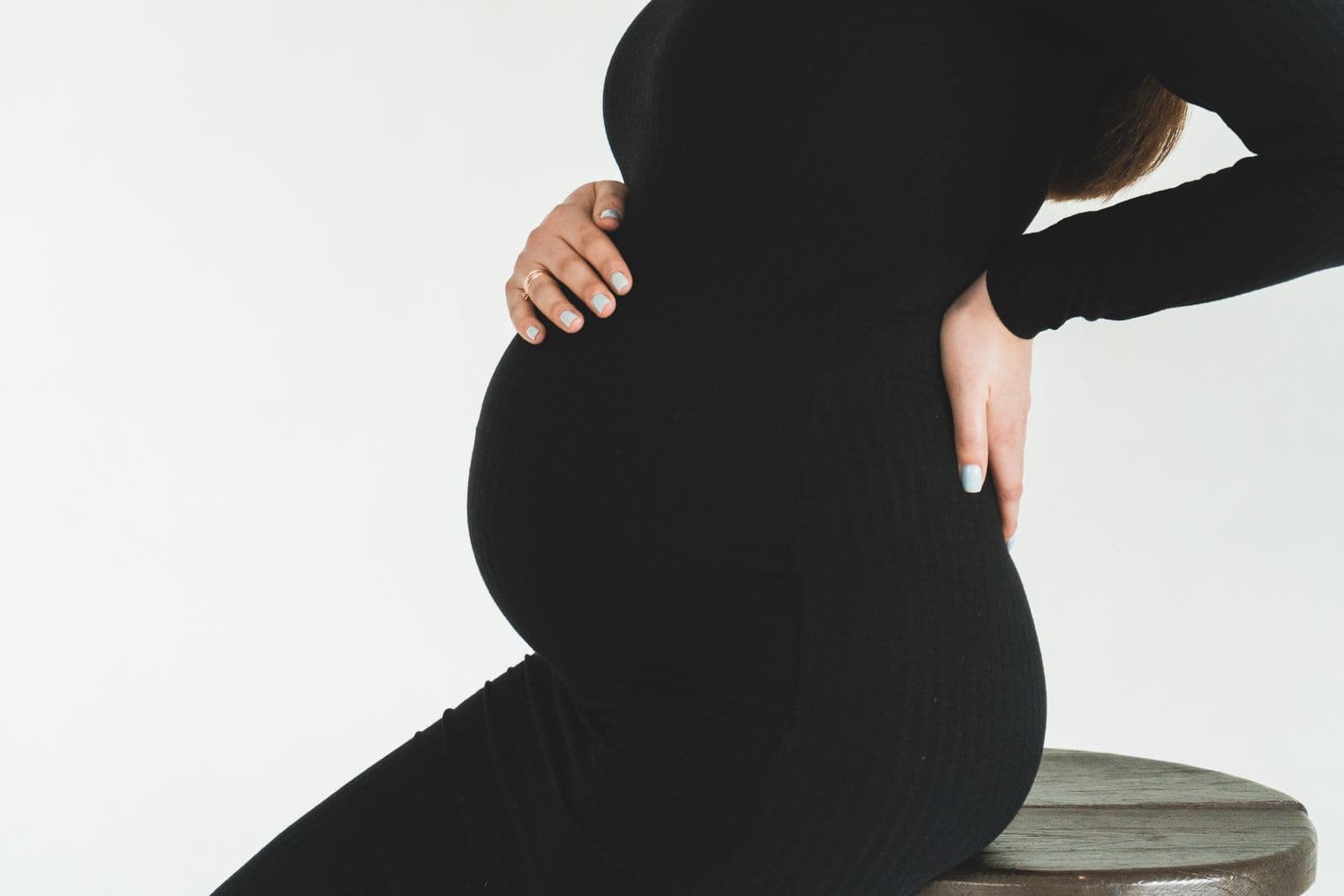
1. Underbust circumference. Wrap the tape around your ribcage directly under the chest, level all the way round, snug but not compressing. Breathe out normally and read the number. This is the measurement most brace sizing charts are actually built on, including the ones that hide it behind a letter. It is also a number that keeps growing through pregnancy as the lower rib cage widens, which is why wearing a posture corrector while pregnant starts as a fit problem.
2. Shoulder breadth. Measure across your back from the bony point of one shoulder to the bony point of the other. This decides whether the shoulder loops sit on your deltoids or cut across the front of your armpits. If your shoulder breadth is at the wide end for your underbust measurement, size up on the strap adjustment rather than the garment.
3. Torso length, C7 to waist. Tip your head forward and find the bump at the base of your neck. That is the C7 vertebra. Measure straight down your spine to the level of your natural waist. A long torso in a short brace puts the crossover point too high and the whole thing pulls from the wrong angle.
| Measurement | What it decides | Common failure when it is ignored |
|---|---|---|
| Underbust circumference | Whether the band closes and holds tension | Strap at the last hole on day one, with nowhere to go as it stretches |
| Shoulder breadth | Where the loops sit relative to the armpit | Chafing and numbness at the front of the shoulder within two hours |
| Torso length (C7 to waist) | The height of the crossover point on the back | The brace rides up, and the pull becomes upward rather than backward |
Reading a sizing chart that does not want to be read
Once you have your three numbers, the chart tells you more than the brand intended.
A chart with one measurement per size is honest but incomplete. Use it, and assume the strap adjustment has to absorb everything else. Check whether the adjustment range is published. If it is not, that is a data point.
A chart with overlapping ranges is normal, not sloppy. If you fall in an overlap, the deciding factor is your shoulder breadth: wider shoulders take the larger size even when the underbust reading suggests the smaller one, because the shoulder loops run out of room before the band does.
"One size fits most" means the product has a wide adjustment range and no structured band. Sometimes that is genuinely fine, particularly for sensor-based trainers where nothing is holding you anywhere. On a passive strap it usually means the middle of the range is well served and both ends are not.
No chart at all on a $60+ product is the strongest signal in this category. The measurement exists, the manufacturer knows it, and it is not on the page.
The four fit checks, on the day it arrives
You cannot judge fit in the first thirty seconds, and you should not try. Everything feels tight and strange for the first ten minutes. What you are checking for is what the brace does over an hour, and where it has moved to at the end.
- The crossover point. Reach behind and feel where the straps cross. It should sit between the shoulder blades, roughly level with the middle of them. Higher than that and the pull becomes an upward shrug.
- Two fingers at the armpit. You should be able to slide two fingers between the strap and the front of your armpit. If you cannot, loosen it. If loosening it makes the brace useless, it is the wrong size.
- Arms overhead. Raise both arms. The brace should move with you and settle back. If it locks your shoulders down and stays there, the band is too high or too tight.
- The one-hour mark. Take it off after an hour and look in the mirror. Red pressure lines are normal. Deep indentations, broken skin, or any numbness are not.
If it fails any of those, return it inside the window rather than persevering. Most brands in this category carry a 30-day return policy specifically because the fit failure rate is high, and a brace you stopped wearing after a week is a worse outcome than a refund.
Sizing for two specific bodies
Larger frames. The failure mode is strap durability rather than length. Thin elastic straps on a low-cost brace are being asked to hold more tension over a longer lever, and they are the part that goes. Look for published capacity or a wider strap width, and treat a $25 brace at the top of a size range as a consumable rather than a purchase.
Long torsos with narrow ribcages. This combination gets sized down on the band and then finds the crossover point sits between the shoulder blades and the neck rather than between the shoulder blades. Prioritise the torso-length figure over the underbust one, and prefer a design with independently adjustable shoulder straps so you can drop the crossover point yourself.
What fit does not fix
A correctly sized brace applied to a badly arranged workstation is a correctly sized brace fighting your furniture. If your screen is a foot below eye level, your shoulders are rounding for a reason and the reason is still there. Fix the geometry first, then decide whether you still want the strap. That order also happens to be free.
And a brace that fits perfectly still does what the trial data says a brace does: it unloads the muscles that hold your shoulders back while you wear it. Fit determines whether you can tolerate it for the recommended hour. It does not change what the hour accomplishes.
Questions people actually ask
What if I am between two sizes?
Go by shoulder breadth. The shoulder loops run out of room before the band does, so the larger size is usually right for anyone at the wider end of the shoulder measurement even when the underbust reading points to the smaller one.
Should a posture corrector feel tight?
It should feel present, not tight. You should be able to slide two fingers between the strap and the front of your armpit, and take a full breath without the band restricting your ribcage. Tension is not the active ingredient, position is.
Do posture correctors stretch out over time?
Elastic ones do, which is why arriving at the last adjustment hole on day one is a problem. Buy with adjustment range left over. Structured nylon bands hold their shape longer but have less give to start with.
Can I measure myself, or do I need somebody else?
Underbust and torso length are straightforward alone with a mirror. Shoulder breadth across the back is the awkward one and is worth having somebody else read, because a self-measurement there is routinely two inches off.
My brace leaves red marks. Is that normal?
Light pressure lines that fade within twenty minutes are normal and are what a snug strap does. Deep indentations that persist, broken skin, or marks in the same spot every session mean the strap is loaded in one place and the fit is wrong.
Sources
- Sizing charts and published measurement ranges read from BackEmbrace (backembrace.com) and The Natural Posture (thenaturalposture.com), May 2026.
- Kim et al., "Effects of Using a Shoulder/Scapular Brace on the Posture and Muscle Activity of Healthy University Students during Prolonged Typing", Healthcare (Basel), 2023. PMC10252399
- Anthropometric landmarks (C7, acromion) follow the standard measurement practice documented in the NHANES anthropometry procedures. CDC NHANES
As an Amazon Associate we earn from qualifying purchases. We earn a commission on some links, at no extra cost to you. It never changes which products we recommend or how they score. Full disclosure

Who wrote this
Writer, evidence and movement
Nadia Feld writes the evidence side of A Better Posture: what a trial measured, what it did not, and what that leaves you with at 3pm when your upper back aches. She is not a clinician and does not write as one. Her job is to read the paper rather than the press release, quote the actual number, and name the limitation the abstract skipped.
More from NadiaThe standard
How this guide was built
- Manufacturer specification sheets and warranty terms, read in full rather than summarised from a listing.
- Published clinical trials and standards bodies where they exist, cited by name and linked.
- Owner reports at volume, including the one-star reviews, which is where failure modes live.
- Every price checked against the live listing on the date printed beside it.