Can You Wear a Posture Corrector While Pregnant? What the Pregnant Spine and Rib Cage Actually Do
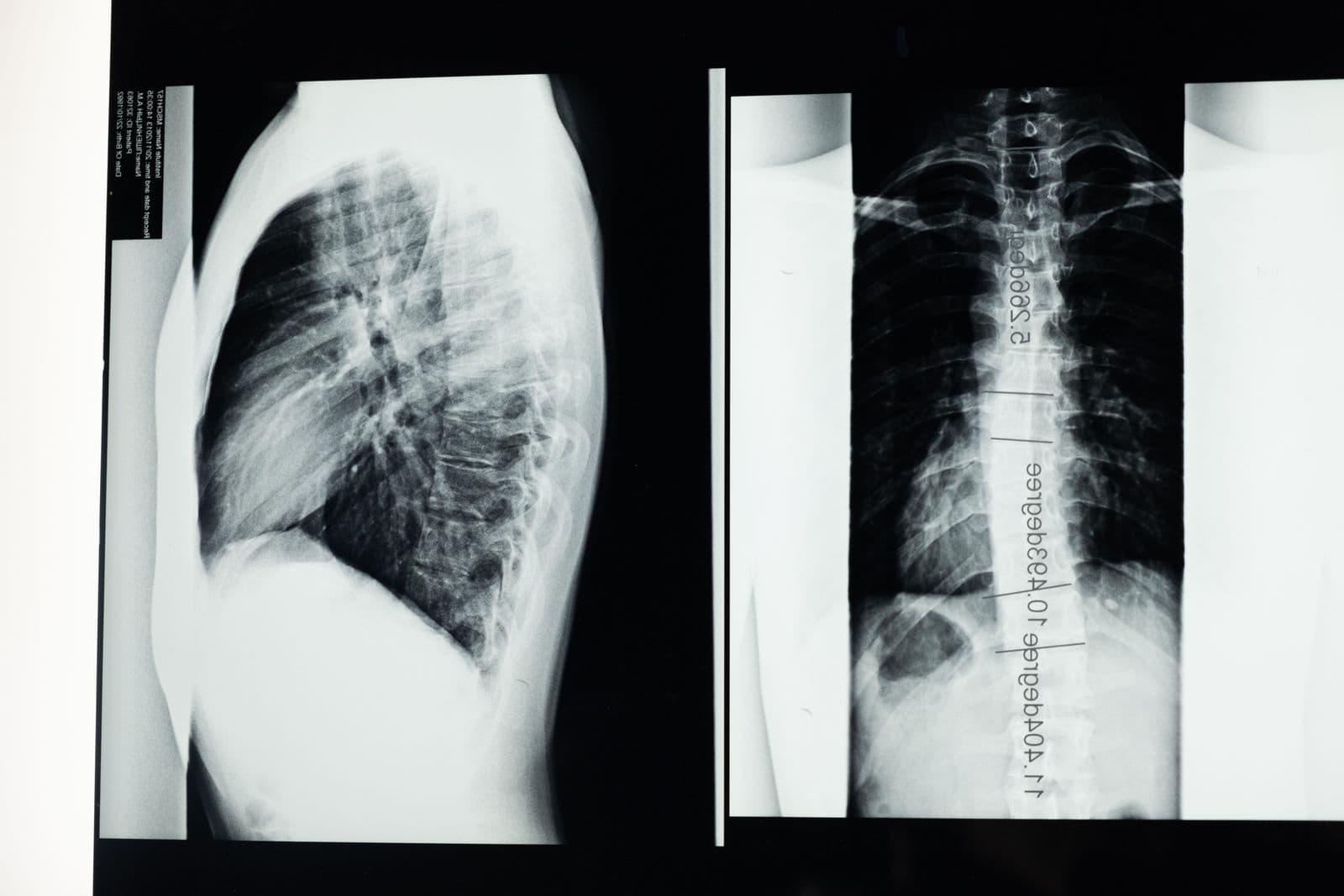
No trial has tested posture correctors in pregnancy. The pain pregnancy brings sits mostly below the waist, and the rib cage a strap wraps keeps widening.
By Nadia Feld, writer, evidence and movement
Published Oct 8, 2026 · 12 min read
- Updated October 8, 2026
- 12 min read
In this guide
The short answer is that nobody knows, because nobody has run the trial. I searched for a randomised study of shoulder-strap posture correctors in pregnant women and found none. What does exist is a clear picture of where pregnancy pain sits, how the spine and rib cage change across forty weeks, and one product category that has actually been put through a trial in pregnant women. That category is not the posture corrector.
So start with who this is wrong for. If your pain is in your lower back, across your pelvis, or over the pubic bone, an upper-back brace is aimed at the wrong region and no amount of strap tension will reach it. If you are in the third trimester and shopping for a brace with a wide band around the lower ribs or waist, you are buying a fixed-size garment for the part of the torso that changes shape fastest. And if you have been told to avoid abdominal compression for any reason, a longline brace with a belly belt is off the table until your midwife or obstetrician says otherwise.
That leaves a narrow group: someone earlier in pregnancy with an upper-back ache from desk work or a heavier bust, who wants a short-session cue. Even there, the evidence is borrowed from non-pregnant studies.
Where pregnancy pain actually sits
Most of it is below the waist. The 2015 Cochrane review of interventions for back and pelvic pain in pregnancy opens with the scale of it: more than two-thirds of pregnant women experience low-back pain and almost one-fifth experience pelvic pain, both typically increasing as pregnancy advances.
A 2025 Turkish study of 515 women in the second half of pregnancy, mean gestational age 32.8 weeks, split the regions out. Pelvic girdle pain was reported by 59 percent, lower back pain by 22.3 percent, and upper back pain by 2.7 percent. The region a posture corrector is designed to act on was the least common site of pain in that sample by a wide margin.
A larger 2026 Israeli survey is a useful counterweight, and it complicates the picture in an honest way. Of 589 pregnant women and 1,062 non-pregnant women, the pregnant group reported more upper back pain (67.1 percent against 56.4 percent) and more lower back pain (73.9 against 64.9). After adjusting for age, BMI, smoking, physical health and other factors, those differences stopped being significant. Physical health status, not pregnancy itself, was the strongest predictor of current low back pain. Read together, they say upper-back ache is common in women generally, pregnant or not, and that what pregnancy adds is mostly lumbar and pelvic.
The posture change happens in the lower spine, and part of it is built in
The familiar explanation is that the growing bump pulls the centre of mass forward and the lower back arches to compensate. ACOG's patient guidance says the same thing in plain terms: the expanding uterus shifts the centre of gravity, stretches and weakens the abdominal muscles, and strains the back, which is why the ache tends to build as the day goes on. The NHS adds the hormonal half, ligaments softening to prepare for labour, which strains the joints of the lower back and pelvis.
A 2007 paper in Nature found that the female lumbar spine is partly built for this load. Whitcome, Shapiro and Lieberman showed that human females have a derived curvature and reinforcement of the lumbar vertebrae that helps keep the trunk's centre of mass over the hips as fetal load shifts it forward. In other words, some of the lower-back curve a pregnant woman develops is the body doing what it evolved to do.
The individual picture is messier than the textbook one. A 2012 study measured spinal curvature with a Spinal Mouse in 15 women at 17 to 34 weeks and 10 non-pregnant controls. Eleven of the pregnant women showed lumbar kyphosis and backward sacral tilt, the opposite of the classic swayback, and body inclination varied between individuals. The sample is small and the finding is narrow, but it is a caution against assuming every pregnant spine changes the same way.
None of this is happening between the shoulder blades. A figure-eight strap pulls the shoulders back and cues the upper thoracic spine. It does not touch the lumbar curve, the pelvis or the sacroiliac joints, which is where both the posture change and the pain are concentrated.
The rib cage a strap wraps keeps getting wider
This is the part most listings skip. A 2015 physiology review in Breathe by LoMauro and Aliverti sets out what the chest does across pregnancy, and almost all of it is relevant to a strap or band around the torso.
The resting position of the diaphragm moves about 5 cm upward as the uterus grows. To keep lung capacity, the lower rib cage widens: the subcostal angle at the base of the sternum increases from about 68.5 degrees early in pregnancy to about 103.5 degrees at term, and the transverse diameter and lower thoracic perimeter increase by the third trimester. Minute ventilation rises by up to 48 percent from the first trimester, driven by bigger breaths rather than faster ones, and the review says that larger tidal volume comes mainly from greater rib cage movement.
That creates two problems for a brace. First, sizing: the posture corrector sizing guide is built on a chest measurement taken once, and in pregnancy that measurement is a moving target month to month. A brace that fits at 14 weeks may sit tight around the lower ribs by 30. Second, function: the review does not test braces, so this is an inference rather than a finding, but a snug band around the lower ribs sits on precisely the structure pregnancy relies on to breathe deeper. Any brace that feels like it is limiting a full breath is too tight, and loosening it or taking it off is the right call.
What has actually been tested in pregnant women
Support garments for the lower back, not posture correctors. The best-known trial, published in BJOG in 2008, randomised 115 women at 20 to 36 weeks with lumbar or posterior pelvic pain to either a purpose-built maternity support garment or a simple tubular elastic bandage, worn for three weeks.
Pain scores fell in both groups, from 6.1 to 4.5 out of 10 with the maternity garment and from 6.0 to 4.7 with the tubular bandage, and the difference between the two was not significant (P=0.61). The maternity garment did better on three daily activities, reducing the impact of pain on sleeping, getting up from sitting and walking, and its group used less pain medication. There was no group that wore nothing, so the trial cannot separate the garment from time, attention or expectation. It is still the closest thing to direct evidence, and it points at the lower back.
The guidance bodies point the same way. ACOG suggests an abdominal support garment that takes the weight of the belly off the back muscles, and says an obstetric provider may recommend a maternity girdle or brace once other causes are ruled out. For pelvic girdle pain, the NHS says a physiotherapist may recommend a pelvic support belt. Neither mentions shoulder-strap posture correctors.
The strongest evidence of all is for something you cannot buy in a box. The Cochrane review pooled 34 trials and 5,121 women and found low-quality evidence that land-based exercise reduced pregnancy-related low-back pain (standardised mean difference -0.64), and moderate-quality evidence that an eight- to 12-week exercise programme reduced the number of women reporting combined low-back and pelvic pain (risk ratio 0.66). Exercise in pregnancy should be cleared with your obstetric provider first, and ACOG says so explicitly.
| Product type | Where it acts | Pregnancy evidence | Fit problem in pregnancy |
|---|---|---|---|
| Figure-eight clavicle strap | Shoulders, upper thoracic spine | No trial found | Underarm straps, fine early on, chest growth changes the fit |
| Longline brace with back panel and waist belt | Upper back plus lower ribs or waist | No trial found | Band sits on the widening lower rib cage or over the bump |
| Maternity support garment or belly band | Lower back, takes bump weight | One randomised trial, both garments reduced pain | Designed to expand, sized by stage of pregnancy |
| Pelvic support belt | Pelvic joints | Recommended by NHS physiotherapy guidance for PGP | Fitted by a physiotherapist where offered |
| Wire-free supportive bra | Breast weight on shoulders | No pregnancy trial found | Sized by bra measurement, which also changes |
If an upper-back ache really is the complaint
It does happen, usually for ordinary reasons: a desk job, a heavier bust, a laptop on the sofa because the desk chair is no longer comfortable. For that problem, a light clavicle-style strap is a reasonable short-term cue. Four conditions keep it in the low-risk category.
Nothing below the bra line. A brace with a waist belt or an abdominal panel turns a shoulder cue into torso compression, and that is a different decision with its own clinical questions.
Short sessions. The research on wear time outside pregnancy already argues for limited daily use, which is set out in how long to wear a posture corrector. A brace is a cue that stops working the moment you rely on it to hold you up.
Loose enough to breathe fully. Given what the rib cage is doing, any tightness on a full inhale means the strap is too tight or the brace no longer fits.
Stop for tingling or numbness in the hands. Figure-eight straps press into the front of the armpit, and hand numbness is a reason to take the brace off and mention it at your next appointment.
Set expectations, too. The cleanest non-pregnant trial, covered in whether posture correctors work at all, found lower-trapezius activity dropped while the brace was worn, and the change in forward shoulder angle was not statistically significant. The free alternatives for upper-back stiffness, like the moves in stretches for a stiff upper back, carry no fit problem at all, though the same clearance rule for exercise applies.
After delivery, the question changes
The torso keeps changing after birth, and the pain pattern shifts upward. Feeding posture drives a lot of neck and upper-back pain in the first months, which is the subject of the guide to a posture corrector for postpartum shoulder pain. Chest size keeps shifting with feeding, so a brace bought in pregnancy may not fit well afterwards, and buying one later is usually the better plan.
Questions people actually ask
Is it safe to wear a posture corrector while pregnant?
No published trial has tested shoulder-strap posture correctors in pregnant women, so there is no evidence either way. A light clavicle strap worn briefly, with nothing around the waist or bump, is a different proposition from a longline brace with an abdominal belt. Ask your midwife or obstetrician before wearing either.
Will a posture corrector help pregnancy back pain?
Usually not, because pregnancy back pain is mostly lumbar and pelvic. In a 2025 study of 515 women in the second half of pregnancy, 59 percent reported pelvic girdle pain, 22.3 percent lower back pain and 2.7 percent upper back pain. A shoulder brace does not reach the lower back or pelvis.
What should I wear for back pain in pregnancy instead?
ACOG suggests an abdominal support garment that takes the weight of the belly off the back muscles, and the NHS says a physiotherapist may recommend a pelvic support belt for pelvic girdle pain. In a 2008 trial of 115 women, both a maternity support garment and a simple tubular bandage reduced lower back pain over three weeks.
Why does a posture corrector feel tighter as pregnancy goes on?
Because the lower rib cage widens during pregnancy. The angle of the lower ribs increases from about 68.5 to about 103.5 degrees by term, and the lower chest perimeter grows, so a brace sized before pregnancy can sit tight around the ribs. Loosen it or stop wearing it.
Can I wear a posture corrector while breastfeeding?
That is a separate question with separate research. Feeding posture drives neck and upper-back pain after birth, and chest size keeps shifting with feeding, so strap adjustability and nursing access matter most then.
Sources
- Liddle SD, Pennick V. "Interventions for preventing and treating low-back and pelvic pain during pregnancy." Cochrane Database of Systematic Reviews, 2015, CD001139. PMC7053516
- Ozdilek R, Yıldırım M, Aksoy SD, Gul DK. "The Frequency of Back Pain, Lumbar Pain, And Pelvic Girdle Pain During Pregnancy." Pain Management Nursing, 2025, 26(4), 470-477. doi.org
- Mhajne M, Weisman A, Yona T, Masharawi Y. "Is pregnancy a major risk factor for musculoskeletal pain? A cross-sectional study." Musculoskeletal Science and Practice, 2026, 81, 103482. doi.org
- Whitcome KK, Shapiro LJ, Lieberman DE. "Fetal load and the evolution of lumbar lordosis in bipedal hominins." Nature, 2007, 450(7172), 1075-1078. doi.org
- Okanishi N, Kito N, Akiyama M, Yamamoto M. "Spinal curvature and characteristics of postural change in pregnant women." Acta Obstetricia et Gynecologica Scandinavica, 2012, 91(7), 856-861. doi.org
- LoMauro A, Aliverti A. "Respiratory physiology of pregnancy: Physiology masterclass." Breathe, 2015, 11(4), 297-301. PMC4818213
- Kalus SM, Kornman LH, Quinlivan JA. "Managing back pain in pregnancy using a support garment: a randomised trial." BJOG, 2008, 115(1), 68-75. doi.org
- American College of Obstetricians and Gynecologists. "Back Pain During Pregnancy." acog.org
- NHS. "Back pain in pregnancy." nhs.uk
- NHS. "Pelvic pain in pregnancy." nhs.uk
As an Amazon Associate we earn from qualifying purchases. We earn a commission on some links, at no extra cost to you. It never changes which products we recommend or how they score. Full disclosure

Who wrote this
Writer, evidence and movement
Nadia Feld writes the evidence side of A Better Posture: what a trial measured, what it did not, and what that leaves you with at 3pm when your upper back aches. She is not a clinician and does not write as one. Her job is to read the paper rather than the press release, quote the actual number, and name the limitation the abstract skipped.
More from NadiaThe standard
How this guide was built
- Manufacturer specification sheets and warranty terms, read in full rather than summarised from a listing.
- Published clinical trials and standards bodies where they exist, cited by name and linked.
- Owner reports at volume, including the one-star reviews, which is where failure modes live.
- Every price checked against the live listing on the date printed beside it.