Best Posture Correctors for Large Frames: When Standard Sizing Stops at Large
Most posture correctors max out around a 44-46 inch chest. Three that are built past that line, and how to measure so you don't guess wrong twice.
By Nadia Feld, writer, evidence and movement
Published Sep 2, 2026 · reviewed Oct 11, 2026 · 12 min read
- Updated October 11, 2026
- 12 min read
In this guide
- Why the standard cut runs out of room
- What the bracing literature says about body size and force
- KARM Plus Size Posture Corrector: the widest strap adjustment in a familiar layout
- King Mills Plus Size Back Brace: built for XXXL to 6XL
- Vive Elastic Posture Corrector: a brand size chart that runs to a 57 inch chest
- How long to wear one at this size, and what to watch for
- Sources
Look at the sizing chart on most posture correctors before you look at the reviews. A large number of them top out at a "one size fits most" range that means something like a 30 to 44 inch chest, with a strap and buckle system that has maybe two more inches of adjustment past the largest hole. Order one above that line and you get a product that either won't close in front, or closes but pulls the shoulder loops so tight against the front of the armpit that it's unwearable in under an hour.
That's a webbing-length problem and a D-ring placement problem, not a "posture corrector for you" problem. A small number of listings are cut with longer straps and a wider back panel specifically to solve it. The three below are drawn from published sizing charts and the pattern across owner reports at the largest end of each brand's range, not from a guess at what "big and tall" usually means.
Why the standard cut runs out of room
A figure-eight posture brace is built from three fixed lengths: the back panel width, the two shoulder loops, and the strap that closes the front. Every one of those has to scale with chest circumference, and most manufacturers cut one size of back panel and rely on strap adjustment to cover everything from a 30 inch chest to a 46 inch one. That's roughly a 50% range on a single fixed panel, which is already a stretch, and past 46 inches the strap runs out of holes before the band closes.
The three problems that follow from an undersized panel are the same three every time. The back panel is too narrow, so it doesn't sit flat between the shoulder blades and instead bunches or rides up. The shoulder loops are cut for a narrower shoulder-to-underarm distance, so on a bigger frame they land further forward, closer to the front of the armpit where they cut in. And the front closure, usually Velcro or a cinch buckle, runs out of overlap, so it either won't fasten or fastens with almost no margin, which means it loosens within a wear.
A product built for a large frame fixes this with a wider back panel as the base pattern rather than an add-on, shoulder loops with more length before the crossover point, and a front closure with enough spare webbing that day-one and day-thirty fit the same. That's the difference to look for on a listing, not just a bigger number on the size chart.
What the bracing literature says about body size and force
Posture correctors haven't been studied specifically for body size, but a related body of clinical bracing research has, and the mechanism it describes applies directly. A 2016 study of 182 adolescent idiopathic scoliosis patients in the Journal of Children's Orthopaedics found that patients above the 85th percentile for BMI had 2.4 times the risk of brace failure in unadjusted analysis, driven mostly by worse in-brace correction and lower measured compliance. The researchers' explanation was mechanical: the force a brace is meant to transfer to the torso can be dissipated by excess soft tissue between the brace and the skeleton, so the same tension produces less actual pull on the shoulders (Goodbody et al., 2016).
Scoliosis bracing and a passive shoulder-retraction corrector are not the same intervention, and this is not a claim that either treats anything. What transfers directly is the underlying physics: a band that doesn't sit flush against the torso loses force to the tissue in between it and the skeleton, regardless of what the brace is for. A corrector cut too narrow for the frame it's on doesn't just fit worse, it does less of the one thing it's designed to do. That's the case for choosing fit over price on this end of the size range, more than it is on a standard-fit purchase.
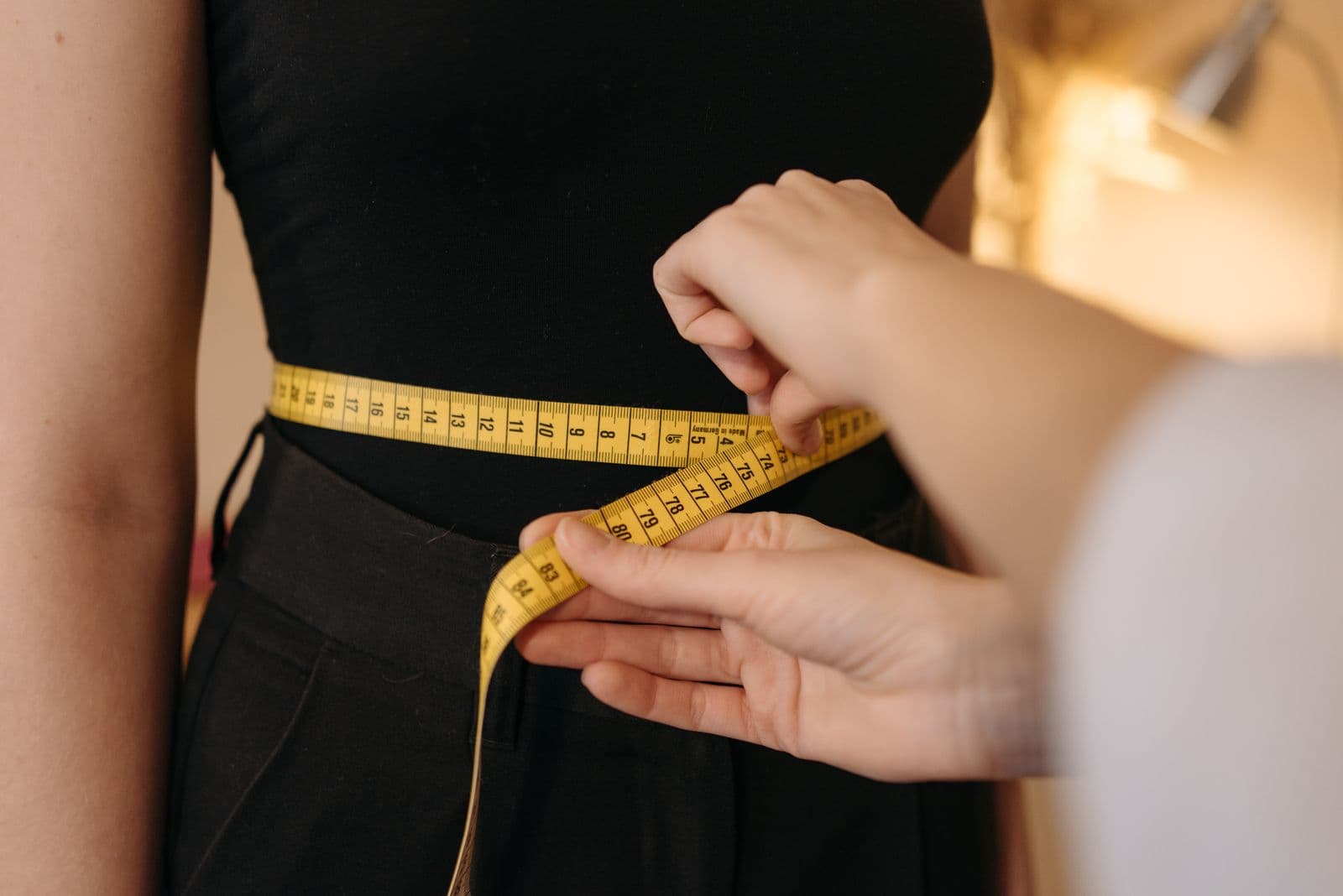
Before ordering, take the actual chest measurement at the fullest point with a soft tape, not a shirt size. The full three-measurement method also covers shoulder breadth and torso length, both of which matter more than the chest number alone once you're sizing against a brand's largest listed range rather than its middle one.
KARM Plus Size Posture Corrector: the widest strap adjustment in a familiar layout

KARM Plus Size Posture Corrector
A neoprene-and-nylon figure-eight brace built to its own plus-size pattern rather than a standard-size brace with extra strap length bolted on, with a listed fit up to a 3XL/XXXL frame. The padded shoulder loops and clavicle support follow the same layout as a standard corrector, just scaled to a wider back panel.
We may earn a commission on this link. It never changes the ranking.
- Type
- Adjustable figure-eight strap, padded
- Fit range
- XXL to 3XL, listed up to XXXL
- Material
- Neoprene and nylon, breathable
- Closure
- Adjustable front fasteners
- Best for
- A standard-layout brace sized correctly the first time
What works
- Sized to its own plus-size pattern rather than an adjusted standard, so the back panel width matches the strap range
- Padded shoulder loops reduce the cutting-in complaint common at this size range
- Breathable material for extended wear against skin
- Adjustable fasteners give room to fine-tune within the size
What to know
- Tops out at 3XL/XXXL, so a chest past that range needs the wider option below
- Neoprene runs warmer than a cotton-blend strap over a full day
- Passive brace, so nothing limits how long you leave it on
- Sizing is brand-specific; measure against KARM's own chart rather than a generic XXL
Wrong for you if your chest measurement is past the XXXL end of this chart. The panel width is fixed at that upper size, and forcing a too-small band defeats the point of buying to size in the first place.
King Mills Plus Size Back Brace: built for XXXL to 6XL

King Mills Plus Size Back Brace
A back brace built on a longer center panel and wider shoulder straps than a standard plus-size cut, with a listed range running from XXXL up to 6XL. Owner reports describe more strap length to adjust and a wider back section than the same maker's standard-size version, which is the specific complaint most XXL-and-up braces fail on.
We may earn a commission on this link. It never changes the ranking.
- Type
- Back brace with shoulder straps
- Fit range
- XXXL to 6XL
- Material
- Breathable, skin-friendly fabric
- Padding
- Two shoulder pads
- Best for
- Frames past the range most plus-size listings cover
What works
- Fit range extends to 6XL, past where most competing plus-size listings stop
- Longer center back panel and wider straps than a standard-size version scaled up
- Two shoulder pads address the cutting-in problem directly
- Adjustable fasteners and Velcro closure for fine adjustment within the range
What to know
- A longer, wider panel is a specific fit, so it runs large if your chest is closer to a standard XL
- At least one owner report describes some arm digging regardless of strap adjustment
- Listed for back support broadly, so read the posture-specific claims against your actual goal
- Sold under more than one near-identical listing name, so match the ASIN, not just the title
Wrong for you if a chest measurement in the standard XL to 2XL range covers you. This is cut for the top of the range, and a smaller frame will swim in the extra back-panel length.
Vive Elastic Posture Corrector: a brand size chart that runs to a 57 inch chest

Vive Elastic Posture Corrector
A slim elastic figure-eight brace that Vive sizes by chest circumference rather than selling as one adjustable range. On Vive's own chart the Universal size covers a 28.5 to 42 inch chest and the X-Large covers 42 to 57 inches. That X-Large is the size for the frame described at the top of this guide, too big for a one-size band that stops in the mid-40s. Pick the X-Large option and check the size selector on Amazon before buying.
We may earn a commission on this link. It never changes the ranking.
- Type
- Elastic figure-eight posture brace
- Brand sizing
- Universal 28.5-42 in, X-Large 42-57 in (Vive chart)
- Material
- Latex-free elastic blend
- Closure
- Dual adjustable waist straps, fastener closure
- Best for
- Buying to a measured chest size against Vive's chart
What works
- Vive charts its sizes by chest circumference, so a large frame can buy a size made for its range rather than one band stretched across every chest
- Vive's X-Large runs to 57 inches, well past the 44 to 46 inch ceiling most one-size correctors hit
- Dual waist straps, which Vive says add stability and can be adjusted while it is on
- Slim enough to wear under a shirt, and hand washable
What to know
- Vive's chart tops out at 57 inches, so a bigger chest needs the King Mills brace above
- Elastic straps with no padding listed, so it gives a lighter pull than a padded strap brace
- Not meant for sleep, and like every passive brace nothing limits how long you leave it on
- Confirm the X-Large option is selected before ordering, and measure against Vive's chart rather than going by a shirt size
Wrong for you if your chest measures above 57 inches. Past that line, the King Mills brace above is built for the range this one doesn't cover.
How long to wear one at this size, and what to watch for
The dosing question doesn't change with size: start at 15 to 20 minutes and build from there, regardless of which of the three above you buy. What does change is how quickly skin irritation shows up. A wider back panel and longer straps mean more fabric surface in contact with skin over a longer wear session, and that's more area where sweat and friction can build. The skin-irritation guide covers the fix, which is mostly about breathable material and a base layer, not a different product.
If the passive-strap category isn't working for your frame regardless of fit, a sensor-based device is worth comparing. Vibration posture trainers use a completely different mechanism: no strap tension to size at all, just a buzz when you slump, which sidesteps the sizing problem entirely at the cost of the physical pull a brace provides.
And before buying anything: the trials behind this category measured what a passive brace actually does to muscle activity, and the effect is a short-term change in how the shoulder muscles fire, not a lasting correction. Fit determines whether you get even that; an undersized brace produces less of the effect the research measured, for the mechanical reason above.
Questions people actually ask
How do I know if a "one size fits most" corrector will actually fit a large frame?
Check the listed chest range in inches, not the size label. "One size" ranges differ between brands, and many stop in the low to mid 40s: Mueller charts its one-size posture support at a 34 to 44 inch chest, for example. Measure your chest at the fullest point and compare that number directly against the brand's own chart before ordering.
Do plus-size posture correctors work differently than standard ones?
No. The mechanism is identical, a passive pull that retracts the shoulders. What differs is the pattern: a wider back panel, longer shoulder loops, and more webbing at the front closure, all sized to fit a larger frame flush rather than stretched to its adjustment limit.
Why does a too-small posture corrector feel worse than not wearing one?
An undersized band concentrates tension at the armpit and front closure instead of distributing it across the back and shoulders, which is where the cutting-in complaint comes from. It's a fit failure, not a sign the category doesn't work for a larger frame.
Is there a size where a posture corrector stops being the right tool?
Past the largest listed range of a dedicated plus-size brace, a fitted option gets harder to find. At that point a vibration-based trainer, which has no strap tension to size, or a conversation with a physical therapist about a custom fit becomes the more practical route.
Does a wider brace mean more skin irritation?
More fabric surface in contact with skin over a longer wear session does raise the odds, particularly with sweat. A moisture-wicking base layer under the brace and starting with shorter sessions addresses most of it.
Sources
- Goodbody CM, Asztalos IB, Sankar WN, Flynn JM, "It's not just the big kids: both high and low BMI impact bracing success for adolescent idiopathic scoliosis", Journal of Children's Orthopaedics, 2016. PMC5033782
- Kim et al., "Effects of Using a Shoulder/Scapular Brace on the Posture and Muscle Activity of Healthy University Students during Prolonged Typing", Healthcare (Basel), 2023. PMC10252399
- "Effectiveness of Wearable Devices for Posture Correction: A Systematic Review of Evidence from Randomized and Quasi-Experimental Studies", Applied Sciences, 2026. MDPI
- Vive Health, Elastic Posture Corrector size chart (Universal 28.5-42 in, X-Large 42-57 in chest). vivehealth.com
- Mueller Sports Medicine, Adjustable Posture Support sizing (OSFM 34-44 in, LG/XL 42-53 in chest). muellersportsmed.com
As an Amazon Associate we earn from qualifying purchases. We earn a commission on some links, at no extra cost to you. It never changes which products we recommend or how they score. Full disclosure

Who wrote this
Writer, evidence and movement
Nadia Feld writes the evidence side of A Better Posture: what a trial measured, what it did not, and what that leaves you with at 3pm when your upper back aches. She is not a clinician and does not write as one. Her job is to read the paper rather than the press release, quote the actual number, and name the limitation the abstract skipped.
More from NadiaThe standard
How this guide was built
- Manufacturer specification sheets and warranty terms, read in full rather than summarised from a listing.
- Published clinical trials and standards bodies where they exist, cited by name and linked.
- Owner reports at volume, including the one-star reviews, which is where failure modes live.
- Every price checked against the live listing on the date printed beside it.