Can a Posture Corrector Help Scoliosis? What the Bracing Trials Actually Required
Scoliosis bracing has a stopped-early trial behind it. A shoulder strap bought online has none. What the trials required, and what to check before buying.
By Nadia Feld, writer, evidence and movement
Published Sep 28, 2026 · 12 min read
- Updated September 28, 2026
- 12 min read
In this guide
The search usually starts with something seen in a mirror or across a room. One shoulder sits higher than the other. One shoulder blade sticks out more. A waistline dips on one side. Someone says the word scoliosis, and the next tab open is a product page for a posture corrector with a before-and-after photo of a straightened back.
The instinct makes sense. Scoliosis is a spine problem, a posture corrector is sold as a spine product, and bracing is a real, trial-backed treatment for scoliosis. The chain breaks at the third link. The braces that have evidence for scoliosis share almost nothing with a figure-8 strap except the word "brace," and the conditions under which even those braces work are narrow, measured and supervised.
The short version: no trial has tested an over-the-counter posture corrector on a scoliosis curve, and the mechanism gives no reason to expect one to help.
Scoliosis is not a posture problem
A slouch is a position. You can leave it by sitting up. Scoliosis is a structural curve, and it does not straighten when you stand tall.
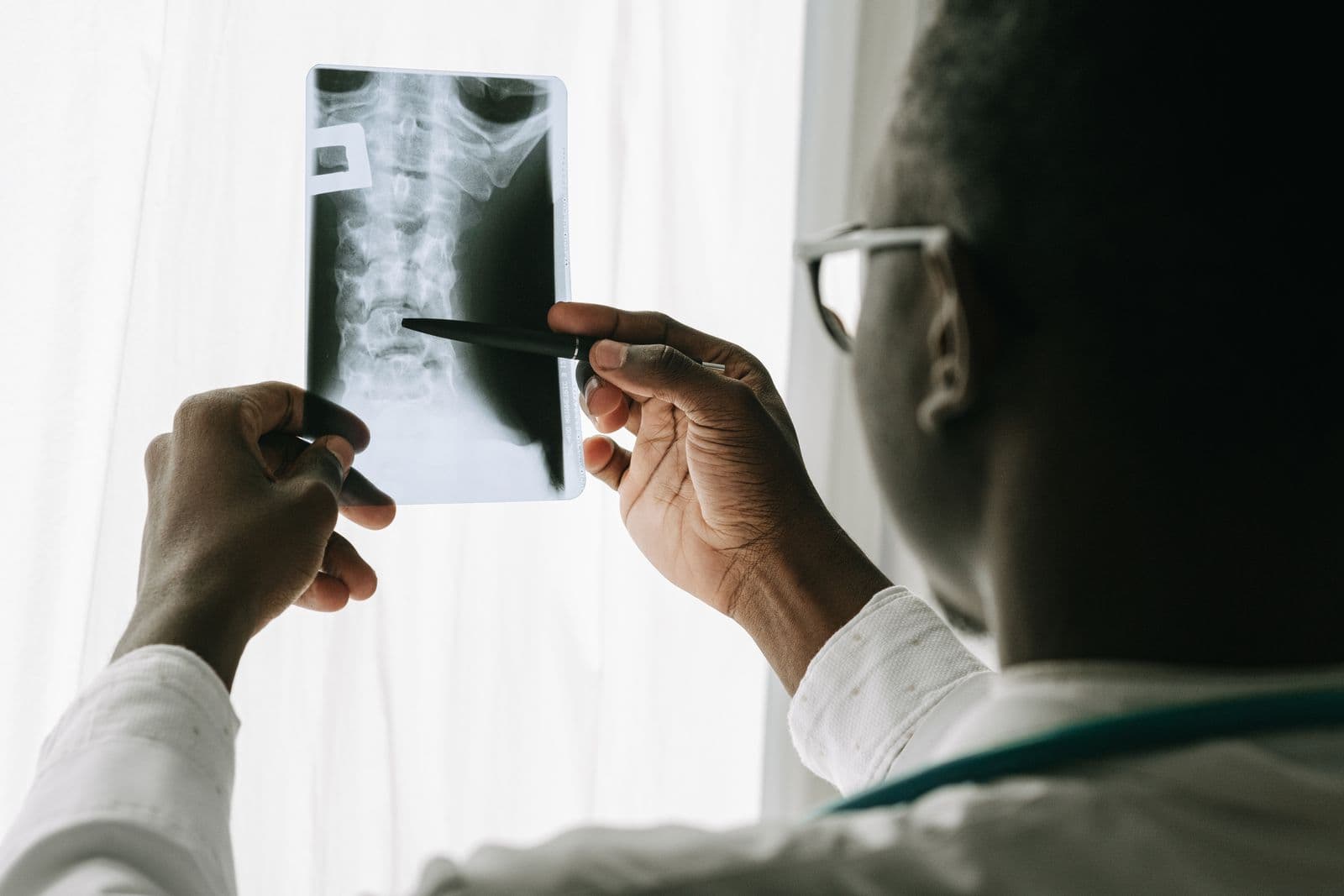
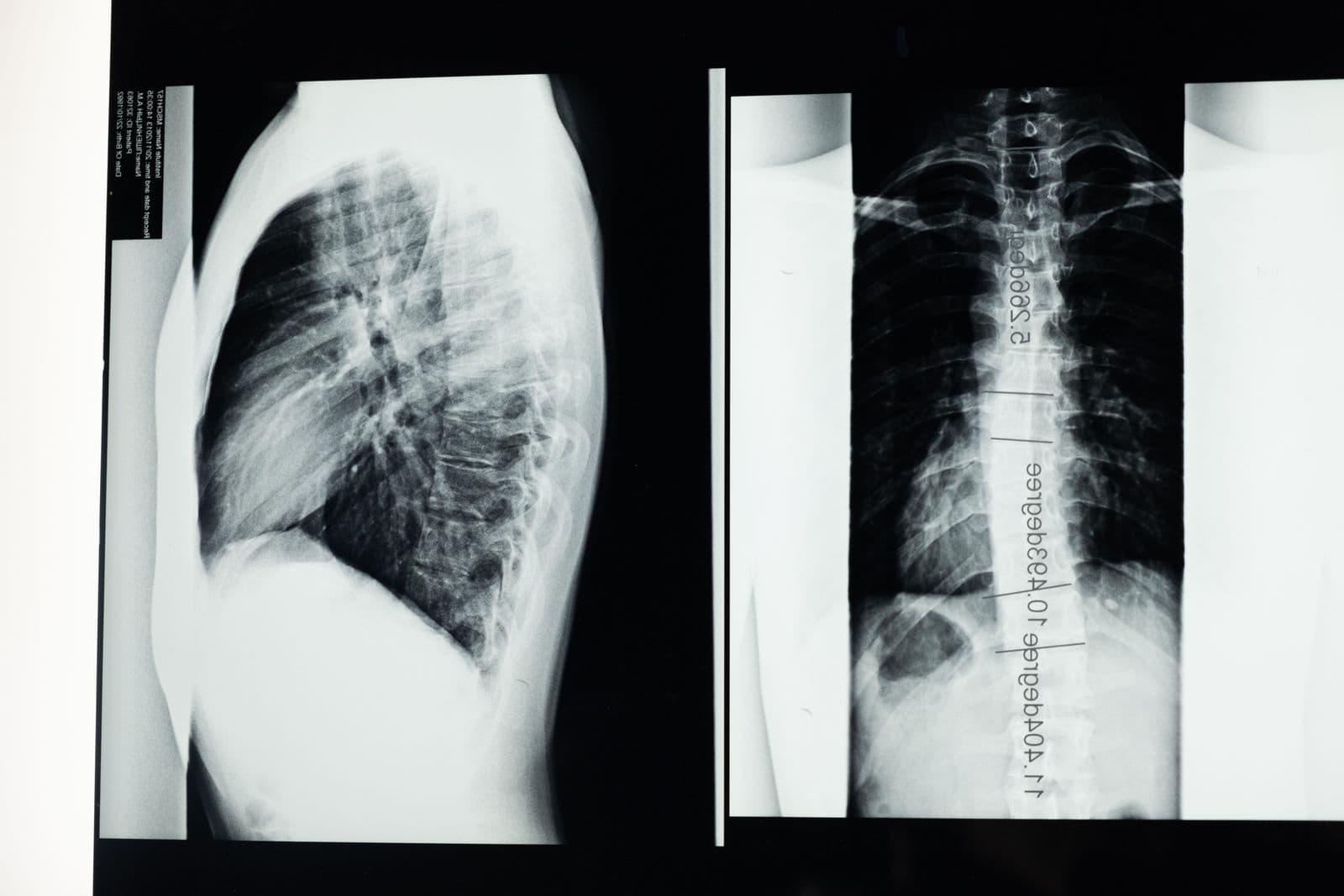
The US Preventive Services Task Force defines adolescent idiopathic scoliosis as "a lateral curvature of the spine of unknown cause with a Cobb angle of at least 10°." The Cobb angle is measured on an X-ray, between the most tilted vertebrae at the top and bottom of the curve. The Task Force puts the prevalence at 1% to 3% of children aged 10 to 16.
The curve is also rotational. The American Academy of Orthopaedic Surgeons describes scoliosis as causing "the bones of the spine to twist or rotate so that, instead of a straight line down the middle of the back, the spine looks more like the letter 'C' or 'S.'" That twist is what the forward bend test in a doctor's office looks for.
The same AAOS page is direct about cause: idiopathic scoliosis "is not related to specific behaviors or activities, like carrying a heavy backpack or having poor posture." Slouching did not produce the curve, so correcting slouching will not undo it.
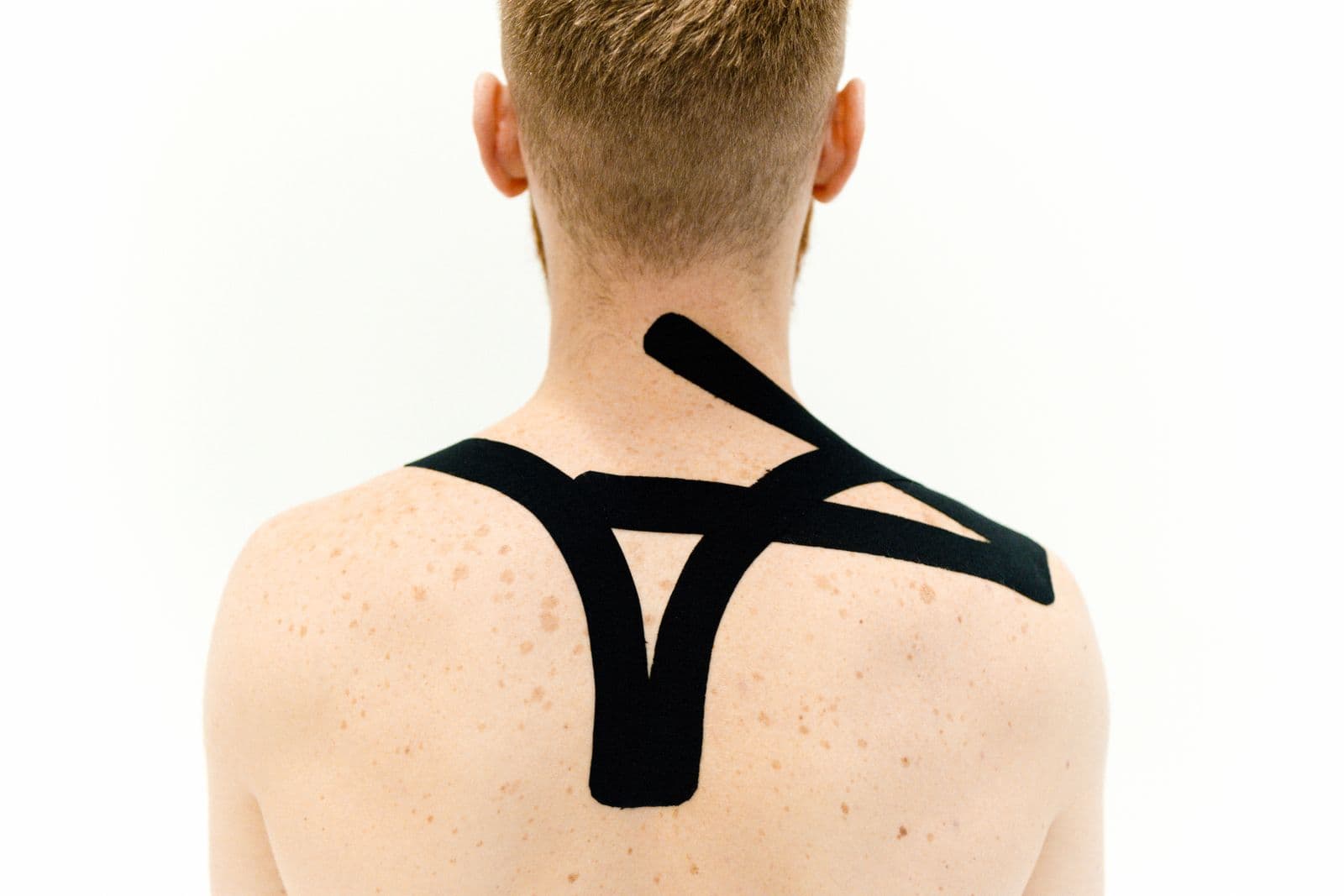
This matters for the purchase because the visible signs overlap. The National Institute of Arthritis and Musculoskeletal and Skin Diseases lists uneven shoulders, one shoulder blade more prominent than the other, and one hip appearing higher than the other. Rounded, slumped shoulders from long hours at a desk can look lopsided too. From the outside the two are hard to tell apart, which is why the first step is a measurement, not a strap.
What the bracing trial actually tested
The strongest evidence that bracing works for scoliosis is BrAIST, the Bracing in Adolescent Idiopathic Scoliosis Trial, published in the New England Journal of Medicine in 2013 and funded by the National Institutes of Health.
Participants were 10 to 15 years old, still growing (Risser grade 0 to 2, a measure of skeletal maturity read off the pelvis on X-ray), with curves of 20 to 40 degrees. Of 242 patients analyzed, 116 were randomized and 126 chose between bracing and observation. Braced patients were told to wear the brace at least 18 hours a day. Success meant reaching skeletal maturity without the curve progressing to 50 degrees, the usual threshold for surgery.
The trial was stopped early because bracing worked. Across both cohorts, 72% of braced patients succeeded against 48% under observation. In the randomized group alone the split was 75% against 42%.
Now look at what the brace was. Most braced patients (68%) wore a customized Boston-type thoracolumbosacral orthosis, a rigid plastic shell fitted to the individual patient and running from the chest down over the pelvis. Every brace carried a temperature logger that recorded a reading every 15 minutes, so the researchers knew exactly how long each one was worn.
That logger produced the most useful finding in the paper. Benefit tracked wear time. Patients in the lowest quartile of wear, 0 to 6 hours a day, had a 41% success rate, about the same as not wearing a brace at all. Patients who wore it 12.9 hours a day or more reached success rates of 90 to 93%. Mean wear across the first six months was 12.1 hours a day, well short of the 18 prescribed.
So a rigid, fitted orthosis, worn half the day or more, on a growing spine with a measured moderate curve, reduces the chance of that curve reaching surgical range. Remove the growth, the fit, the rigidity or the hours, and the trial no longer describes you.
Even inside those conditions, bracing holds a curve rather than reversing it. The AAOS says it plainly: "bracing will not straighten an existing curve," though "it often prevents it from getting worse to the point of requiring surgery." The before-and-after photo on a posture corrector listing is promising something the prescribed devices do not claim.
The elastic brace in the trials is not the one on the product page
The Cochrane review of bracing for adolescent scoliosis (Negrini and colleagues, 2015, seven studies, 662 participants) includes one detail that sounds, at first, like good news for soft braces. One small randomized trial found that elastic bracing increased the success rate in curves of 15 to 30 degrees at three years (47 participants, risk ratio 1.88), rated low-quality evidence.
The elastic brace in that literature is SpineCor, and the review's description of it shows how far it sits from a desk posture strap. The orthosis is applied using "a specific Corrective Movement" that depends on the type of curve, set according to dedicated software, and every provider must complete a two-phase training course before fitting one. It is soft, but it is still curve-specific, prescribed and fitted.
The same review found that in 20 to 30 degree curves, a rigid brace outperformed an elastic one at curbing progression (43 girls, risk ratio 1.40 at four years). The soft option was the weaker option even when it was purpose-built.
A consumer posture corrector is neither rigid nor curve-specific. Most pull both shoulders back with equal tension through a figure-8 or backpack-style harness. Scoliosis is asymmetric by definition, with a curve to one side and a rotation in one direction. A device that applies the same force to the left and right has nothing in its design that addresses a curve going one way. It acts on the shoulder girdle, and the curve lives in the vertebrae below it.
| Scoliosis brace in the trials | OTC posture corrector | |
|---|---|---|
| Construction | Rigid shell custom-fitted, or elastic applied by a trained fitter | Elastic straps, S/M/L or one size |
| Force pattern | Set to the individual curve type | Symmetric pull on both shoulders |
| Target | Measured structural curve, 20 to 40 degrees in BrAIST | Postural slouch |
| Dose studied | 12.9+ hours a day for the best results | No scoliosis dose exists |
| Wear monitored | Temperature logger every 15 minutes | Nobody |
| Trial evidence for scoliosis | Yes, in growing adolescents | None found |
Our review of the posture corrector trials found that the evidence for these straps is thin even for the problem they are sold to fix, and none of those trials enrolled anyone with a diagnosed curve.
What about exercise?
Physiotherapeutic scoliosis-specific exercise, often abbreviated PSSE and including methods such as Schroth, is the other non-surgical option people run into. The 2024 Cochrane update (Romano and colleagues, 13 randomized trials, 583 participants) is careful about it.
Against no treatment, the reviewers were "very uncertain" whether therapeutic exercise reduces the Cobb angle (mean difference of 3.6 degrees across two studies, 52 participants). Added to bracing, scoliosis-specific exercise may reduce the angle by about 2.2 degrees, on low-certainty evidence. The authors' overall conclusion is that the evidence "is currently sparse due to heterogeneity, small sample size, and many different comparisons."
That is a modest result, but it comes from randomized trials in people with scoliosis, which no posture corrector has. The exercises are also asymmetric and curve-specific, prescribed by a trained physiotherapist.
General back and shoulder strengthening, like scapular retraction work for rounded shoulders, is reasonable for desk slouch. It is not a scoliosis treatment, and nothing on this site should be read as one.
Adults with scoliosis are a different evidence base
Most bracing research is in adolescents, because the brace works on a spine that is still growing. Adults, with a curve left over from adolescence or a degenerative curve that developed later, sit in a much thinner literature.
A 2020 systematic review in BMC Musculoskeletal Disorders (McAviney and colleagues) found only ten studies from 1967 to 2018, four of them case reports, covering 339 adults. Eight used rigid braces and two used soft ones. Most reported some reduction in pain and improvement in function, results on the Cobb angle were mixed, and every cohort study was rated at high risk of bias. The authors also disclosed that they work for a company that sells scoliosis treatment products.
A 2025 review of braces for adult degenerative scoliosis (Karimi and Bazipour, 11 studies) reached a similar place: the literature does not support the conclusion that braces reduce curve severity in adults, though they "may have an impact on quality of life and pain severity."
So for an adult, the realistic question a brace answers is about pain and function, and the braces studied were mostly rigid and prescribed. If an adult with scoliosis finds that a soft support makes a long day more comfortable, that is a comfort decision to make with the clinician who follows the curve. It is not a treatment for the curve, and the research on long daily wear of soft correctors still applies.
What to do before buying anything
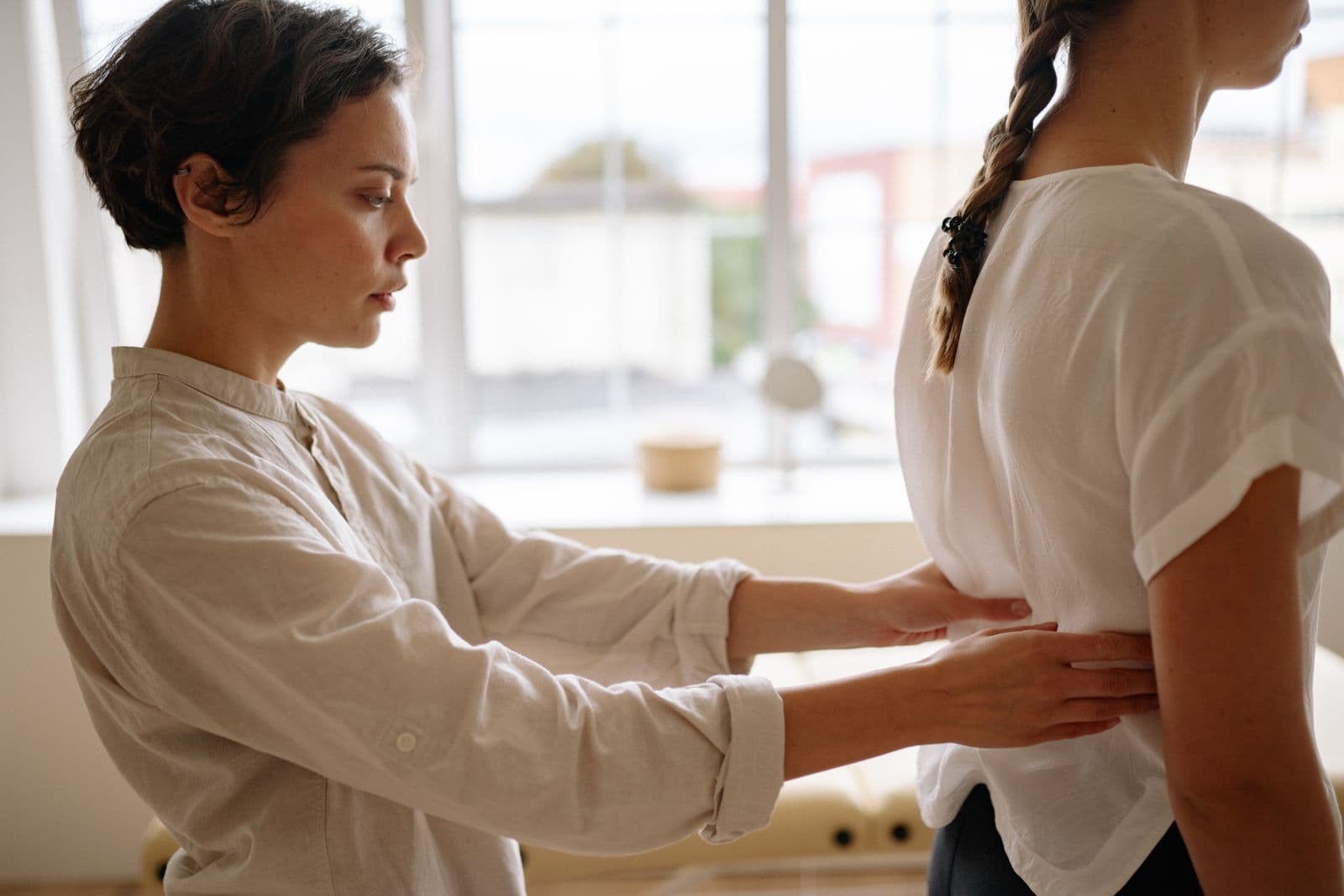
Get the curve measured if you suspect one. The forward bend test is quick. The USPSTF describes it as bending forward at the waist with arms hanging while the clinician looks at the back, sometimes with a scoliometer, and notes that an angle of trunk rotation of 5 to 7 degrees is often the threshold for an X-ray. The Task Force issued an "I" statement in 2018, meaning it found the evidence insufficient to recommend for or against routine screening of all adolescents. That is about screening everyone, not about checking a child whose shoulders already look uneven.
For a growing child, timing matters more than equipment. BrAIST's benefit came from bracing during growth, and the AAOS reserves bracing for curves of about 25 to 45 degrees in children who are still growing, with smaller curves watched and re-measured every 6 to 12 months. A strap bought online during that window adds nothing to the curve and can delay the visit that would.
If the problem turns out to be slouch, not scoliosis, a posture corrector is back in its normal lane, with the normal limits. The kyphosis buying guide covers the round-back version, and the overnight bracing piece explains why the night-brace studies in scoliosis do not carry over to consumer straps either.
Questions people actually ask
Can a posture corrector fix scoliosis?
No trial has tested an over-the-counter posture corrector on a scoliosis curve. The braces with evidence are rigid, custom-fitted orthoses or curve-specific elastic braces applied by trained fitters, worn by growing adolescents for 12 hours a day or more. Even those hold a curve from progressing rather than straightening it.
Is scoliosis caused by bad posture?
No. The American Academy of Orthopaedic Surgeons states that idiopathic scoliosis is not related to poor posture or carrying a heavy backpack. It is a structural, rotational curve, measured on X-ray, that does not go away when a person stands up straight.
How is scoliosis different from uneven shoulders caused by slouching?
Scoliosis is defined as a sideways curve of at least 10 degrees on an X-ray, usually with rotation of the vertebrae. Postural asymmetry changes when the person changes position. The two can look similar standing, which is why a forward bend test and, if needed, an X-ray are the way to tell them apart.
Can a soft brace help an adult with scoliosis?
The adult literature is small and mostly low quality. Reviews found some reduction in pain and improvement in function with bracing, mostly rigid braces, but no reliable evidence that braces reduce the curve in adults. Any brace use for pain is worth discussing with the clinician who monitors the curve.
Do scoliosis exercises work?
The 2024 Cochrane review of 13 randomized trials found the evidence sparse and low certainty. Scoliosis-specific exercise added to bracing may reduce the Cobb angle by about 2 degrees. These are curve-specific programs prescribed by trained physiotherapists, not general posture exercises.
Sources
- Weinstein SL, Dolan LA, Wright JG, Dobbs MB. "Effects of bracing in adolescents with idiopathic scoliosis." New England Journal of Medicine, 2013, 369(16), 1512-1521. PMC3913566
- Negrini S, et al. "Braces for idiopathic scoliosis in adolescents." Cochrane Database of Systematic Reviews, 2015, CD006850. PMC10616811
- Romano M, et al. "Therapeutic exercises for idiopathic scoliosis in adolescents." Cochrane Database of Systematic Reviews, 2024, CD007837. PMC10900302
- McAviney J, et al. "A systematic literature review of spinal brace/orthosis treatment for adults with scoliosis between 1967 and 2018: clinical outcomes and harms data." BMC Musculoskeletal Disorders, 2020, 21(1), 87. PMC7007692
- Karimi MT, Bazipour P. "Evaluation the Efficiency of Braces for Degenerative Scoliosis: A Systematic Review of Literature." Spine Surgery and Related Research, 2025, 9(3), 283-288. PMC12151290
- US Preventive Services Task Force. "Adolescent Idiopathic Scoliosis: Screening." 2018. uspreventiveservicestaskforce.org
- American Academy of Orthopaedic Surgeons, OrthoInfo. "Idiopathic Scoliosis in Children and Adolescents." orthoinfo.org
- National Institute of Arthritis and Musculoskeletal and Skin Diseases. "Scoliosis." niams.nih.gov
As an Amazon Associate we earn from qualifying purchases. We earn a commission on some links, at no extra cost to you. It never changes which products we recommend or how they score. Full disclosure

Who wrote this
Writer, evidence and movement
Nadia Feld writes the evidence side of A Better Posture: what a trial measured, what it did not, and what that leaves you with at 3pm when your upper back aches. She is not a clinician and does not write as one. Her job is to read the paper rather than the press release, quote the actual number, and name the limitation the abstract skipped.
More from NadiaThe standard
How this guide was built
- Manufacturer specification sheets and warranty terms, read in full rather than summarised from a listing.
- Published clinical trials and standards bodies where they exist, cited by name and linked.
- Owner reports at volume, including the one-star reviews, which is where failure modes live.
- Every price checked against the live listing on the date printed beside it.