Can a Posture Corrector Help a Broken Collarbone? What the Clavicle Trials Found
A figure-8 posture corrector looks like the clavicle brace used for fractures. Four trials compared that brace with a plain sling. Here is what they found.
By Nadia Feld, writer, evidence and movement
Published Oct 3, 2026 · 12 min read
- Updated October 3, 2026
- 12 min read

In this guide
- The figure-8 shape came from fracture care
- What the clavicle trials actually compared
- Children: the same answer from a smaller study
- Why a posture corrector is a worse fit than the brace that already lost
- What current guidance actually recommends
- Where a posture corrector fits later on
- The bottom line
- Sources
Search for a collarbone brace and the results look a lot like a search for a posture corrector. The same padded loops go around both shoulders, the same strap crosses between the shoulder blades, and some listings name "clavicle support" and "posture correction" in the same sentence. So a reasonable question follows. If the two are basically the same strap, would the posture corrector already in a drawer do the job for a broken collarbone?
The short answer: the figure-of-eight brace has been tested against a plain arm sling in randomized trials, and it did not win. It healed no better, it hurt more early on, and the main patient guidance in the US and UK starts with a sling. A consumer posture corrector was never in any of those trials at all.
This page is about what the research says and how the two products differ. It is not a substitute for the X-ray and the follow-up visits a fracture needs.
The figure-8 shape came from fracture care
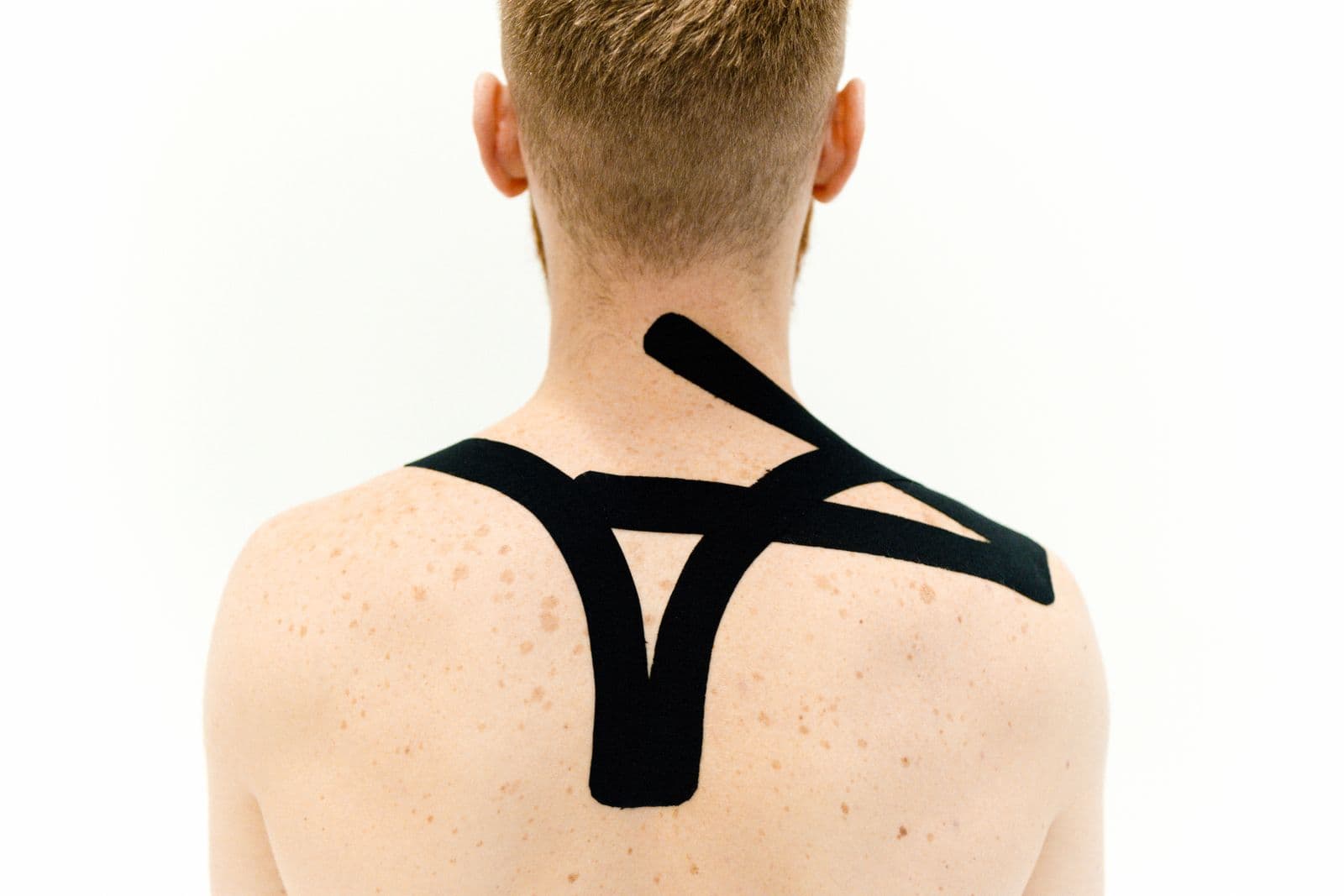
The figure-of-eight bandage is old. It loops around each shoulder and crosses behind the upper back, drawing both shoulders backward. The theory was that pulling the shoulders back would stretch the collarbone out to its full length, line up the broken ends and hold them there while they knit.
Posture correctors borrowed the shape for a different reason. Pull the shoulders back, and the wearer feels it every time they round forward. The strap is a reminder, not a splint. Our review of the trials behind posture correctors covers how thin the evidence is even for that slouching use.
So the two products share a silhouette and a mechanism, a backward pull on both shoulders. What they do not share is the job, the fit or the way they are checked once they are on.
What the clavicle trials actually compared
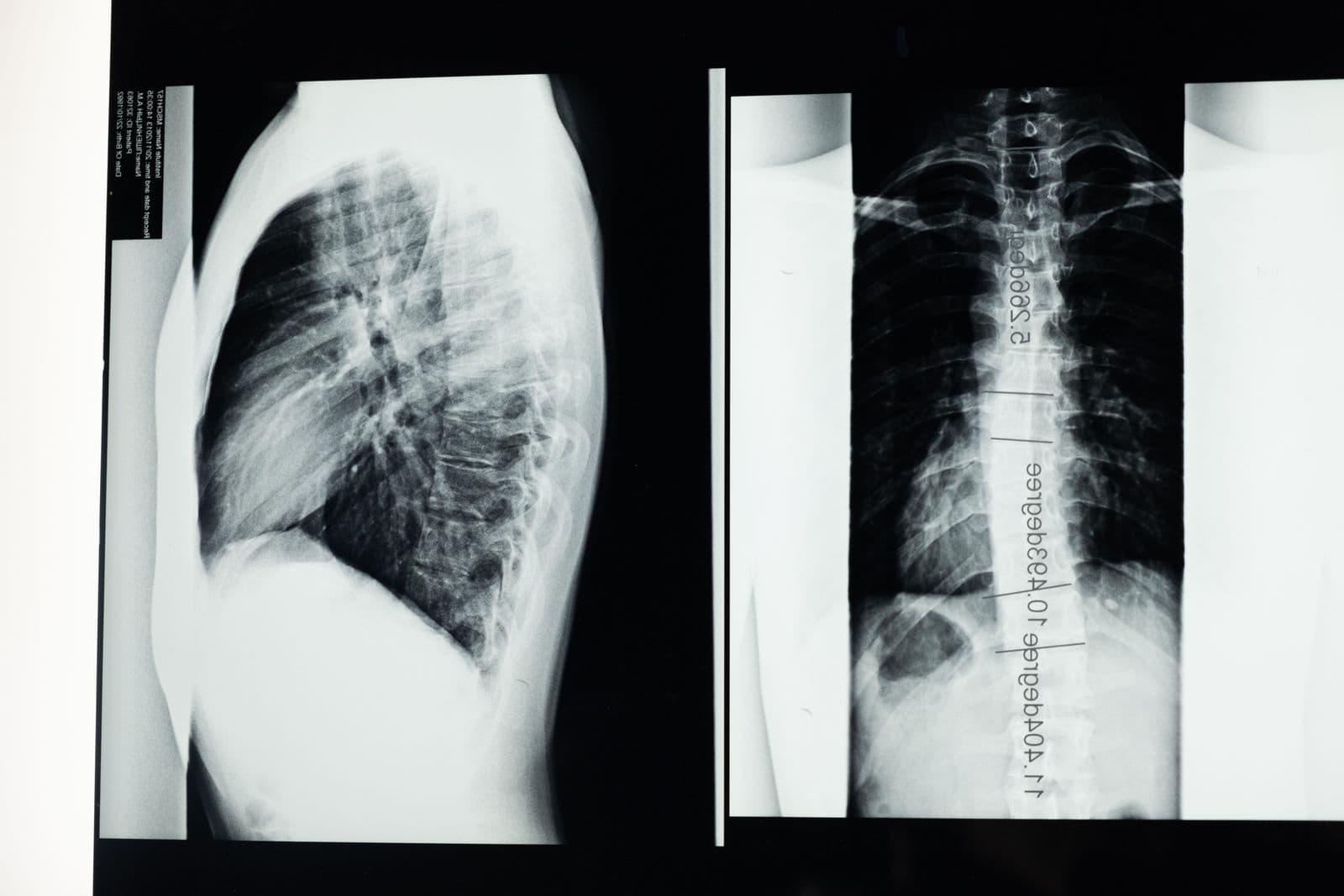
Clavicle fractures are common. The American Academy of Orthopaedic Surgeons puts them at about 5% of all adult fractures, and most happen in the middle third of the bone after a fall onto the shoulder or an outstretched arm. Most mid-shaft breaks are treated without surgery, and for decades the two standard non-surgical options were the figure-of-eight bandage and a simple arm sling.
Here is what the randomized trials found when they put the two head to head.
Andersen, Jensen and Lauritzen, 1987. Seventy-nine outpatients with mid-clavicle fractures were randomized to a figure-of-eight bandage or a simple sling, and 61 were re-examined at three months. The sling "caused less discomfort and perhaps fewer complications." The functional and cosmetic results were identical. The detail that matters most for the posture corrector question is the last line of the abstract: the alignment of the healed fractures "was unchanged from the initial displacement." Pulling the shoulders back did not pull the bone straight.
Ersen and colleagues, 2015. Sixty patients with mid-shaft fractures, aged 15 to 75, were randomized to a broad arm sling or a figure-of-eight bandage. Pain on the first day averaged 6.8 out of 10 with the figure-of-eight against 5.6 with the sling, a significant difference. Shortening of the healed bone averaged 9 mm with the figure-of-eight and 7.5 mm with the sling, a difference the trial could not separate from chance. The authors concluded the broad arm sling was preferable, because it hurt less early on and was easier to apply.
The Cochrane review, 2016. Lenza and Faloppa pooled the randomized evidence on non-surgical treatment for mid-shaft fractures in adolescents and adults. Three trials with 296 participants compared the figure-of-eight bandage with an arm sling. Shoulder function came out similar in each. Pooled pain at two weeks showed no clinical difference, with a mean difference of 0.43 points on a 10-point scale. Time to healing differed by 0.2 weeks. The reviewers rated all of it very low quality evidence, from small, methodologically weak trials, and concluded that the evidence cannot say which non-surgical method is best.
That last point deserves a straight reading. The trials do not prove the sling is better. They show the figure-of-eight brace failed to show the advantage it was designed to deliver, and that it tends to be the more uncomfortable of the two.
Children: the same answer from a smaller study
Parents ask this question as often as adults do, since collarbone fractures are common in children. A 2025 study from Turkey compared 49 school-age children with mid-shaft fractures, 20 treated with an arm sling and 29 with a figure-of-eight bandage. It was not randomized, which limits it. At follow-up the shortening and angulation of the bone were similar in both groups, and angulation improved over time in both. The NHS notes that children often recover in 3 to 4 weeks, against 6 to 8 weeks for most adults.
Why a posture corrector is a worse fit than the brace that already lost
If the purpose-built clavicle brace did not beat a sling, a posture corrector has a steeper hill to climb. It was never designed for the job, and several of its features work against it.
| Clavicle figure-8 brace (fracture care) | Consumer posture corrector | |
|---|---|---|
| Designed purpose | Hold the shoulders back during fracture healing | Cue the wearer out of a slouch |
| Randomized evidence for fractures | Three trials, 296 people, no advantage over a sling | None |
| Who fits it | Applied and checked at a clinic, re-tightened at follow-up | Self-fitted from a size chart |
| Daily wear pattern on the box | Continuous, as directed, for weeks | Short sessions, usually one to two hours a day per maker instructions |
| Who watches for nerve or skin problems | The treating clinician at follow-up | Nobody |
It is sized for a slouch, not a swollen shoulder. A fresh fracture swells and bruises. A posture corrector picked from a size chart, as our posture corrector sizing guide explains, is fitted to an uninjured chest measurement. Tighten it enough to hold anything and it presses into tissue that is already inflamed.
The straps sit over the nerves and vessels. AAOS notes that the collarbone lies above several important nerves and blood vessels. The loop of a figure-8 strap runs under the armpit, and that is exactly where the brachial plexus and the axillary vessels pass. A 1987 case report from Germany described a complete brachial plexus paralysis two days after a figure-of-eight bandage was applied to an uncomplicated clavicle fracture, and its authors wrote that early neurological complications after these fractures are "mostly caused by the figure-of-eight bandage." Case reports cannot give a rate. They do show why a strap pulled tight under a broken collarbone needs someone checking on it.
Skin takes a beating. Even on healthy shoulders, the strap edges are where people report rubbing. Our guide to posture corrector skin irritation covers the pressure points, and they are the same ones a fracture patient would be leaning on for weeks.
It encourages the wrong kind of stillness. The AAOS guidance stresses keeping the hand, wrist and elbow moving from early on, to prevent stiffness, with gentle shoulder exercises added as the bone begins to heal. A rigid habit of holding the shoulders braced back is not part of that plan.
What current guidance actually recommends
Both of the large patient-facing sources line up with the trials.
The NHS says a broken collarbone needs to be treated in hospital, that the arm "will usually be put in a sling," and that people may need to wear it for 2 to 3 weeks. Exercises for the shoulder and arm follow, along with follow-up appointments to check the healing.
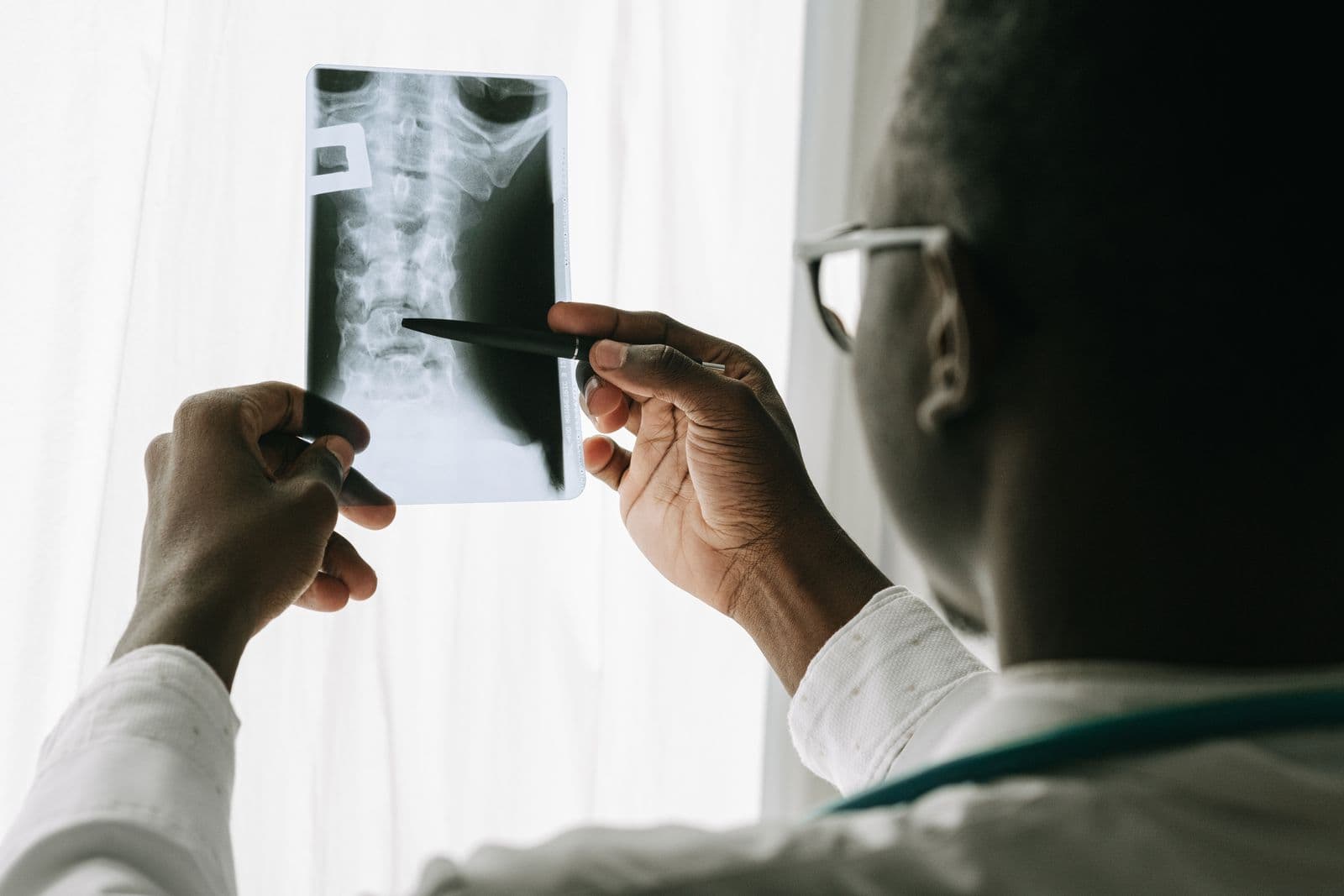
AAOS OrthoInfo says a simple arm sling "is usually used for comfort immediately after the break and while the injury heals," together with pain relief and early motion exercises. Regular visits with X-rays check that the bone stays in a good position. Neither source suggests a figure-8 strap as the first choice.
Some breaks need more than a sling. The 2019 Cochrane review of surgery versus non-surgical care, 14 trials and 1,469 people, found surgery may not improve arm function at one year or more. It did find fewer treatment failures with surgery. Symptomatic non-union, where the bone fails to knit and causes problems, ran at 11.6% in the non-surgical groups, and symptomatic malunion at 11.3%, against 1.2% with surgery. AAOS notes that badly displaced fractures may be recommended for surgery. Whether a particular break falls into that group is a question for an X-ray and a surgeon, not for the fit of a strap.
Where a posture corrector fits later on
Once a fracture has healed and the treating clinician has cleared full activity, the collarbone is no longer the issue. What is left is often a stiff shoulder and a body that spent weeks guarding one side, sometimes with a rounded-forward habit to match.
At that point a posture corrector is back in its normal lane, with the normal limits. It can be a reminder during desk hours. It cannot rebuild strength, and long daily wear has its own questions, covered in how long to wear a posture corrector. The more useful work is usually the strengthening and mobility program a physiotherapist sets after a fracture, and the general scapular retraction exercises for rounded shoulders only belong in the picture once that program allows them.
Two practical points if a strap does go back on after recovery. Watch for any numbness, tingling or color change in the hand, which suggests the loop is pressing on the structures under the arm. And check the bump over the old fracture site. AAOS notes that a lump often forms as the bone heals and may remain in a smaller form, so a strap edge that sits right on it will rub.
The bottom line
A posture corrector and a clavicle brace look alike because one was copied from the other. The original, in its proper clinical setting, was tested against a cloth sling and did not come out ahead. It healed no better and hurt more early on. The copy was built for a different problem, fitted by size chart and worn without anyone checking on it.
For a suspected broken collarbone, the evidence points to medical assessment, an X-ray and, for most mid-shaft breaks, a sling. The posture corrector stays in the drawer until the fracture has healed and the clinician says the shoulder is ready.
Questions people actually ask
Can I use a posture corrector instead of a sling for a broken collarbone?
The evidence does not support it. The purpose-built figure-of-eight clavicle brace was compared with a plain arm sling in randomized trials and showed no advantage for healing, function or alignment, with more early pain in one trial. A consumer posture corrector was not tested at all. NHS and AAOS guidance both start with a sling, chosen and checked by the clinician treating the fracture.
Does a figure-8 brace straighten a broken collarbone?
The trials found it did not. In the 1987 Andersen trial, the alignment of the healed fractures was unchanged from the initial displacement in both the figure-of-eight and sling groups. In the 2015 Ersen trial, shortening averaged 9 mm with the figure-of-eight and 7.5 mm with the sling, a difference that was not statistically significant.
Is a clavicle brace the same thing as a posture corrector?
They share a figure-8 shape that pulls both shoulders backward, and some products are sold as both. The difference is in the job and the supervision. A brace used for a fracture is applied and checked by a clinician over several weeks. A posture corrector is a self-fitted reminder strap for slouching, sized to an uninjured chest.
How long does a broken collarbone take to heal?
The NHS says most people recover in 6 to 8 weeks and children often in 3 to 4 weeks, with a sling usually worn for 2 to 3 weeks. Badly displaced fractures can take longer, and some are treated with surgery. Follow-up X-rays are how the treating team confirms healing.
When can I go back to wearing a posture corrector after a collarbone fracture?
Once the treating clinician has confirmed the fracture has healed and cleared normal activity. At that point the usual limits apply: short sessions as a reminder, not all-day wear, and stop at once if the hand goes numb or tingles or if the strap rubs over the healed fracture site.
Sources
- Andersen K, Jensen PO, Lauritzen J. "Treatment of clavicular fractures. Figure-of-eight bandage versus a simple sling." Acta Orthopaedica Scandinavica, 1987, 58(1), 71-74. doi.org
- Ersen A, Atalar AC, Birisik F, Saglam Y, Demirhan M. "Comparison of simple arm sling and figure of eight clavicular bandage for midshaft clavicular fractures: a randomised controlled study." Bone and Joint Journal, 2015, 97-B(11), 1562-1565. doi.org
- Lenza M, Faloppa F. "Conservative interventions for treating middle third clavicle fractures in adolescents and adults." Cochrane Database of Systematic Reviews, 2016, CD007121. PMC6463869
- Lenza M, Buchbinder R, Johnston RV, Ferrari BA, Faloppa F. "Surgical versus conservative interventions for treating fractures of the middle third of the clavicle." Cochrane Database of Systematic Reviews, 2019, CD009363. PMC6373576
- Dastan AE, et al. "Radiological outcomes of two non-surgical management methods for mid-shaft clavicle fractures in school-age children: No difference between figure-of-eight bandage and arm sling." Ulusal Travma ve Acil Cerrahi Dergisi, 2025, 31(3), 303-309. PMC11894237
- Reichenbacher D, Siebler G. "Early secondary lesions of the brachial plexus, a rare complication following clavicular fracture." Unfallchirurgie, 1987, 13(2), 91-92. doi.org
- American Academy of Orthopaedic Surgeons, OrthoInfo. "Clavicle Fracture (Broken Collarbone)." orthoinfo.org
- NHS. "Broken collarbone." nhs.uk
As an Amazon Associate we earn from qualifying purchases. We earn a commission on some links, at no extra cost to you. It never changes which products we recommend or how they score. Full disclosure

Who wrote this
Writer, evidence and movement
Nadia Feld writes the evidence side of A Better Posture: what a trial measured, what it did not, and what that leaves you with at 3pm when your upper back aches. She is not a clinician and does not write as one. Her job is to read the paper rather than the press release, quote the actual number, and name the limitation the abstract skipped.
More from NadiaThe standard
How this guide was built
- Manufacturer specification sheets and warranty terms, read in full rather than summarised from a listing.
- Published clinical trials and standards bodies where they exist, cited by name and linked.
- Owner reports at volume, including the one-star reviews, which is where failure modes live.
- Every price checked against the live listing on the date printed beside it.