Can You Sleep in a Posture Corrector? What Nighttime Bracing Research Actually Covers
Nighttime bracing has real trial evidence behind it, for a completely different device than the one on your desk. Here is what the research actually covers.
By Nadia Feld, writer, evidence and movement
Published Sep 15, 2026 · 10 min read
- Updated September 15, 2026
- 10 min read
In this guide
Product listings for posture correctors routinely tell you to wear the thing at night: "sleep in it for faster results," or a wear-time chart that quietly includes eight overnight hours in the daily total. It sounds like free progress. You were going to be lying still anyway.
Nighttime bracing is also a real, studied medical practice, which is exactly what makes the marketing claim sound credible. There are published trials on wearing a brace to bed. There just are not any on the product being sold to you, and the two devices have almost nothing in common once you look at what the trials actually tested.
The claim survives because it borrows credibility from a real body of research without naming it. Nobody selling a $40 elastic strap cites the scoliosis literature directly. The pitch just leans on the general cultural sense that nighttime bracing is a legitimate medical thing, which it is, and lets the reader assume it applies here. It is worth walking through what that research actually found, because the details are the whole argument for why it does not transfer.
The nighttime bracing that has trial evidence
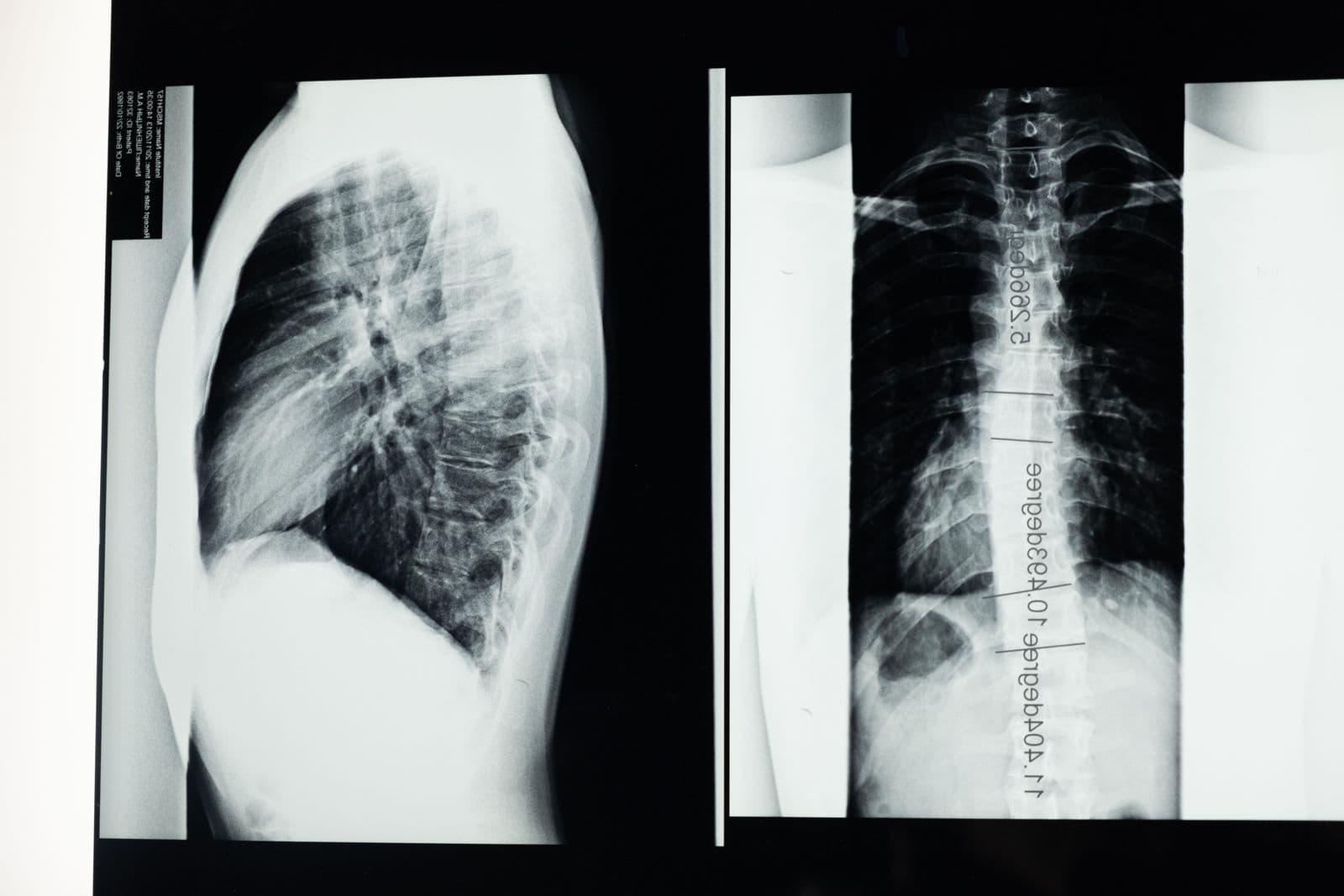
The evidence comes from adolescent idiopathic scoliosis, where nighttime-only bracing is an established, clinically recognized alternative to full-time bracing.
A retrospective analysis of a prospectively followed cohort, published in the North American Spine Society Journal in 2022, compared 111 skeletally immature female patients with curves of 20 to 40 degrees. Sixty-two wore a Providence nighttime brace, worn during sleep only. Forty-nine wore a Boston brace, worn 23 hours a day. Treatment succeeded in 71% of the nighttime group and 65% of the full-time group, a difference that was not statistically significant (p = .67), with comparable mean curve progression, 3.1 degrees against 2.6 degrees. The nighttime group did significantly better on one measure that matters for any brace: compliance. Seventy-six percent hit greater than 75% adherence, against 56% in the full-time group (p = .017).
A separate retrospective cohort in Children (Basel), 2022, followed 150 patients treated with a Cheneau-Toulouse-Munster brace prescribed for 12 hours out of 24, worn overnight plus a smaller daytime stretch. Overall success, defined as no surgery and curve progression of 5 degrees or less, was 70%, with a split by curve type: 60% for main thoracic curves against 84% for main lumbar curves.
Read those numbers straight and the conclusion is that nighttime bracing works, sometimes as well as wearing a brace all day. That conclusion is correct, for the device these trials studied.
Why it does not transfer to the strap on your desk
The Providence and Cheneau-Toulouse-Munster braces are rigid, custom-molded orthoses, built from a cast or scan of one patient's spine, prescribed by an orthopedic specialist to correct a measured structural curve during a growth window, and checked at follow-up visits where the curve is re-measured on imaging. Nothing about that description applies to a figure-8 elastic strap bought online to fix slouching at a desk.
The mismatch runs in four directions at once.
The target is different. Scoliosis bracing corrects a structural lateral curve in a still-growing spine. A consumer posture corrector addresses postural slouch in an adult skeleton that has finished growing. There is no structural curve for it to correct, and the trials on whether it changes anything even while worn are narrow to begin with.
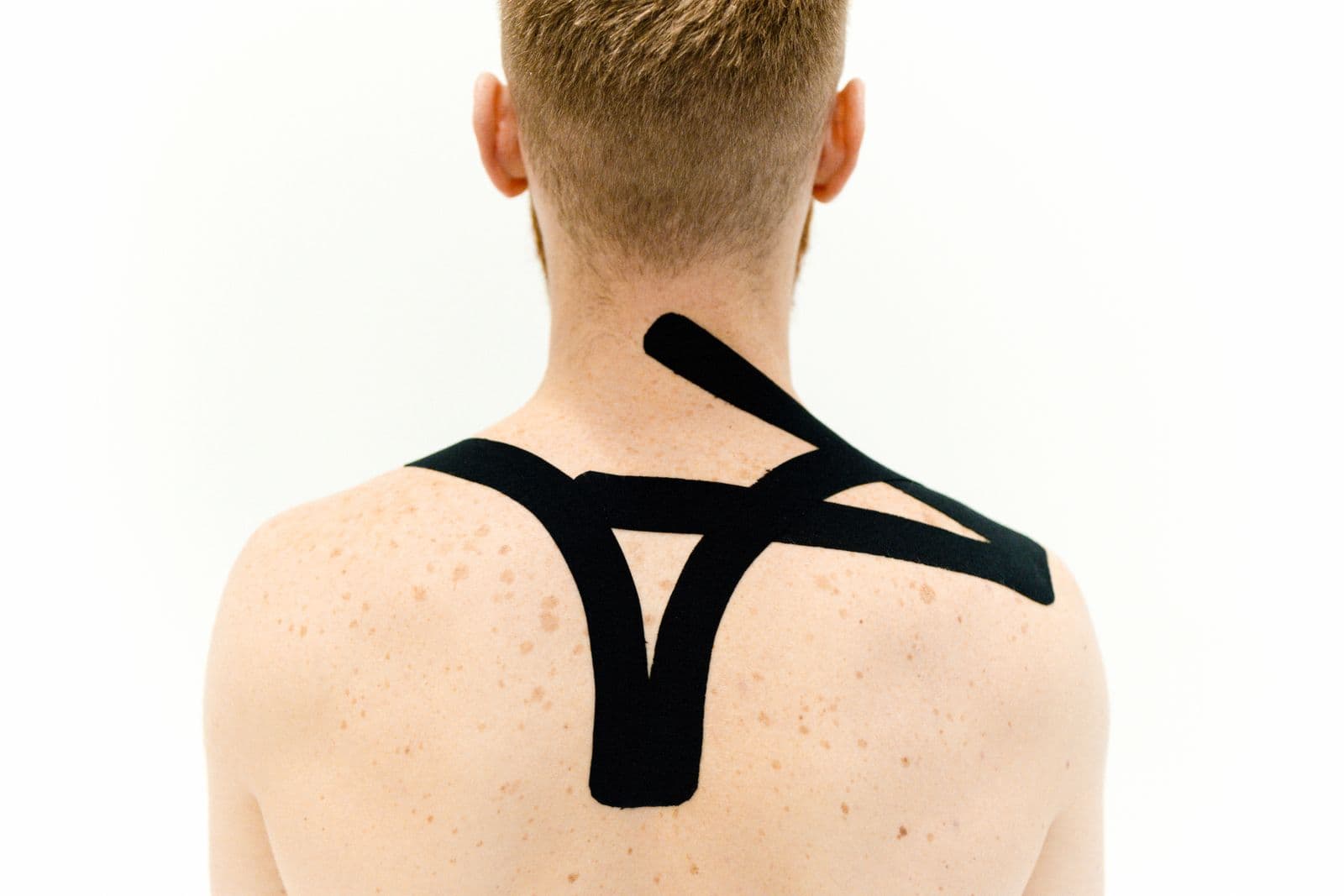
The device is different. A rigid, individually molded shell distributes force across a large, fitted surface area engineered for a specific curve. A soft elastic strap concentrates force at a few points across the shoulders and upper back, by design, which is the same mechanism linked to reduced muscle activity in short-session trials and the same mechanism behind the skin irritation this site has covered separately.
The posture while wearing it is different. Every nighttime bracing trial above studied a device worn lying down, built to hold its shape and pressure distribution in that position. A soft strap designed and marketed for sitting upright at a desk was never fitted or tested for how its pressure points shift once you roll onto your side.
The monitoring is different. Nighttime scoliosis bracing runs inside a supervised protocol: a clinician measures the curve, prescribes the hours, and checks the fit at intervals. An overnight posture corrector is unsupervised by definition. Nobody is watching for a strap that has slipped up against your neck at 3am.
No trial has tested overnight wear of a soft, non-custom posture corrector, in either direction. It has not been shown to help. It has not been formally shown to harm. What exists is a body of evidence about a completely different device, wearing thin the moment it gets stretched to cover this one.
The compliance number does not transfer either
The Providence nighttime brace's strongest result was not curve correction. It was compliance: 76% of patients hit high adherence against 56% for the full-time brace, because a brace worn only while asleep removes the friction of wearing a visible device to school, in front of classmates, all day. That is a specific, well-understood barrier in the adolescent scoliosis population, and nighttime dosing solved it directly.
That barrier does not describe why an adult skips wearing a posture corrector at a desk. The friction there is comfort and habit during waking hours, a barrier that shifting the same device to overnight wear leaves fully in place. It adds a different friction instead: staying comfortable enough, in a strap that was never built for it, to actually sleep through the night. Borrowing the compliance number from the scoliosis trials without checking what produced it is the same move as borrowing their correction numbers, and it fails for the same reason.
| Nighttime scoliosis brace | OTC posture corrector | |
|---|---|---|
| Construction | Rigid, custom-molded to one patient's scan or cast | Soft, elastic, one-size or S/M/L |
| Target | Structural spinal curve in a growing skeleton | Postural slouch in a finished skeleton |
| Fit tested for | Supine and side-lying wear | Upright sitting |
| Prescribed by | Orthopedic specialist, curve measured on imaging | Nobody; self-selected off a product page |
| Trial evidence for overnight wear | Yes, multiple cohorts, comparable to full-time wear | None found |
What could actually go wrong specifically at night
Set the trial evidence aside and the ordinary mechanics of sleep are reason enough for caution. The dose research on daytime wear already points toward short, deliberate sessions rather than all-day use, and sleep adds three problems daytime wear does not have.
You lose the feedback loop. Awake, a strap that has ridden up, pinched a fold of skin, or pressed a nerve gets noticed and adjusted within minutes. Asleep, hours can pass before anything wakes you, and by then a pressure mark or a numb arm has already set in.
Lying down changes where the load lands. A strap fitted to pull your shoulders back while you sit upright meets a different set of contact points once you are on your side or your back, concentrating pressure somewhere the design never accounted for.
And a full night stacks the one clean risk in the deconditioning research: reduced trapezius activity while braced, and lower measured trunk extensor endurance after three weeks of continuous wear in the one study that tracked it. Eight more hours added to a day that already includes the recommended daytime session is exactly the kind of dose creep that study was measuring.
None of this requires a scary word. It requires reading what the strap was tested for and noticing that sleep was never it.
What to do instead
If you are wearing a posture corrector at all, keep it inside the window that has actual dose evidence: roughly one to two hours, in deliberate blocks, while you are awake and can feel what it is doing. Take it off before bed. It was built for sitting upright at a desk, and eight hours of unmonitored side-lying was never part of that design.
If your goal is genuinely nighttime spinal support, that is a clinical conversation, not a shopping decision. A physician or orthopedic specialist can tell you whether a nighttime brace applies to your situation at all, and if one is prescribed, it will be fitted and monitored the way the trials above describe, not picked off a product listing.
For the slouching a posture corrector targets during the day, the better use of eight free hours is not more strap time. It is the scapular strengthening work that builds the underlying capacity, which carries no dose limit and no overnight question at all, and asking whether the desk itself is the actual problem rather than something a few nighttime hours in a brace could fix.
Questions people actually ask
Can I sleep in a posture corrector?
No trial has tested overnight wear of a soft, over-the-counter posture corrector. The nighttime bracing research that exists studied rigid, custom-molded orthoses prescribed for scoliosis, fitted to lying-down positions, and monitored by a clinician. None of that describes an elastic strap bought online for daytime slouching, and stretching the scoliosis evidence to cover it goes past what was measured.
Does nighttime bracing actually work for anything?
Yes, for adolescent idiopathic scoliosis specifically. A 2022 cohort study found a Providence nighttime brace, worn during sleep only, produced comparable curve correction to a Boston brace worn 23 hours a day (71% versus 65% treatment success), with significantly better patient compliance. That evidence applies to a rigid, prescribed device treating a structural curve, not a soft consumer posture strap.
What is different about wearing a brace lying down versus sitting up?
The nighttime scoliosis braces in the trials were built and fitted for supine and side-lying wear specifically. A posture corrector marketed for sitting upright at a desk was fitted and tested for that position, and its pressure points were never evaluated for how they shift once you roll onto your side for hours at a stretch.
What should I do if I want nighttime spinal support?
Talk to a physician or orthopedic specialist rather than deciding from a product page. If a nighttime brace is appropriate for your situation, it will be fitted to you and monitored the way the trials above describe. Self-selecting an unmonitored consumer device for overnight wear is a different, untested proposition.
Is it safer to just wear the posture corrector for fewer hours at night instead of all night?
The dose evidence that exists points toward daytime, deliberate sessions of roughly one to two hours rather than any overnight use. Shortening the overnight block does not add fitted design for lying-down wear or restore the feedback loop that sleep removes, so it reduces the exposure without addressing why nighttime wear was never studied for this device in the first place.
Sources
- Yeh KK, et al. "Providence nighttime brace is as effective as fulltime Boston brace for female patients with adolescent idiopathic scoliosis: A retrospective analysis of a randomized cohort." North American Spine Society Journal, 2022. PMC9706154
- Guidetti V, et al. "Adolescent and Juvenile Idiopathic Scoliosis: Which Patients Obtain Good Results with 12 Hours of Cheneau-Toulouse-Munster Nighttime Bracing?" Children (Basel), 2022. PMC9221823
As an Amazon Associate we earn from qualifying purchases. We earn a commission on some links, at no extra cost to you. It never changes which products we recommend or how they score. Full disclosure

Who wrote this
Writer, evidence and movement
Nadia Feld writes the evidence side of A Better Posture: what a trial measured, what it did not, and what that leaves you with at 3pm when your upper back aches. She is not a clinician and does not write as one. Her job is to read the paper rather than the press release, quote the actual number, and name the limitation the abstract skipped.
More from NadiaThe standard
How this guide was built
- Manufacturer specification sheets and warranty terms, read in full rather than summarised from a listing.
- Published clinical trials and standards bodies where they exist, cited by name and linked.
- Owner reports at volume, including the one-star reviews, which is where failure modes live.
- Every price checked against the live listing on the date printed beside it.