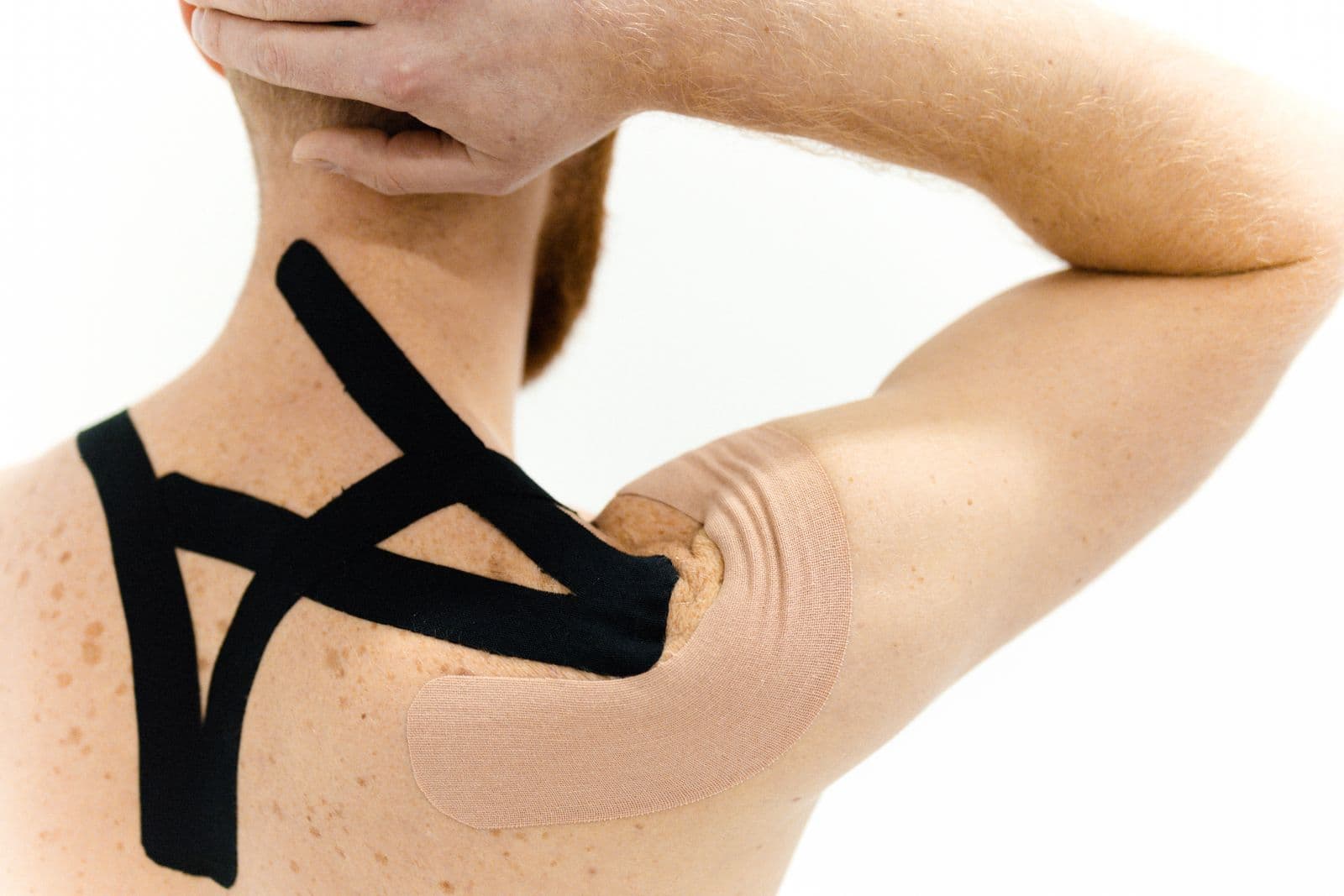
Do Posture Shirts Work? What Six Garment Studies Measured
Posture shirts promise a brace you can wear under a work shirt. Six studies measured them, and the angle mostly stayed put while the pain moved.
By Nadia Feld, writer, evidence and movement
Published Sep 23, 2026 · 12 min read
- Updated September 23, 2026
- 12 min read
In this guide
A posture shirt is the quietest version of the posture corrector idea. Instead of a strap harness buckled over your clothes, you get a snug compression top with panels or elastic bands sewn into the back, meant to pull the shoulders back gently and remind you when you slump. It goes under a work shirt and nobody sees it.
It is a testable pitch. Posture shirts have been through university labs more often than you might expect, sometimes in garments the manufacturer supplied. IntelliSkin provided the shirts for one of the studies below. Six of those studies are worth reading closely.
The short version: in most of the studies the shirt did not measurably change the angle of the head or shoulders. Where pain was measured, it tended to go down anyway. The gap between those two findings is the thing to understand before you buy one.
Who a posture shirt is the wrong purchase for
If you expect the shirt to hold your shoulders back mechanically, the evidence is against you. Two of the three photo-based studies of seated or standing posture found no change in head or shoulder angle with the shirt on. The one that did find a change needed fully tensioned straps to get it.
If your main problem is a desk or screen set up badly, a shirt treats the symptom and leaves the cause in place. Fix the monitor height for neck pain first. It costs less and it changes the load directly.
If you run hot, have sensitive skin, or sit in a warm office, a compression layer under a shirt for several hours a day is a comfort problem before it is a posture question. The same friction and heat issues that affect strap braces apply here, over a larger area.
If you are between sizes, be careful. Fit decides whether the panels sit where the designer intended. The Cole study below named the brace's variable fit as an important limitation.
What a posture shirt actually is
The first is a posture-cueing compression top that relies on its fit and cut alone, with nothing to adjust. The IntelliSkin garment in the Gascon study was described this way, as a posture-cueing compression garment.
The second is a compression top with straps or bands. Alignmed's S3 brace, used in the Cole study, is a compression top with hook-and-loop straps that can be pulled tight, which makes it closer to a strap brace built into a shirt. Medi's Posture Plus Force shirt, used in the Avellanet trial, has inelastic tension bands built into the fabric.
In the one study that compared strap tension directly, the straps changed the result.
The six studies
| Study | Garment and exposure | Who | Posture result | Other outcomes |
|---|---|---|---|---|
| Cole et al., 2013 | Alignmed S3 compression shirt, straps slack vs fully tensioned, single session | 38 overhead athletes with forward head and rounded shoulders | Forward shoulder angle fell from 63.3 to 57.2 degrees with straps tensioned. Straps slack: no significant change | Small, highly variable changes in trapezius EMG |
| Manor et al., 2016 | Corrective posture shirt vs sham shirt, single session | 24 college students with forward shoulder angle over 52 degrees | Posture shirt: no change in shoulder or head angle (p = 1.00). Sham shirt: shoulder angle decreased (p = 0.029) | None |
| Zappala et al., 2017 | Posture-cuing shirt vs tennis shirt, single session | 9 college tennis players | Maximum external rotation unchanged (172.0 vs 170.9 degrees) | Serve rotation velocity rose, short of significance (p = 0.058) |
| Gascon et al., 2018 | IntelliSkin garment vs generic performance top, static standing | 40 active women | More scapular retraction and posterior tilt (about 10 degrees more tilt) | None |
| Christensen et al., 2021 | Posture-cueing shirt vs compression shirt vs no shirt, 15-minute laptop task | 30 healthy men | No change in head or shoulder angle for either shirt | Pain 0 vs 1 on a 0-10 scale, statistically lower than no shirt only |
| Avellanet et al., 2025 | Medi Posture Plus Force, 2 to 4 hours a day for 3 months, vs an exercise programme | Women healthcare workers with chronic neck pain, 54 to 56 analysed per arm | Spinal curvature unchanged | Pain fell from 4.81 to 3.14 (VAS). Painkiller use 8% vs 23.5% with exercise |
The posture finding: mostly no change
In Christensen et al., thirty healthy men did three 15-minute laptop writing tasks, one in a posture-cueing shirt, one in a plain compression shirt and one with no shirt. Head and shoulder angles were measured from photographs at minute 1 and minute 15. Neither shirt changed either angle at either time point. It is the study closest to a desk worker's day.
Manor et al. is the awkward one for the category. Twenty-four students who already had rounded shoulders were photographed wearing a corrective posture shirt and, on a separate trial, a sham shirt. The posture shirt produced no change in forward shoulder angle at all. The sham shirt, which had no corrective design, did reduce it. Putting on any close-fitting garment may shift how people hold themselves for a while, and the corrective design added nothing measurable on top.
Cole et al. found the clearest mechanical effect, and it came with conditions. The same compression shirt was worn with the straps slack or fully tensioned. With the straps tensioned, forward shoulder angle dropped by about 6 degrees. With the straps slack it did not change significantly. Worth knowing: the paper reports the standard error of measurement for that angle as 5 degrees, so a 6-degree shift is real in the statistics and modest on a photograph.
Gascon et al. measured the shoulder blade itself with an electromagnetic motion-tracking system. Forty women standing still had their shoulder blades sitting further back and tipped about 10 degrees further backward in the IntelliSkin garment than in a generic athletic top. Standing still is the easiest condition for a garment to influence, and nobody in that study was typing.
The posture evidence is narrow. A strapped or posture-cueing garment can shift where the shoulder blade sits while you stand still, in some studies. Across the three photo studies of head and shoulder angle, including the one run at a laptop, two found nothing.
The pain finding: it moved anyway
The two studies that asked about pain both found it went down.
Christensen's effect is tiny. Median pain after the laptop task was 0 on a 0 to 10 scale in the posture-cueing shirt and 1 with no shirt. The authors called that statistically significant difference negligible. Pain in the plain compression shirt was no different from the posture shirt, which points at compression, or simply at wearing something, over the posture design.
Avellanet et al. is the most useful study in the set, because it is the only one that ran for months in people who actually had a problem. Women healthcare workers with chronic neck pain spent three months wearing the Medi Posture Plus Force shirt for two to four hours a day under their clothes, and, after a three-month washout, three months on a physiotherapist-taught exercise programme, or the same two blocks in reverse order.
Both worked. Average pain fell from 4.81 to 3.14 with the shirt and from 5.22 to 3.72 with exercise. Painkiller use was lower in the shirt period, 8% against 23.5%. Posture, measured with a Spinal Mouse by an assessor who did not know which intervention each participant had just finished, did not change with either.
Two details from that trial matter more than the headline. First, the benefit did not last. In the group that wore the shirt first, pain climbed back from 2.74 to 4.83 over the three-month washout that followed. Second, compliance was similar: 69% of the shirt group wore it as instructed, against 64% of the exercise group doing their exercises. Of the participants who kept going with one intervention afterwards, more than half chose the shirt, reporting it took less time.
What that combination means
Pain improving while the measured angle stays put is the pattern seen across most of the posture corrector literature, and the full picture is in what the posture corrector trials measured. The likeliest explanation is sensory. A snug garment pushing on the skin of the upper back gives a constant, low-level cue about where your shoulders are. Some people respond by moving more, holding less, or noticing tension earlier. None of that needs the resting angle on a photograph to change.
If the benefit is a cue, it works while you wear the shirt and fades after you stop, which is what Avellanet's washout data show. The same logic applies to kinesiology tape for posture, which works through skin contact in much the same way.
In the one head-to-head trial, the shirt and the exercises produced similar pain relief by different routes. The exercise route builds capacity that stays after the programme ends, if you keep it up. The scapular retraction exercises for rounded shoulders are the ones most comparable to what that exercise arm did.
Wear time and how to judge one
No trial compares wear times for a posture shirt, so the best-supported dose is the one Avellanet used: two to four hours a day, during the daytime, under normal clothing. That is also in line with the reasoning in how long to wear a posture corrector, which argues for deliberate sessions over all-day wear.
When comparing shirts, three things are worth checking on the listing:
- Adjustable tension or fixed panels. The only study that isolated strap tension found the posture change depended on it. A fixed-panel shirt cannot be tightened.
- A real size chart by chest and torso length. Cole's team reported that the compression top bunched during movement and that participants with short torsos were harder to fit. A shirt that rides up puts its panels in the wrong place.
- Whether you will actually wear it. Compliance in the long trial was 69%, inside a study with scheduled follow-up visits. A shirt that is too hot or too tight for your office will sit in a drawer, and the trial data say its benefit stops when you stop wearing it.
Nothing in these papers shows a branded posture shirt beating a generic compression top on pain. Christensen found the plain compression shirt matched the posture shirt on every outcome measured.
Questions people actually ask
Do posture shirts actually correct posture?
Mostly not in the way the packaging implies. Two of the three photographic studies of head and shoulder angle found no change with a posture shirt on, including a 15-minute laptop task in 30 men. A strapped compression shirt did reduce forward shoulder angle by about 6 degrees in 38 athletes, but only with the straps fully tensioned. Motion-sensor studies show small shifts in where the shoulder blade sits while standing still.
Do posture shirts help neck pain?
The one long trial says they can, at least while you wear them. Women with chronic neck pain who wore the Medi Posture Plus Force shirt two to four hours a day for three months saw average pain fall from 4.81 to 3.14, a similar improvement to a physiotherapist-taught exercise programme. Pain went back up during the three-month washout that followed.
Is a posture shirt better than a strap posture corrector?
No study has compared them directly. A shirt spreads pressure over a larger area and is easier to hide under clothing, which helps people keep wearing it. A strap brace can apply more force at specific points. Neither design has shown a lasting change in resting posture once it comes off.
Is a plain compression shirt just as good?
In the one study that compared them, it was. During a laptop task, a posture-cueing shirt and an ordinary compression shirt produced the same posture and pain results, and neither changed head or shoulder angle. A sham shirt in another study reduced shoulder angle while the corrective shirt did not.
How long should I wear a posture shirt each day?
The only multi-month trial prescribed two to four hours a day, in the daytime, under normal clothing, for three months. That is the best evidence available. There is no data supporting all-day or overnight wear.
Sources
- Cole AK, McGrath ML, Harrington SE, Padua DA, Rucinski TJ, Prentice WE. "Scapular bracing and alteration of posture and muscle activity in overhead athletes with poor posture." Journal of Athletic Training, 2013, 48(1), 12-24. PMC3554027
- Manor J, Hibberd E, Petschauer M, Myers J. "Acute Effects of Posture Shirts on Rounded-Shoulder and Forward-Head Posture in College Students." Journal of Sport Rehabilitation, 2016, 25(4), 309-314. Journal of Sport Rehabilitation
- Zappala J, Orrego C, Boe E, Fechner H, Salminen D, Cipriani DJ. "Influence of Posture-Cuing Shirt on Tennis Serve Kinematics in Division III Tennis Players." Journal of Chiropractic Medicine, 2017, 16(1), 49-53. PMC5310952
- Gascon SS, Gilmer GG, Hanks MM, Washington JK, Oliver GD. "Biomechanical influences of a postural compression garment on scapular positioning." International Journal of Sports Physical Therapy, 2018, 13(4), 700-706. PMC6088124
- Christensen SWM, Johansson SS, Jensen MD, Jensen AE, Knudsen TH, Palsson TS. "Effect of a Posture-Cueing Shirt on Sitting Posture During a Functional Task in Healthy Participants: A Randomized Cross-Over Study." Journal of Manipulative and Physiological Therapeutics, 2021, 44(9), 725-733. DOI 10.1016/j.jmpt.2022.03.003
- Avellanet M, Mena A, Pages E, Boada-Pladellorens A. "Extended Multicenter Study on the Postural Shirt for Women With Chronic Nonspecific Cervical Pain: A Randomized Crossover Clinical Trial." Cureus, 2025, 17(5), e84629. PMC12182875
As an Amazon Associate we earn from qualifying purchases. We earn a commission on some links, at no extra cost to you. It never changes which products we recommend or how they score. Full disclosure

Who wrote this
Writer, evidence and movement
Nadia Feld writes the evidence side of A Better Posture: what a trial measured, what it did not, and what that leaves you with at 3pm when your upper back aches. She is not a clinician and does not write as one. Her job is to read the paper rather than the press release, quote the actual number, and name the limitation the abstract skipped.
More from NadiaThe standard
How this guide was built
- Manufacturer specification sheets and warranty terms, read in full rather than summarised from a listing.
- Published clinical trials and standards bodies where they exist, cited by name and linked.
- Owner reports at volume, including the one-star reviews, which is where failure modes live.
- Every price checked against the live listing on the date printed beside it.