The Best Posture Correctors for Kyphosis
Kyphosis is a measured curve, not a habit. The brace the trials studied differs from a $25 strap. Four options, and who each is wrong for.
By Nadia Feld, writer, evidence and movement
Published Sep 9, 2026 · 13 min read
- Updated September 9, 2026
- 13 min read
In this guide
- What the trials actually measured
- The device the trials used still exists
- ORTONYX Posture Corrector: the strap that names kyphosis specifically
- OTC Comfort Posture Brace with Rigid Stays: an actual rigid brace at strap-adjacent pricing
- Cybertech Postural Extension: rigid aluminum, TLSO-class
- medi Spinomed IV A/P: the device the trials actually used
- Which one, in one paragraph each
- Sources
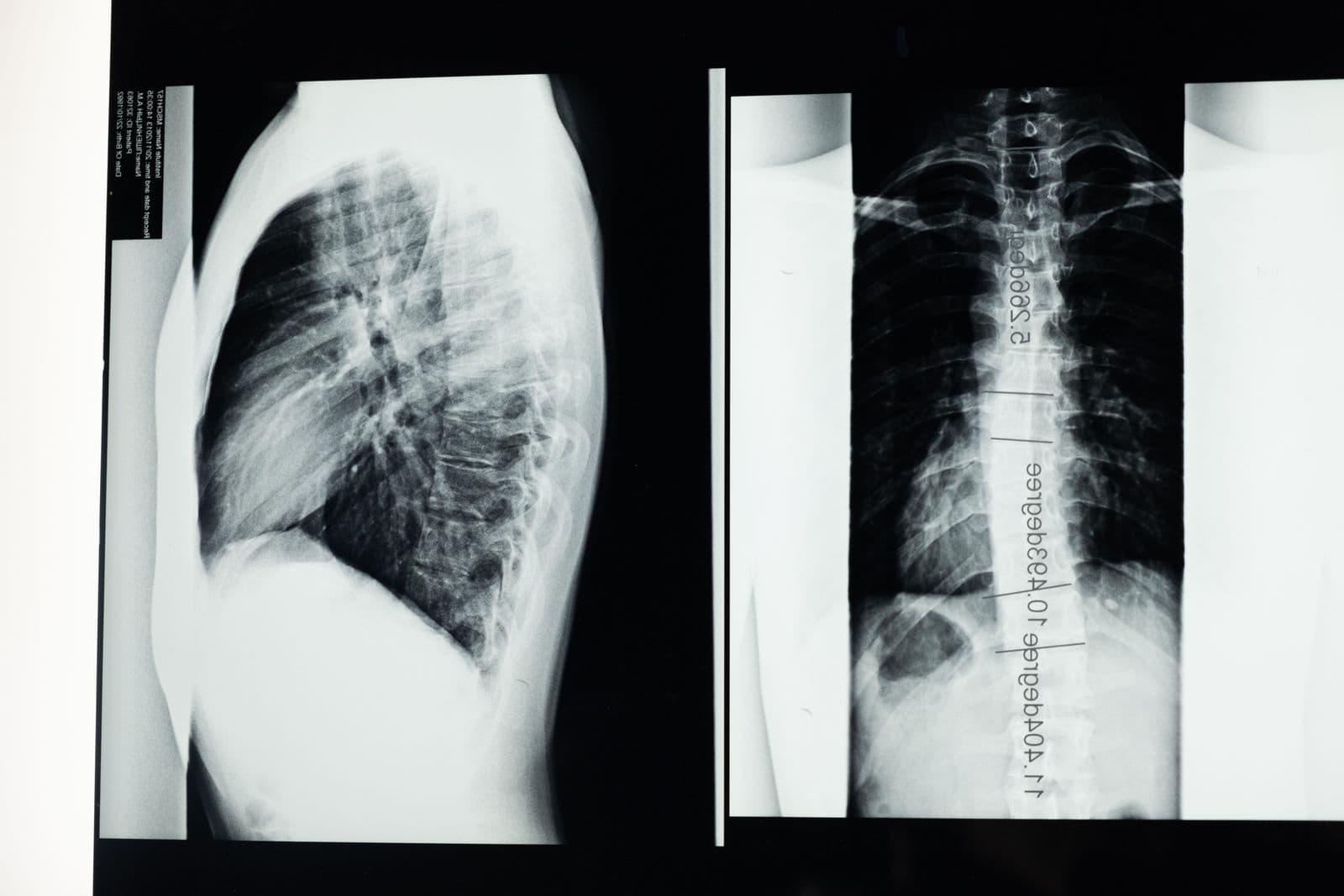
Kyphosis is a measured curve, usually taken as the Cobb angle across the thoracic spine on an X-ray. A diagnosis means a clinician has already put a number on your spine, and that number is what separates this guide from the desk-worker posture correctors already covered here: $25 to $50 adjustable straps built for a person who slumps at a screen, tested for how much they reduce trapezius muscle activity during typing, in people nobody measured for a structural curve. If your only evidence is rounded shoulders and a stiff upper back rather than a diagnosis, the muscular pattern behind that is worth reading before any of this.
The devices tested against an actual structural curve sit in a different, less-marketed category: rigid or dynamic hyperextension orthoses, priced from about $60 to $240, sold as durable medical equipment rather than shapewear. This guide covers both bands, because most people searching for a posture corrector for kyphosis have never been told which one the evidence applies to.
What the trials actually measured
A 2022 systematic review pooled four randomized controlled trials on bracing for thoracic kyphosis, all in women with osteoporosis, 326 participants total, ages 51 to 93. Every trial scored low risk of bias. The braces used were not passive shoulder straps: they were dynamic hyperextension orthoses, worn two hours a day for six months in most protocols, or twelve hours a day for twelve months in one.
The results split, and the split matters more than the headline. Three of the four trials found a significant reduction in kyphotic angle: 4.2 degrees in the earliest, 7.9 to 8.1 degrees in a later one, 7.5 degrees in a third. The fourth found no significant change at all. Where a benefit showed up, it came with real functional gains beyond the angle itself: greater back extensor and abdominal flexor strength, less pain, better forced expiratory volume and vital capacity, and 5 to 6 centimeters of regained standing height. The review's authors also flagged a confound worth repeating: the trial with the largest angle change combined bracing with an exercise program, so it is not settled whether the brace alone produced that number or the exercise did the work and the brace got the credit. The one trial that isolated bracing from exercise found no difference between the two for either pain or kyphosis angle.
Read plainly, that is a real but narrow finding, tied to a specific device category worn on a specific schedule, mostly in older women with osteoporotic kyphosis rather than a 30-year-old with a rounded upper back from a laptop. It does not transfer cleanly to every brace marketed as a posture corrector, and it does not license "wear this and your curve will improve" as a claim for anything sold without its own trial.
The device the trials used still exists
The brand behind most of that evidence is medi's Spinomed line, sold today in its fourth generation as the Spinomed IV. A single cold-formable aluminum panel runs up the back of the spine, shaped by a technician or by hand to the individual's curve, and backpack-style shoulder straps hold it against an extended position. medi calls the design "activating": the intent is to cue the back extensors into working, closer to a training aid than a cast. It carries the DME billing code HCPCS L0456, the kind of detail that shows up on an insurance claim for durable medical equipment.
That lineage is why it appears below alongside three brace-style alternatives spread across the rigid-to-dynamic spectrum.
| Product | Category | Price | Best for |
|---|---|---|---|
| ORTONYX Posture Corrector | Semi-rigid pull strap | $49.95 | Testing the kyphosis-specific fit before spending more |
| OTC Comfort Posture Brace, Rigid Stays | Rigid-stay brace | $59.00 | Real stays with waist-based sizing, at strap-adjacent pricing |
| Cybertech Postural Extension | Rigid aluminum TLSO-class | $229.99 | A diagnosed structural curve or compression fracture |
| medi Spinomed IV A/P | Dynamic hyperextension orthosis | $238.79 | Matching the device the published trials actually used |
ORTONYX Posture Corrector: the strap that names kyphosis specifically

ORTONYX Posture Corrector
A criss-cross shoulder-pull strap in a breathable elastic-cotton blend, mechanically the same category as the desk-worker correctors but marketed specifically at kyphosis, hunchback and clavicle pain rather than general slouching. It is not the device any trial tested, and it will not change a Cobb angle. It is a reasonable, cheap way to find out whether shoulder-pull correction is tolerable for you before spending four times as much on a rigid brace.
We may earn a commission on this link. It never changes the ranking.
- Type
- Semi-rigid pull-strap corrector
- Material
- Breathable elastic-cotton blend
- Fit
- Adjustable criss-cross straps, S–XXL
- Named indications
- Kyphosis, hunchback, clavicle and neck hump, per listing
- Best for
- A cheap first test of shoulder-pull correction
What works
- Cheapest entry point in this guide by a wide margin
- Sized S through XXL rather than one stretch-to-fit band
- Breathable fabric holds up to a full day better than a rigid brace under clothes
- Low cost makes it a reasonable way to test tolerance before buying a rigid device
What to know
- No rigid stays or frame, so it is a directional pull rather than structural support
- Not the device category behind the kyphosis trial evidence above
- Will not move a measured Cobb angle regardless of wear time
- Marketing language names kyphosis, but the mechanism is identical to a generic shoulder-pull strap
Wrong for you if a clinician has already put a number on your curve. This is a comfort-and-cue product, priced and built for exactly that.
OTC Comfort Posture Brace with Rigid Stays: an actual rigid brace at strap-adjacent pricing

OTC Comfort Posture Brace with Rigid Stays
A latex-free orthopedic brace, model 2456, with removable rigid stays in a tapered front panel and criss-crossing shoulder straps, sized by an actual waist measurement across six sizes rather than a generic stretch band. Measuring correctly before you buy matters more here than the brand. The manufacturer lists kyphosis, kyphoscoliosis, lordosis and slumping shoulders as indications, and it is genuinely a step up in rigidity from a pull strap, though it is still a directional-support brace rather than the dynamic hyperextension orthosis behind the trial numbers.
We may earn a commission on this link. It never changes the ranking.
- Type
- Rigid-stay posture brace
- Stays
- Removable rigid stays, adjustable
- Fit
- Sized by waist measurement, XS–2XL (24"–48")
- Material
- Latex-free
- Named indications
- Kyphosis, kyphoscoliosis, lordosis, slumping shoulders, post-op
What works
- Real removable rigid stays, not just elastic tension
- Sized by waist measurement across six sizes, which narrows the fit-failure problem common to one-size straps
- Manufacturer names kyphosis and kyphoscoliosis as indications, not an inferred use
- Latex-free construction
- Under $60, well below the TLSO-class options below
What to know
- Still a directional-support brace, not the dynamic hyperextension design the trial evidence covers
- No published trial exists on this specific model
- Waist-based sizing can be wrong for an unusual torso-to-waist ratio
- Rigid stays under clothing are noticeable in a way a thin strap is not
Wrong for you if you have a documented compression fracture or a curve severe enough that a clinician has recommended a TLSO. This is a step up from a strap, not a step up to that.
Cybertech Postural Extension: rigid aluminum, TLSO-class

Cybertech Postural Extension Back Straightener Brace
A professional-grade thoracolumbosacral brace built around a single aluminum posterior bar that runs from the sacrum to the upper thoracic spine, tensioned by a mechanical pulley system rated at a 5-to-1 mechanical advantage so the wearer dials in compression rather than guessing at strap tightness. It is marketed for kyphosis, osteoporosis, compression fractures and spinal stenosis, and it puts on over the shoulders like a backpack despite the rigidity. This is priced and built like the durable medical equipment it is, and the $230 price reflects that category, not a markup on a strap.
We may earn a commission on this link. It never changes the ranking.
- Type
- Rigid aluminum-frame extension brace
- Frame
- Single posterior aluminum bar, sacrum to upper thoracic
- Compression
- Mechanical pulley system, 5:1 ratio
- Application
- Over-the-shoulder, backpack-style
- Named indications
- Kyphosis, compression fractures, osteoporosis, spinal stenosis
What works
- Genuine rigid extension from an aluminum frame, not a fabric pull
- Pulley system lets you set precise compression instead of guessing at a strap notch
- Full sacrum-to-upper-thoracic coverage suits a diagnosed compression fracture, which a shoulder strap cannot address
- Donning system requires no assistance despite the rigidity of the frame
What to know
- Nearly $230 for a non-prescription purchase, TLSO-class pricing
- No published trial covers this specific model; the category's trial evidence comes from a different brand below
- Too bulky to wear under ordinary clothing through a workday
- A brace this rigid is a conversation with the clinician who diagnosed you before it is a cart click
Wrong for you if nobody has actually diagnosed a structural curve or fracture. This is built for a specific clinical picture, and using it for ordinary slouching is using a TLSO to solve a strap-level problem.
medi Spinomed IV A/P: the device the trials actually used

medi Spinomed IV A/P Spine Brace
The current, fourth-generation version of the Spinomed line, the brand behind most of the randomized trial evidence on bracing and thoracic kyphosis cited above. A cold-formable aluminum posterior panel is shaped to the individual's spinal curve and held in place by backpack-style shoulder straps, with medi describing the design as activating rather than immobilizing, meaning it is meant to cue the back extensors into holding an extended position instead of locking the spine rigid. It carries the DME billing code HCPCS L0456, which can mean insurance or FSA/HSA reimbursement with a prescription. It is also the most expensive item here, and the trials behind it used it two hours a day for six months, often paired with exercise, not as an all-day standalone fix.
We may earn a commission on this link. It never changes the ranking.
- Type
- Dynamic hyperextension orthosis
- Frame
- Cold-formable aluminum posterior panel
- Application
- Backpack-style shoulder straps
- Billing code
- HCPCS L0456 (DME)
- Sizing
- Measured sacroiliac junction to C7 along the spine, S–XL
What works
- The closest commercially available match to the device behind the systematic review's angle-reduction numbers
- Cold-formable aluminum panel is fitted to the individual spine rather than a generic curve
- DME billing code means it may be reimbursable through insurance or an FSA/HSA with a prescription
- "Activating" design cues muscle engagement rather than fully immobilizing the spine
What to know
- The trials behind this device used it on a specific two-hour daily schedule, often combined with exercise, not as an all-day brace
- At nearly $240 it is the most expensive product in this guide
- One of the four trials in the systematic review found no significant improvement over exercise alone
- Sizing is taken from a spinal measurement, which is easy to get wrong without a clinician or fitter
Wrong for you if nobody has measured your kyphotic angle. Wearing the exact device from a trial does not recreate that trial's result if you skip the diagnosis, the measured wear schedule, and the exercise program most of the successful trials paired it with. How long to actually wear any of these is its own question, and the trial schedules above are the closest published answer for this category.
Which one, in one paragraph each
You are not sure "kyphosis" even applies to you, you just round forward at a desk: neither the ORTONYX nor any device here. Read what the desk-posture trials actually found first, because that is a different, better-studied problem with a cheaper answer.
A clinician mentioned kyphosis in passing and you want to try something before a follow-up: the ORTONYX, worn as a low-cost test of tolerance while you wait for that appointment.
You want real rigid support sized from an actual waist measurement: the OTC Comfort Posture Brace with Rigid Stays.
You have a diagnosed structural curve or a compression fracture: the Cybertech Postural Extension, and a conversation with the clinician who diagnosed it before you buy.
A clinician has measured your Cobb angle and recommended bracing specifically: the Spinomed IV A/P, worn on the schedule they specify, alongside the exercise program that made the trial numbers real in the first place.
Questions people actually ask
Will a posture corrector fix kyphosis?
The trial evidence is narrower than that. A systematic review of four randomized trials in women with osteoporosis found three of the four showed a measurable reduction in kyphotic angle after two hours of daily brace wear for six months, but the fourth found no change, and the largest improvement came from a trial that combined bracing with exercise, so it is not settled how much of that came from the brace alone. No trial has shown a $25 to $50 shoulder-pull strap changes a measured curve.
What is the difference between a posture corrector and a kyphosis brace?
A posture corrector, in the sense most listings use the word, is a fabric pull strap that repositions the shoulders while worn and applies no rigid structure. A kyphosis brace in the clinical sense, like the devices studied in the trials above, uses a rigid or semi-rigid frame, usually aluminum, shaped to or against the spine, and is classified and billed as durable medical equipment.
Do I need a prescription to buy a rigid back brace for kyphosis?
Most of the products listed here are sold directly to consumers without one. A prescription matters for insurance or FSA/HSA reimbursement instead, since durable medical equipment carries a billing code that a payer will only cover with documentation from a clinician.
How long should a kyphosis brace be worn each day?
The trials that found a benefit generally used two hours a day for six months, with one protocol at twelve hours a day for twelve months. Neither schedule was all-day, indefinite wear, and no trial tested that. Follow whatever schedule the clinician who diagnosed the curve specifies, not the number on a product listing.
Can exercise alone do what a kyphosis brace does?
In at least one of the four trials in the systematic review, exercise alone produced results no different from bracing for either pain or kyphosis angle. The honest reading of the evidence is that exercise is doing real work in this category, and a brace's marginal contribution on top of it is not settled.
Sources
- Bansal, S. et al., "Efficacy of Bracing on Thoracic Kyphotic Angle and Functionality in Women with Osteoporosis: A Systematic Review", Geriatric Orthopaedic Surgery & Rehabilitation, 2022. PMC9228437
- Pfeifer, M. et al., "Effects of a New Spinal Orthosis on Posture, Trunk Strength, and Quality of Life in Women with Postmenopausal Osteoporosis: A Randomized Trial", American Journal of Physical Medicine & Rehabilitation, 2004.
- Pfeifer, M. et al., "Spinal Orthoses for Vertebral Fractures and Osteoporotic Vertebral Deformity", American Journal of Physical Medicine & Rehabilitation, 2011.
- medi USA, Spinomed IV A/P product documentation and HCPCS billing classification. medi Spinomed
- OTC Professional Orthopaedic, 2456 Comfort Posture Brace with Rigid Stays, product specification and sizing chart. OTCbrace
As an Amazon Associate we earn from qualifying purchases. We earn a commission on some links, at no extra cost to you. It never changes which products we recommend or how they score. Full disclosure

Who wrote this
Writer, evidence and movement
Nadia Feld writes the evidence side of A Better Posture: what a trial measured, what it did not, and what that leaves you with at 3pm when your upper back aches. She is not a clinician and does not write as one. Her job is to read the paper rather than the press release, quote the actual number, and name the limitation the abstract skipped.
More from NadiaThe standard
How this guide was built
- Manufacturer specification sheets and warranty terms, read in full rather than summarised from a listing.
- Published clinical trials and standards bodies where they exist, cited by name and linked.
- Owner reports at volume, including the one-star reviews, which is where failure modes live.
- Every price checked against the live listing on the date printed beside it.