Standing Desk or Converter: The Arithmetic That Decides It
A converter cannot lower your desk, cannot reach a tall user, and adds its closed height to your seated typing surface. Here is when it is still the right buy.
By Ellis Warner, editor, hardware and workstation geometry
Published Aug 31, 2026 · reviewed Sep 4, 2026 · 10 min read
- Updated September 4, 2026
- 10 min read

In this guide
The choice between a converter and a whole desk looks like a budget question and mostly is not. It is a geometry question with a budget attached, and the geometry rules out one of the two options for a large share of people before price enters the conversation at all.
Three facts settle most cases. A converter adds height and cannot subtract it. A converter's lift is fixed and modest. And at the top of the converter market, the price is no longer lower than a complete desk. Work through those in order and the answer usually appears without agonising.
A converter can only go up
This is the fact that eliminates the most people and gets mentioned the least. A converter sits on your existing desk and raises your work above it. It cannot lower anything. If your desk is 29 inches, which is close to the fixed-desk standard, and your correct seated typing height is 24 inches, a converter leaves you typing five inches too high all day and offers a standing position on top of that.
That is the position most people under about five foot four are already in. For them a converter does not solve the problem, it preserves it and adds a second surface. The fix is a desk that lowers or a keyboard tray that drops below the existing one, which is covered in the short-user guide.
There is a second, quieter version of the same problem for people whose desk height is already correct. Every converter has a closed height, and that height is added to your seated surface permanently. A converter sitting three inches proud has raised your seated typing height by three inches, which is enough to hold your shoulders shrugged through a working day. The slimmest risers exist precisely because of this, and it is why the closed height belongs in the comparison alongside the lift.
The lift is fixed, and it is smaller than you think
A converter adds a set amount to whatever is underneath. BTOD, which tested ten of them, found that many raise only 13 to 14 inches above the desk, so users under 5'6" or over 6'0" can struggle, and over 6'6" usually cannot reach the proper height.
Put that on a standard 29-inch desk and the arithmetic is unforgiving. Fourteen inches of lift produces a 43-inch keyboard height. A six-foot person needs roughly 44 inches standing. A six-foot-four person needs roughly 47. The category tops out below the requirement, and no model choice fixes it because the host desk sets the starting point. If you are tall, this is a desk problem, not a converter problem.
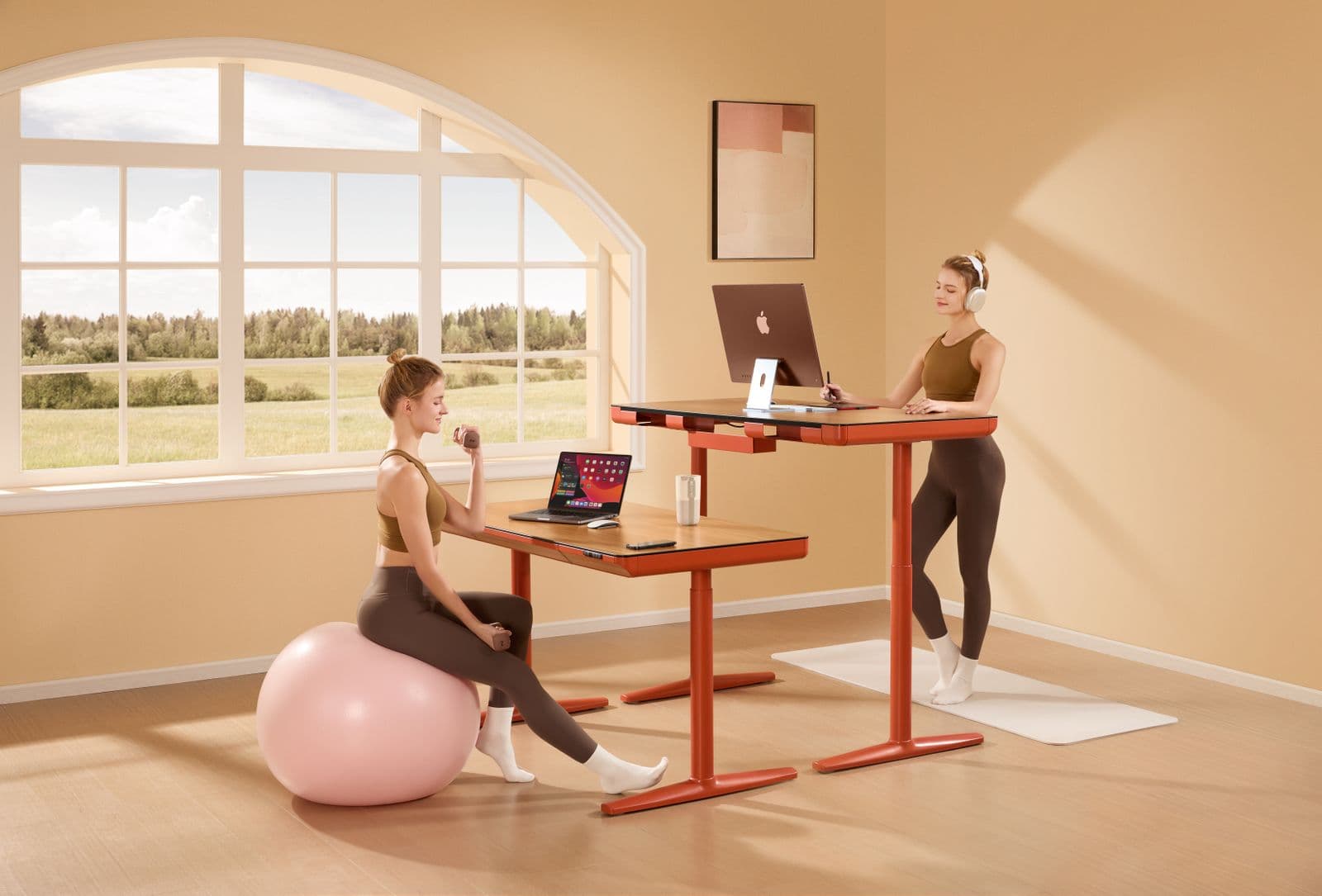
A height-adjustable desk has no equivalent limit, because the whole surface moves. That is the capability you are buying, and it is why the comparison is not really like for like.
The price crossover
At the bottom of the market a converter is genuinely cheaper. A simple riser costs a fraction of any powered desk, and if your desk is fine and you want an occasional standing option, that is the whole argument.
At the top of the market the gap closes and then reverses. A powered converter costs about what a complete budget standing desk costs, and at that point you are paying a premium for a product that adds height to your seated position, cannot lower anything, and inherits the stability of the desk beneath it. Checked on 4 September 2026, a complete FlexiSpot bamboo desk listed at $239.98 and a VIVO dual-motor frame at $179.99, which is the same money as a mid-range powered riser.

FlexiSpot Solid Bamboo Standing Desk, 48 x 24
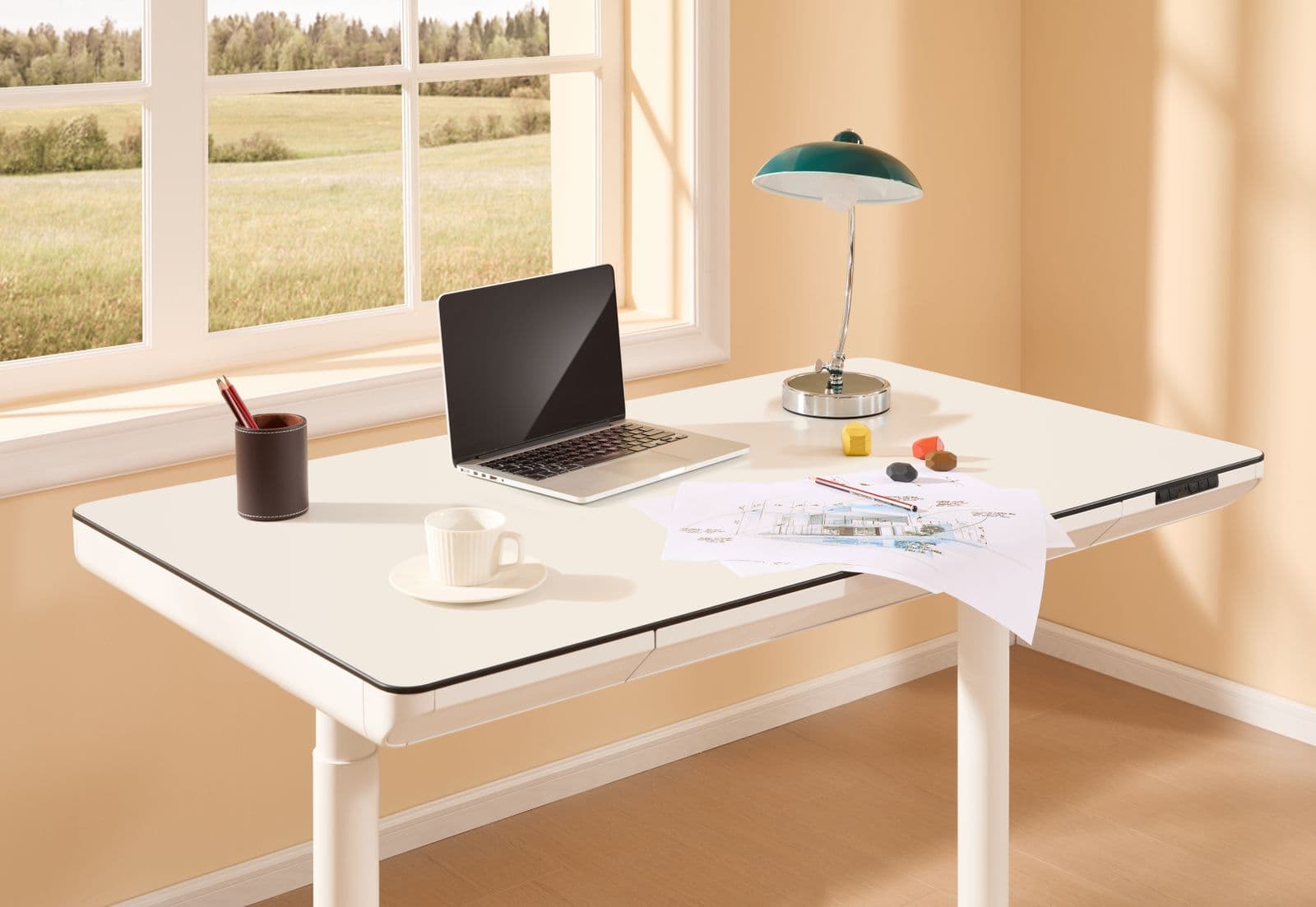
A complete desk with a one-piece solid bamboo top, published at 28.1 to 45.7 inches with four height presets. It exists here as the price benchmark: it listed at $239.98 on 4 September 2026, which is powered-converter money for a desk where the whole surface moves rather than a second one stacked on the first. Note the ceiling as well as the floor, because 45.7 inches is where this one stops.
We may earn a commission on this link. It never changes the ranking.
- Height range
- 28.1 to 45.7 in, complete desk
- Type
- Complete desk, not a frame
- Top
- 48 x 24 in, FSC-certified solid bamboo
- Presets
- Four
- Frame
- Steel, industrial grade
- Price checked
- $239.98 on 4 September 2026
What works
- A complete desk at converter money, with no second surface stacked on a first
- Four presets, which is the feature the adherence research actually points at
- Arrives as a finished desk rather than a frame plus a sourcing problem
- The whole surface moves, so nothing is added to your seated height
What to know
- A 28.1-inch floor is no lower than a standard fixed desk, which rules it out for short users
- A 45.7-inch ceiling is short for anyone much over six foot
- The listing does not publish a weight capacity, so a heavy multi-monitor load is a question mark
- One fixed desktop size, and FlexiSpot's general warranty terms are shorter than the ten and fifteen-year desks in the main guide
Wrong for you if the desk cannot be replaced, or if you are short. The floor on this one is no lower than the desk you already own.

VIVO 36-inch Desk Converter
A wide two-tier riser with a gas-spring lift that arrives assembled, with the keyboard on a separate lower tier so typing stays below the screen. It is the right answer when the desk is built in, rented or shared, and the wrong answer when the desk could simply be swapped.
We may earn a commission on this link. It never changes the ranking.
- Type
- Two-tier sit-stand converter
- Width
- 36 in surface
- Adjustment
- Gas spring, one motion
- Keyboard
- Lower removable tray
- Power
- None required
- Best for
- A single-monitor workstation
What works
- Requires no change to the desk underneath it, which is the entire point
- Two-tier layout keeps the keyboard below the monitor
- Gas spring raises and lowers in a single movement
- Arrives assembled
What to know
- Its closed height is added to your seated typing height permanently
- Cannot lower anything, so a too-high desk stays too high
- Fixed lift, which runs out for anyone much over six feet
- Inherits whatever movement the desk beneath it has, and lengthens the lever arm
Wrong for you if you could replace the desk and simply have not got around to it.
Stability is inherited, not fixed
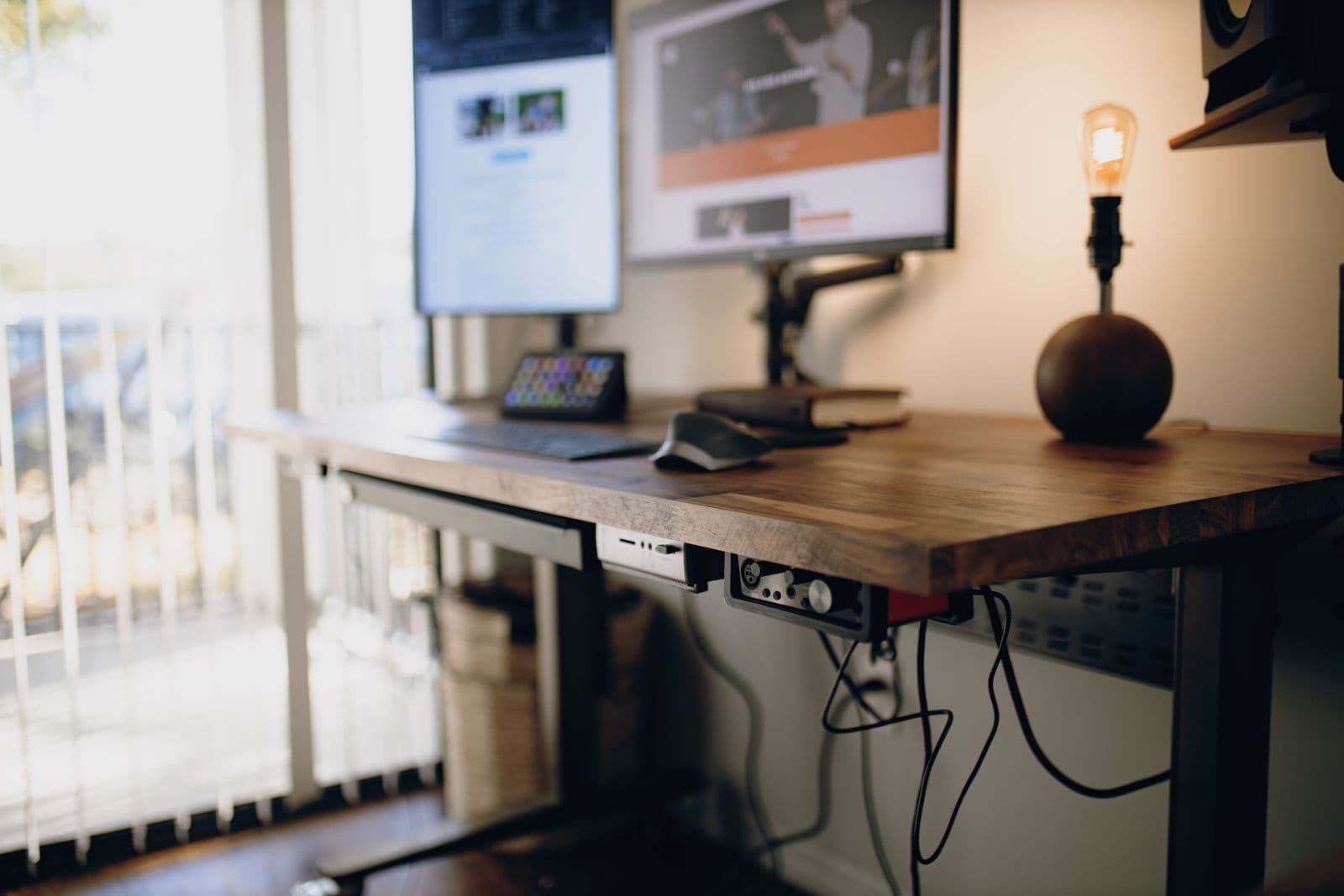
A converter does not improve the desk beneath it. It puts more mass higher up on the same structure. A 50 lb riser carrying two monitors on a flexible dining table produces movement that no converter specification predicts, because the specification describes the riser rather than the system. The variables that govern desk wobble apply to the stack as a whole, and the weakest element sets the result.
A height-adjustable desk is one structure engineered as one thing, with a published weight rating that means something about the whole assembly. That is not a small difference at standing height, where the lever arm is longest.
When the converter is right
None of this makes converters a bad product. It makes them a specific one. A converter is the correct purchase when:
- The desk is built in, rented, shared or provided by an employer, and replacing it is not a decision you get to make.
- The desk is genuinely good, and the only thing wrong with it is that it does not move.
- Your seated height at the existing desk is already correct, and a slim closed height will keep it that way.
- You want the standing option removable, either because the room is shared or because you are not sure the habit will stick.
- Your standing requirement is inside the lift the category offers, which in practice means you are under about six feet.
If more than two of those are true, buy the converter and pick it on lifting capacity rather than surface size, which is where the converter guide goes into detail. If none of them are true, buy the desk.
The order to decide in
- Measure both of your heights first. The measuring guide gives you a seated number and a standing number, and everything below depends on having them.
- If your seated number is below your current desk height, a converter cannot help. Skip to a desk that lowers.
- If your standing number is more than about 14 inches above your desk height, a converter probably cannot reach it either.
- If both numbers are inside what a converter offers, ask whether the desk can be replaced at all. If it cannot, the decision is made.
- If it can, compare the converter price against a complete desk before assuming the converter is the cheaper route. Above roughly $300 it usually is not.
The desks themselves are covered in the main guide, which leads with height range for the same reason this piece does.
Questions people actually ask
Is a standing desk converter as good as a standing desk?
For the standing position it can be, provided the lift reaches your height. For the seated position it is worse by design, because its closed height is added to your existing desk height and it cannot lower anything. A converter changes one of your two working positions and mildly degrades the other.
How much height does a standing desk converter add?
Typically 13 to 20 inches of lift above the desk it sits on. BTOD found many raise only 13 to 14 inches, which on a standard 29-inch desk produces a 43-inch keyboard height. That suits someone around six feet and falls short for anyone taller.
Are converters cheaper than standing desks?
At the entry level, clearly. At the top of the range, no. A powered converter costs about the same as a complete budget standing desk, and on 4 September 2026 a finished FlexiSpot bamboo desk listed at $239.98 against powered risers in the same bracket. Above roughly $300 the converter needs a reason beyond price.
Will a converter fix a desk that is too high?
No, and it makes it slightly worse. A converter only adds height. If your desk is above your correct seated typing height, the options are a desk that lowers, a keyboard tray that drops below the existing surface, or raising your chair and adding a footrest.
Do converters wobble?
They inherit whatever the desk underneath them does and lengthen the lever arm by raising the mass. A stable converter on a flexible table moves. Assess the desk first, because no converter specification accounts for what it is standing on.
Sources
- Converter lift ranges and the heights at which they stop working from BTOD's testing of standing desk converters.
- Height range, presets, desktop material and price for the complete-desk comparison read off the FlexiSpot and VIVO product listings on 4 September 2026. Neither listing publishes a weight capacity, which is why none is quoted here; the capacity pattern across FlexiSpot's frames is in the motor-count guide.
- Working posture guidance: OSHA Computer Workstations eTool.
As an Amazon Associate we earn from qualifying purchases. We earn a commission on some links, at no extra cost to you. It never changes which products we recommend or how they score. Full disclosure

Who wrote this
Editor, hardware and workstation geometry
Ellis Warner edits A Better Posture and writes the hardware side of it: desks, chairs, monitor arms and the measurements that decide whether any of them help. He reads the specification sheet, the warranty and the returns policy in full before he reads a single review, because that is where the differences between two apparently identical products actually live.
More from EllisThe standard
How this guide was built
- Manufacturer specification sheets and warranty terms, read in full rather than summarised from a listing.
- Published clinical trials and standards bodies where they exist, cited by name and linked.
- Owner reports at volume, including the one-star reviews, which is where failure modes live.
- Every price checked against the live listing on the date printed beside it.