Saddle Chairs and Posture: What the Research Actually Measured
Saddle chairs open the hip angle to about 125 degrees. Four dental studies measured what that does to the spine, and the results split in two directions.
By Ellis Warner, editor, hardware and workstation geometry
Published Sep 25, 2026 · 13 min read
- Updated September 25, 2026
- 13 min read
In this guide
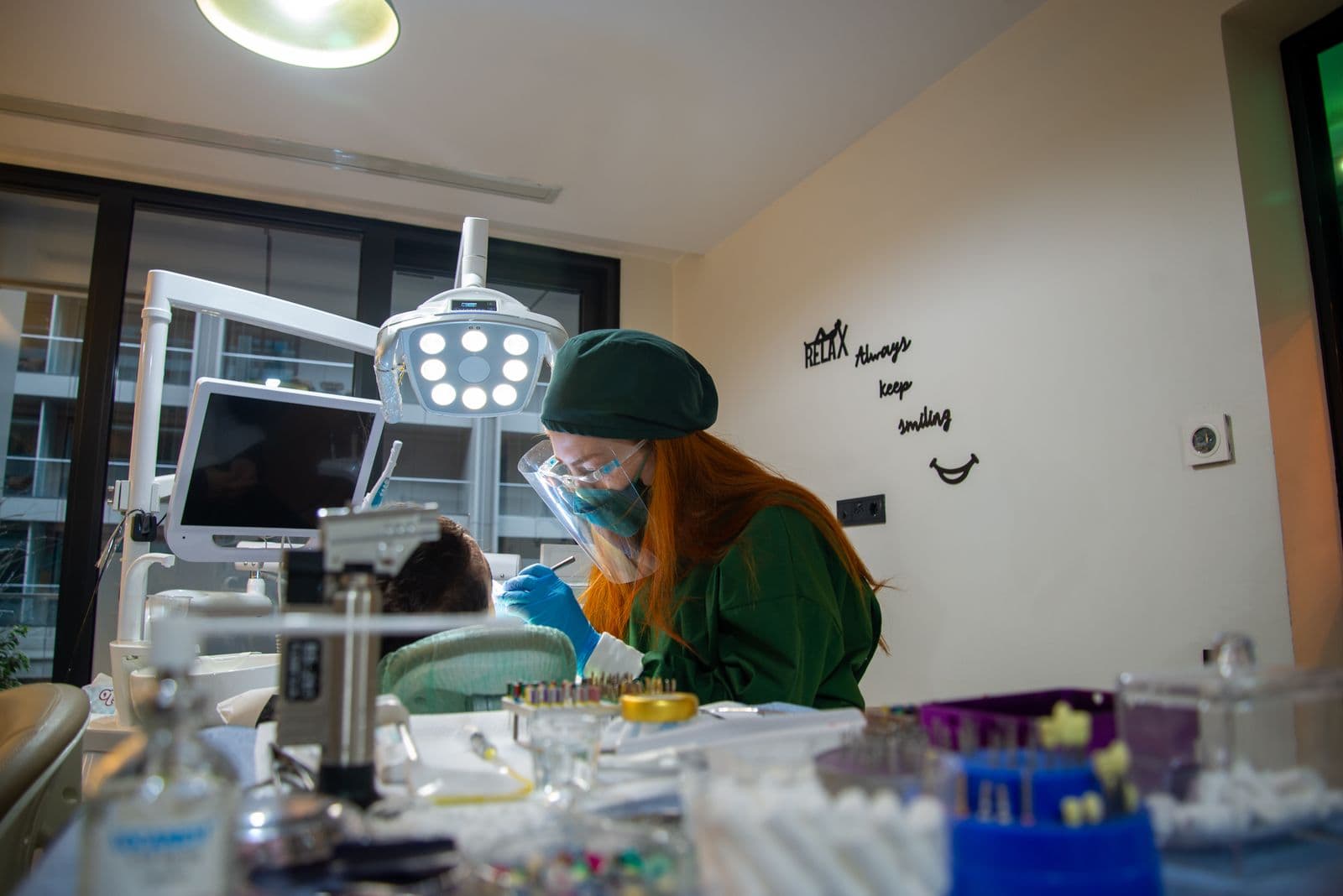
A saddle chair is the one piece of "ergonomic" seating with a real research base behind it, and almost none of that research was done on office workers. It was done on dentists and dental students, because dentistry is a job where people sit leaning forward over a small, fixed target for hours at a stretch. So the honest answer to whether a saddle chair helps posture at a desk is a borrowed one. The findings are real, the population is narrow, and the four studies worth reading do not all point the same way.
What a saddle seat changes, mechanically
A conventional office chair puts your thighs roughly level. OSHA's workstation guidance describes the target as the whole sole of the foot on the floor, with the back of the knee slightly higher than the seat, which is a hip angle near 90 degrees.
A saddle seat is built to break that geometry. It is taller, it is shaped like the saddle a rider sits on, and it drops your thighs down and apart. CCOHS, the Canadian government's occupational health agency, describes it as a seat that "often has a wider seat that encourages the legs to splay outwards." The result is a much more open angle at the hip. In the one study that reported the figure directly, a saddle seat put the trunk-thigh angle at about 125 degrees, against 90 for the standard stool.
That open hip angle is the entire pitch. When the thighs are level, the pelvis tends to roll backward, and the lower back follows it into a flattened, flexed curve. Drop the thighs, and the pelvis has room to tip forward, which lets the lumbar spine keep more of the curve it has when you are standing. A kneeling chair uses the same mechanism, and the saddle does it without loading your shins.
The two trials that found a benefit
The strongest support comes from dental schools, and it comes through one outcome measure: RULA, the Rapid Upper Limb Assessment. RULA is an observational scoring system. An assessor looks at a person's working posture, scores the neck, trunk, arms and wrists against a set of diagrams, and produces a risk score. Higher means worse.
Gandavadi, Ramsay and Burke ran the first trial at the University of Birmingham in 2006. Sixty second-year dental students starting phantom-head lab classes were randomly assigned to 30 Bambach Saddle Seats or 30 conventional seats, worked on them for ten weeks, and were then photographed and scored. The students on conventional seats recorded significantly higher RULA risk scores (p less than 0.05). The authors concluded that the saddle seat let students "maintain an acceptable working posture" during simulated treatment.
Dable and colleagues repeated the idea in India in 2014 with 90 second-year students split across three groups, comparing conventional seats with and without magnification against a Salli saddle chair with magnification. The conventional seat without magnification scored significantly worse than the saddle chair with it.
Gouvêa and colleagues then pooled those two trials in a 2018 systematic review and meta-analysis in PLOS One. Across 150 students, the saddle seat lowered the RULA risk score by a mean of 3.16 points (95% CI -4.02 to -2.30, p below 0.001). The review rated both trials at low risk of bias and graded the overall evidence as moderate.
Read the fine print on that meta-analysis before leaning on the headline number. Heterogeneity was high, with an I-squared of 95%, which means the two trials disagreed substantially about the size of the effect. The review had exactly two studies to pool, and the authors say plainly that neither had a sample size calculation or a power analysis. And the Dable trial did not isolate the seat at all. Its winning arm was a saddle chair plus magnification loupes, and loupes change head and neck angle by themselves. Some of that effect belongs to the glasses.
The two studies that complicate it
De Bruyne and colleagues at Ghent University, publishing in Applied Ergonomics in 2016, put 25 participants through a simulated dental screening on three seats: a standard stool, a saddle, and a stool called the Ghopec, which has a flat rear section for the pelvis, a front section that slopes down for the thighs, and an adjustable backrest. They measured lumbar posture and muscle activity with instruments.
The standard stool, at a 90-degree hip angle, flexed the lower back and produced higher back-muscle activity. The saddle, at 125 degrees, overshot in the other direction. Lumbar posture on the saddle was more extended than neutral, and abdominal muscle activity went up. The Ghopec, which opened the hip to the same 125 degrees but added a backrest, came closest to neutral and needed less abdominal effort to get there. The authors picked the Ghopec, not the saddle, as the most suitable design for the task.
That is the most useful single result in this literature for anyone considering a saddle seat. Opening the hip angle moved the lower back off its flexed curve. A backless saddle can open it so far that you trade a slumped curve for an over-arched one held up by your abdominal muscles.
Pazos and colleagues, publishing in the European Journal of Dental Education (online 2025, in the February 2026 issue), had students cut 120 cavity preparations on artificial molars while seated on a conventional stool, a saddle seat, or a seat ball. They recorded trapezius, abdominal and paravertebral activity by surface EMG and measured neck and trunk deviation from neutral with posture-analysis software.
Stool type made no difference to paravertebral or abdominal muscle activity. The trapezius results were mixed, with the conventional stool lower on the right side for two teeth and the saddle lower on the left for one. And the posture result ran against the saddle. Trunk deviation from neutral was greater on the saddle seat and the ball for every section of the mouth, and the saddle produced greater neck deviation in two of the four sections. The authors' conclusion: the unconventional stools "led to greater angular deviations in the neck and trunk."
| Study | Who and what | What it found for the saddle seat |
|---|---|---|
| Gandavadi et al., 2007 | 60 dental students, randomised, RULA score after 10 weeks | Lower ergonomic risk score than a conventional seat |
| Dable et al., 2014 | 90 dental students, three groups, RULA score | Saddle chair plus magnification beat a conventional seat without it. Seat and loupes not separated |
| Gouvêa et al., 2018 (meta-analysis) | The two trials above, 150 students pooled | RULA score 3.16 points lower, moderate evidence, heterogeneity 95% |
| De Bruyne et al., 2016 | 25 participants, lumbar posture and EMG, three stools | Hip angle opened to 125 degrees, lumbar spine pushed past neutral into extension, more abdominal effort. A backrested design did better |
| Pazos et al., 2025 | 120 preparations, EMG and posture software, three stools | No difference in back or abdominal muscle activity, greater trunk deviation than a conventional stool |
How to read a split verdict
The two positive trials scored overall upper-body posture by eye, over weeks, in beginners. The two instrumented studies measured the lumbar spine and muscles directly, in single sessions. A seat can look better on a RULA sheet while pushing the lower back past neutral, and both findings can be true at once.
What holds up across all four is this. A saddle seat reliably changes the hip angle, and a more open hip angle reliably changes what the lower back does. Whether that change is an improvement depends on how far it goes and whether anything supports you once you get there. None of the studies measured pain, sick days or any outcome beyond a single lab session or a ten-week class, which is the question most buyers actually have.
The desk-height problem nobody mentions
A saddle seat is a tall seat. Bambach's own specification sheet gives its standard stem a range of 60 to 77 cm, about 23.6 to 30.3 inches, with a short stem at 51 to 63 cm and a long stem up to 91 cm. A US retailer's sizing chart for the same seat maps a medium cylinder, for users from 5'1" to 6'1", to a seat height of 22.5 to 30 inches.
Now compare that with the desk. The desk height arithmetic on this site starts from a standard fixed desk at 29 to 30 inches and a seated elbow height that lands between 24 and 28 inches for most adults on a normal chair. That mismatch already runs two to five inches too tall. Raise your seat by several inches, and your elbows rise with it. A desk that was too tall for you on an office chair is now likely too low, and you will round your shoulders and neck forward to reach it, which is exactly the posture you bought the saddle to escape.
A dentist works over a patient chair that rises to meet the operator. Your desk usually cannot move, and OSHA's under-desk leg clearance range of 20 to 28 inches is written for people sitting at conventional heights. A saddle seat works at a desk only when the surface can be set to your new elbow height, which usually means a sit-stand desk or a drafting-height surface.
Who a saddle chair is wrong for
Anyone at a fixed-height desk. Unless the working surface can rise several inches, you will hunch to reach it.
Anyone who needs a backrest to sit comfortably for long stretches. The classic saddle seat is backless, and the backless saddle is the version that pushed the lower back past neutral in the Ghent study. Bambach's specification lists a backrest version, at 15 kg against 11.5 kg for the plain seat, and that study suggests the backrest is not a luxury.
Anyone who sits for most of an eight-hour day. CCOHS names static back load and accelerated fatigue, and the students in the positive trials were in lab classes, not at a desk all day.
Anyone with limited hip mobility or pelvic pain. The seat works by spreading the thighs and dropping the knees, and no study tested it on people who find that position painful.
Who it is plausibly right for
A saddle seat makes the most sense for someone at a height-adjustable desk who already moves between sitting and standing, wants a middle position between the two, and works leaning slightly forward over the task, which is the posture the dental trials were built around. CCOHS lists this as its main use: a "widened sit-stand (i.e., semi-standing) stance" for work that needs a higher position than normal sitting.
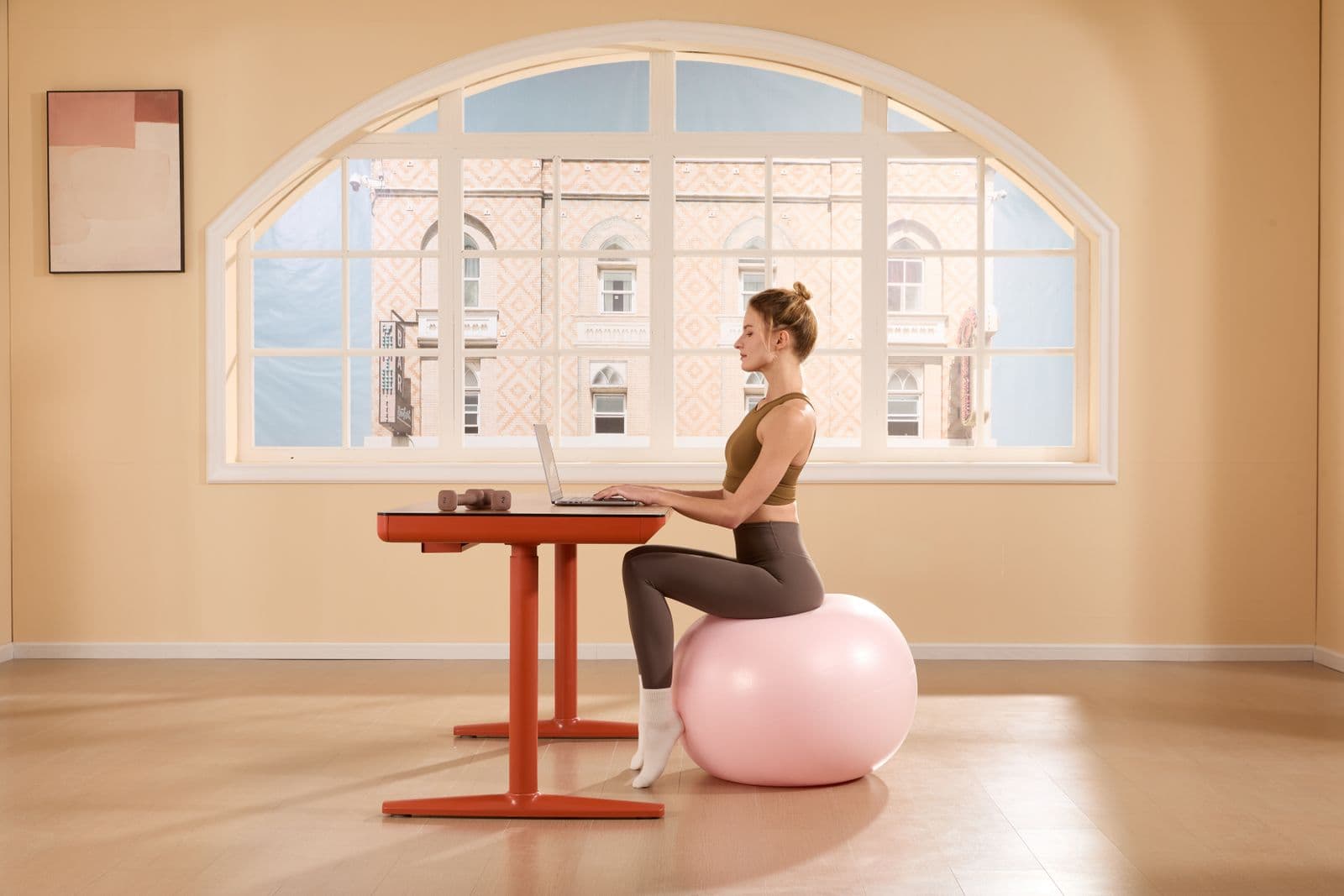
For everyone else, the more reliable fix is the chair you already have, set up properly. Most of the benefit a saddle promises comes from the hip angle, and a forward-sloping seat pan gets part of the way there on a conventional chair, with a backrest still in place. The same logic applies to the alternatives covered in the kneeling chair and exercise ball evidence. Each one changes something real, and each one has a cost the marketing leaves out. Before replacing a chair, adjust the one you own in the order that matters, and check whether the lower back problem is actually a lumbar support problem.
Questions people actually ask
Are saddle chairs good for your back?
The research is split. Two randomised trials in dental students found lower ergonomic risk scores on a saddle seat, pooled as a 3.16-point reduction on the RULA scale. Two instrumented studies found that a backless saddle pushed the lower back past neutral into extension, and that trunk deviation was greater on a saddle than on a conventional stool. None of the four measured back pain.
Can I use a saddle chair at a normal desk?
Usually not well. A standard Bambach saddle seat adjusts from about 23.6 to 30.3 inches, far higher than a conventional office chair, which raises your elbow height by several inches. A standard desk is 29 to 30 inches and does not move. A saddle seat suits a sit-stand desk or a drafting-height surface that can be raised to match.
Is a saddle chair better than a kneeling chair?
They use the same mechanism, an opened hip angle, and they cost you in different places. A kneeling chair loads the shins and knees. A saddle chair loads the perineum and, according to CCOHS, adds static back load. No trial has compared the two directly.
Sources
- Gouvêa GR, Vieira WA, Paranhos LR, et al., "Assessment of the ergonomic risk from saddle and conventional seats in dentistry: A systematic review and meta-analysis," PLOS One, 2018, 13(12), e0208900. PLOS One
- Gandavadi A, Ramsay JR, Burke FJ, "Assessment of dental student posture in two seating conditions using RULA methodology, a pilot study," British Dental Journal, 2007, 203(10), 601-605. doi:10.1038/bdj.2007.1047
- Dable RA, Wasnik PB, Yeshwante BJ, et al., "Postural Assessment of Students Evaluating the Need of Ergonomic Seat and Magnification in Dentistry," Journal of the Indian Prosthodontic Society, 2014, 14(Suppl 1), 51-58. PMC4502020
- De Bruyne MA, Van Renterghem B, Baird A, et al., "Influence of different stool types on muscle activity and lumbar posture among dentists during a simulated dental screening task," Applied Ergonomics, 2016, 56, 220-226. doi:10.1016/j.apergo.2016.02.014
- Pazos JM, Mota GM, Verri ED, et al., "Effect of Different Types of Dental Stools on Muscle Activity During Execution of Preclinical Procedures," European Journal of Dental Education, 2026, 30(1), 155-162. doi:10.1111/eje.13102
- CCOHS: Working in a Sitting Position, Alternative Chairs
- OSHA Computer Workstations eTool: Chairs
- OSHA Computer Workstations eTool: Desks
- Bambach Saddle Seat product specification
- Health By Design: Bambach Saddle Seat size and fit
As an Amazon Associate we earn from qualifying purchases. We earn a commission on some links, at no extra cost to you. It never changes which products we recommend or how they score. Full disclosure

Who wrote this
Editor, hardware and workstation geometry
Ellis Warner edits A Better Posture and writes the hardware side of it: desks, chairs, monitor arms and the measurements that decide whether any of them help. He reads the specification sheet, the warranty and the returns policy in full before he reads a single review, because that is where the differences between two apparently identical products actually live.
More from EllisThe standard
How this guide was built
- Manufacturer specification sheets and warranty terms, read in full rather than summarised from a listing.
- Published clinical trials and standards bodies where they exist, cited by name and linked.
- Owner reports at volume, including the one-star reviews, which is where failure modes live.
- Every price checked against the live listing on the date printed beside it.