Walking Pads Under a Standing Desk: What the Treadmill Desk Trials Found
Walking at about 1 mph at a desk adds roughly 100 kcal an hour. The trials also found slower mousing, weaker verbal learning, and no proven effect on back pain.
By Ellis Warner, editor, hardware and workstation geometry
Published Sep 26, 2026 · 12 min read
- Updated September 26, 2026
- 12 min read
In this guide
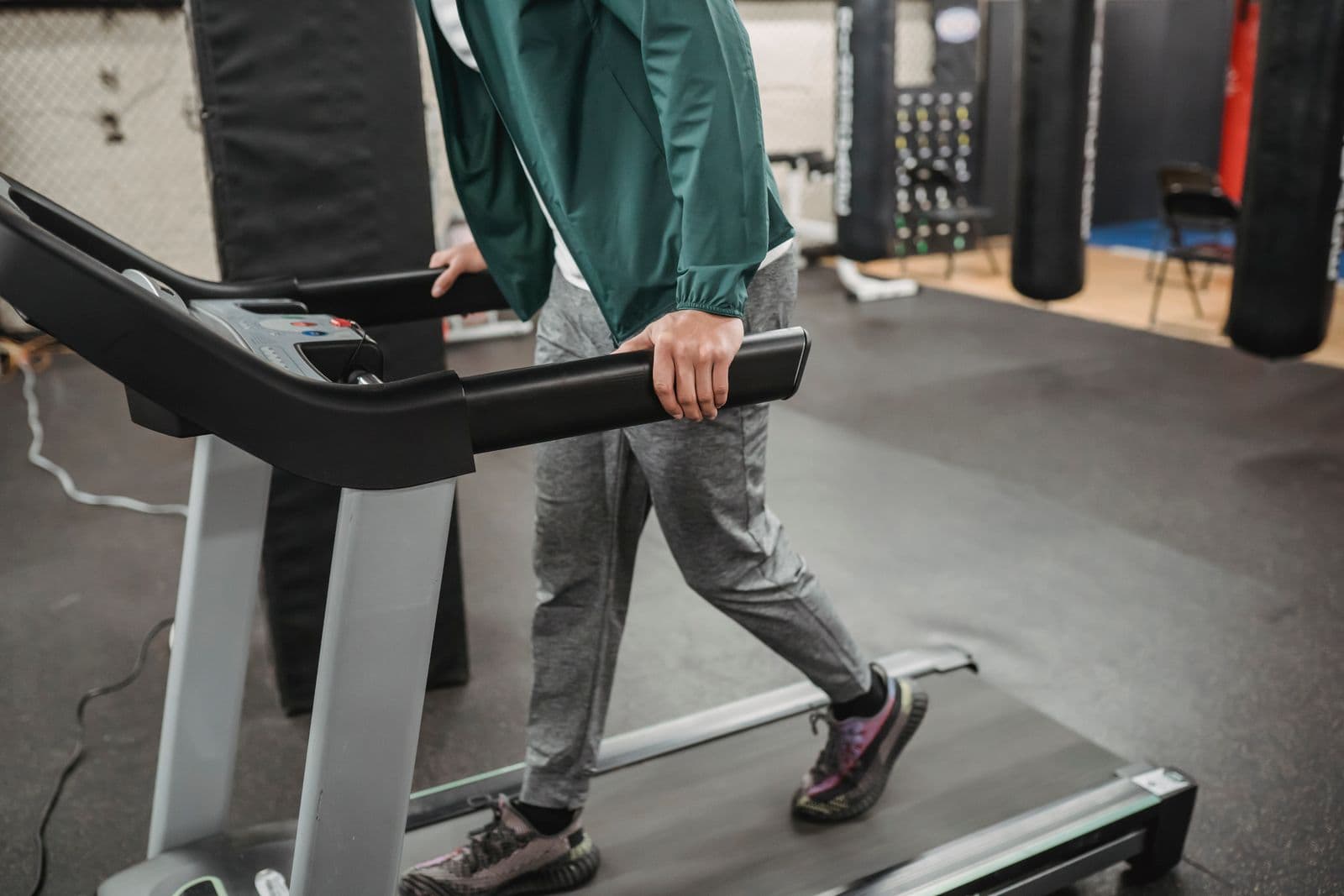
A walking pad under a standing desk trades sitting for slow walking instead of standing. A decade of treadmill desk research, much of it from one Mayo Clinic group, measured calories, sitting time, typing, mouse accuracy, memory and gait. What it did not measure well is whether any of it changes posture or back pain.
The calorie number is real, and it is modest
The founding measurement comes from Levine and Miller, published in the British Journal of Sports Medicine in 2007. Fifteen sedentary office workers with obesity worked at a computer seated, standing, and walking on a treadmill at a speed they picked themselves. Seated, they burned a mean of 72 kcal per hour. Walking and working at a self-selected 1.1 mph, they burned 191 kcal per hour. The difference was 119 kcal per hour.
That study is small, and all but one participant was a woman with a BMI around 32, so the pooled number is better. Oye-Somefun and colleagues ran a systematic review and meta-analysis in BMC Public Health in 2021 covering 13 treadmill desk studies and 351 participants. Across the laboratory studies, treadmill desk use raised energy expenditure by 105 kcal per hour (95% CI 90 to 120) compared with sitting, and raised metabolic rate by 5.0 mL/kg/min.
About 100 kcal an hour is the honest figure. Two hours a day is roughly 200 kcal, a real addition to a sedentary day and not a weight-loss plan by itself.
What happened when people had one for a year
Koepp and colleagues gave 36 employees with sedentary jobs a treadmill desk in place of their regular desk for a full year and reported the results in Obesity in 2013. Daily sedentary time, measured by accelerometer, fell from 1,020 minutes a day at baseline to 929 at six months, then drifted back up to 978 at twelve months. Average weight loss over the year was 1.4 kg, with a standard deviation of 3.3 kg, and 2.3 kg in the participants with obesity. Work performance was not affected.
The drop was about 91 minutes a day at six months and about 42 by the end of the year, so roughly half the early gain faded. The standing desk literature shows the same pattern, which is why I would plan around the twelve-month number.
The 2021 meta-analysis found the same thing at workplace scale. In the six workplace studies, treadmill desk users sat 1.73 fewer minutes per hour across a 24-hour day than people at conventional desks. Blood pressure did not change, and no other metabolic outcome moved significantly.
A 2023 network meta-analysis in the International Journal of Behavioral Nutrition and Physical Activity put treadmill desks in context with every other active workstation. Across 23 randomised trials and 1,428 office workers, a treadmill workstation paired with prompts to use it reduced work sitting time (standardised mean difference -1.29), and so did a plain sit-stand desk (-1.10). The best results came from multicomponent programmes that combined equipment with organisational changes. The authors graded the overall certainty of evidence as low. The practical reading: the walking pad did not clearly beat a plain sit-stand routine done properly, and both worked better with a reason to use them.
Typing slows down, and mousing suffers more
Straker, Levine and Campbell tested 30 office workers in Human Factors in 2009 across six conditions: sitting, standing, walking at 1.6 and 3.2 km/h (about 1 and 2 mph), and cycling at two workloads. Computer task performance was lower while walking and slightly lower while cycling, compared with sitting. Standing performance was no different from sitting. Mouse work was hit harder than typing, and the effect was the same for touch typists and for everyone else. The authors concluded that active workstations "may be less suitable for mouse-intensive work."
Larson and colleagues ran a randomised comparison in PLOS One in 2015. Seventy-five healthy adults were assigned to sit or to walk at 1.5 mph while they completed memory, attention and typing tests. The walking group performed significantly worse on every typing measure. They also scored lower on total verbal learning and on a paced attention test, although delayed recall did not differ.
Two later studies found smaller or even opposite effects, and both have a design problem worth knowing about. Frodsham and colleagues, also in PLOS One in 2020, tested 137 young adults seated at a first session and then on a treadmill or cycling desk at a second. Attention and typing were better during the active session, and verbal memory was worse. Because the active session always came second, the authors note that practice effects may explain the gains.
Medina-Inojosa and colleagues at the Mayo Clinic published a crossover trial in the Journal of the American Heart Association in 2024. Forty-four healthy adults spent a day at each of four stations. Cognitive scores improved or held steady on the active stations, and typing speed fell without an increase in typing errors. But sitting was always day one, with the active stations randomised afterwards, and the authors themselves observed that "overall results improved after day 1, suggesting habituation." A test people have taken once before is easier the second time.
Put the four together and the pattern is stable. Walking costs some typing speed, more mouse precision, and possibly a little on tasks that require taking in verbal information. Whether it helps attention is unresolved, because the studies that found a benefit could not separate walking from practice.
What walking does to how you stand
For a posture site, the gap in this literature is the headline. No trial I could find measured spinal posture, neck angle or muscle load at a treadmill desk over a working week. What exists is closer to the edges of the question.
The Cochrane review on this subject is the one to read. Parry and colleagues looked at workplace interventions that increase standing or walking in workers who already had musculoskeletal symptoms, and published in 2019. They found ten studies with 955 participants. For changes to the physical environment, sit-stand and treadmill workstations across four studies, there was no significant reduction in the intensity of low back symptoms (SMD -0.35, 95% CI -0.80 to 0.10) or upper back symptoms in the short term. The evidence was rated low quality. There is no trial evidence that a walking pad treats back pain.
The one biomechanics study worth knowing is from Eggleston and colleagues in Gait & Posture in 2019. They filmed people in three dimensions on a walking workstation while they did mouse tasks with targets of different sizes. During mousing, people shortened their stride, narrowed their stance and spent less time with both feet on the belt. The authors judged that this did not raise the risk of a trip, and they pointed out the reason: people steadied themselves by resting their forearms on the desk.
That is the posture point. At a walking desk, the desk becomes part of your balance. The forearms go down, the shoulders come up and forward, and the trunk leans toward the screen. Held for an hour, it is the same forward-loaded upper body a laptop produces, with a moving belt under it.
Set it up so you stand straight on it
Raise the desk by the height of the deck. A walking pad lifts you by the thickness of its deck, which varies by model, so measure yours from floor to belt surface. Your correct desk height on the pad is your normal standing elbow height plus that number. OSHA's workstation guidance is that elbows should sit at about keyboard height with the shoulders relaxed, and that holds on a belt the same as on a floor. If you have not done the base measurement yet, the two numbers that decide a standing desk walks through it. Check that your desk's maximum height still clears the new target, because a desk that barely reaches your standing height on the floor may not reach it with a deck under you.
Raise the monitor with it, by the same amount, or your neck makes up the difference.
Expect more shake. Walking puts a rhythmic side-to-side load into the desk frame through your forearms, and a desk that feels solid under typing can visibly sway under a walker. What causes standing desk wobble explains which specifications predict it. A desk with a crossbar and a low-profile frame will handle it better than a tall single-column design.
Pick the speed the studies picked. The trial speeds ran from about 1 to 2 mph, with self-selected pace in the Levine study averaging 1.1 mph. That is a stroll. Faster walking adds calories but, by every measure above, costs more precision.
Keep your forearms light. Resting them on the desk keeps you steady. Hanging your weight on them is the lean described above.
Who a walking pad is wrong for
People whose work is mostly mouse work. Design, spreadsheets, CAD, photo editing. This is where the performance loss is largest and most consistent. Walk during calls and reading, and stop for precision work.
People doing work that depends on taking in verbal material. Studying, drafting from dictation, learning a new system. The verbal learning results from two separate labs lean against walking here.
Anyone with a balance problem, a lower-limb injury, or a condition affected by prolonged time on the feet. A moving belt adds a fall risk that a standing mat does not. The trials on sit-stand timing already show costs to standing all day, and walking all day has not been studied at all.
Anyone buying it to fix posture or back pain. The best evidence says it does neither on its own. As the standing desk accessories guide puts it, a treadmill is a fitness purchase, and it should be judged as one.
Who it suits
It suits someone with a heavily seated job who already owns a sit-stand desk tall enough to take the deck, who spends a real share of the day on calls, email and reading, and who wants roughly 100 kcal an hour of low-intensity movement without leaving the desk. It suits them best in short blocks. The research on how often to get up from your desk makes the same case from a different direction: frequent small changes of position beat one long session of anything.
Questions people actually ask
How many calories does a walking pad burn at a desk?
About 100 kcal an hour more than sitting. A 2021 meta-analysis of laboratory treadmill desk studies pooled the increase at 105 kcal per hour, and the original Mayo Clinic study measured 119 kcal per hour at a self-selected 1.1 mph.
Does walking while working hurt typing?
Yes, modestly. A 2015 randomised study at 1.5 mph found worse performance on every typing measure, and a 2009 study found that mouse work suffered more than typing. A 2024 crossover trial found typing speed fell while typing errors did not rise.
Is a walking pad good for posture or back pain?
There is no trial evidence that it is. A 2019 Cochrane review of standing and walking interventions in workers with symptoms found no significant reduction in low back or upper back symptom intensity, on low-quality evidence. Posture at a walking desk depends on desk and monitor height.
What speed should I walk at a treadmill desk?
The trials used about 1 to 2 mph, and people choosing their own pace averaged 1.1 mph. Slower speeds keep more of your typing and mouse accuracy.
Do I need to raise my standing desk for a walking pad?
Yes. Add the height of the walking pad deck to your normal standing elbow height, raise the monitor by the same amount, and confirm the desk's maximum height still reaches it.
Sources
- Levine JA, Miller JM, "The energy expenditure of using a 'walk-and-work' desk for office workers with obesity," British Journal of Sports Medicine, 2007, 41(9), 558-561. PMC2465387
- Oye-Somefun A, Azizi Z, Ardern CI, Rotondi MA, "A systematic review and meta-analysis of the effect of treadmill desks on energy expenditure, sitting time and cardiometabolic health in adults," BMC Public Health, 2021, 21(1), 2082. PMC8590128
- Koepp GA, Manohar CU, McCrady-Spitzer SK, et al., "Treadmill desks: A 1-year prospective trial," Obesity, 2013, 21(4), 705-711. doi:10.1002/oby.20121
- Zhou L, Deng X, Xu M, et al., "The effects of active workstations on reducing work-specific sedentary time in office workers: a network meta-analysis of 23 randomized controlled trials," International Journal of Behavioral Nutrition and Physical Activity, 2023, 20(1), 92. PMC10375647
- Straker L, Levine J, Campbell A, "The effects of walking and cycling computer workstations on keyboard and mouse performance," Human Factors, 2009, 51(6), 831-844. doi:10.1177/0018720810362079
- Larson MJ, LeCheminant JD, Hill K, et al., "Cognitive and typing outcomes measured simultaneously with slow treadmill walking or sitting: implications for treadmill desks," PLOS One, 2015, 10(4), e0121309. PMC4398464
- Frodsham KM, Randall NR, Carbine KA, et al., "Does type of active workstation matter? A randomized comparison of cognitive and typing performance between rest, cycling, and treadmill active workstations," PLOS One, 2020, 15(8), e0237348. PMC7413476
- Medina-Inojosa JR, Gomez Ibarra MA, Medina-Inojosa BJ, et al., "Effect of Active Workstations on Neurocognitive Performance and Typing Skills: A Randomized Clinical Trial," Journal of the American Heart Association, 2024, 13(8), e031228. PMC11262529
- Parry SP, Coenen P, Shrestha N, et al., "Workplace interventions for increasing standing or walking for decreasing musculoskeletal symptoms in sedentary workers," Cochrane Database of Systematic Reviews, 2019, CD012487. doi:10.1002/14651858.CD012487.pub2
- Eggleston JD, Chavez EA, Harry JR, Dufek JS, "Computer interactions during walking workstation use moderately affects spatial-temporal gait characteristics," Gait & Posture, 2019, 74, 200-204. doi:10.1016/j.gaitpost.2019.09.011
- OSHA Computer Workstations eTool: Keyboards
As an Amazon Associate we earn from qualifying purchases. We earn a commission on some links, at no extra cost to you. It never changes which products we recommend or how they score. Full disclosure

Who wrote this
Editor, hardware and workstation geometry
Ellis Warner edits A Better Posture and writes the hardware side of it: desks, chairs, monitor arms and the measurements that decide whether any of them help. He reads the specification sheet, the warranty and the returns policy in full before he reads a single review, because that is where the differences between two apparently identical products actually live.
More from EllisThe standard
How this guide was built
- Manufacturer specification sheets and warranty terms, read in full rather than summarised from a listing.
- Published clinical trials and standards bodies where they exist, cited by name and linked.
- Owner reports at volume, including the one-star reviews, which is where failure modes live.
- Every price checked against the live listing on the date printed beside it.