Why Your Office Chair Keeps Sinking, and What Actually Fixes It
A sinking chair is a specific mechanical failure with a specific fix. Here is what the cylinder does, why it fails, and whether your warranty already covers it.
By Ellis Warner, editor, hardware and workstation geometry
Published Aug 24, 2026 · 10 min read
- Updated August 24, 2026
- 10 min read
In this guide
The chair drops an inch the moment you sit down, then another inch by mid-afternoon, and by the end of the week you are typing with your elbows at your ears. This is not the chair wearing out generally. It is one part, and that part has a name, a known failure mode, and in a lot of cases a warranty that already covers it.
What is actually inside the column
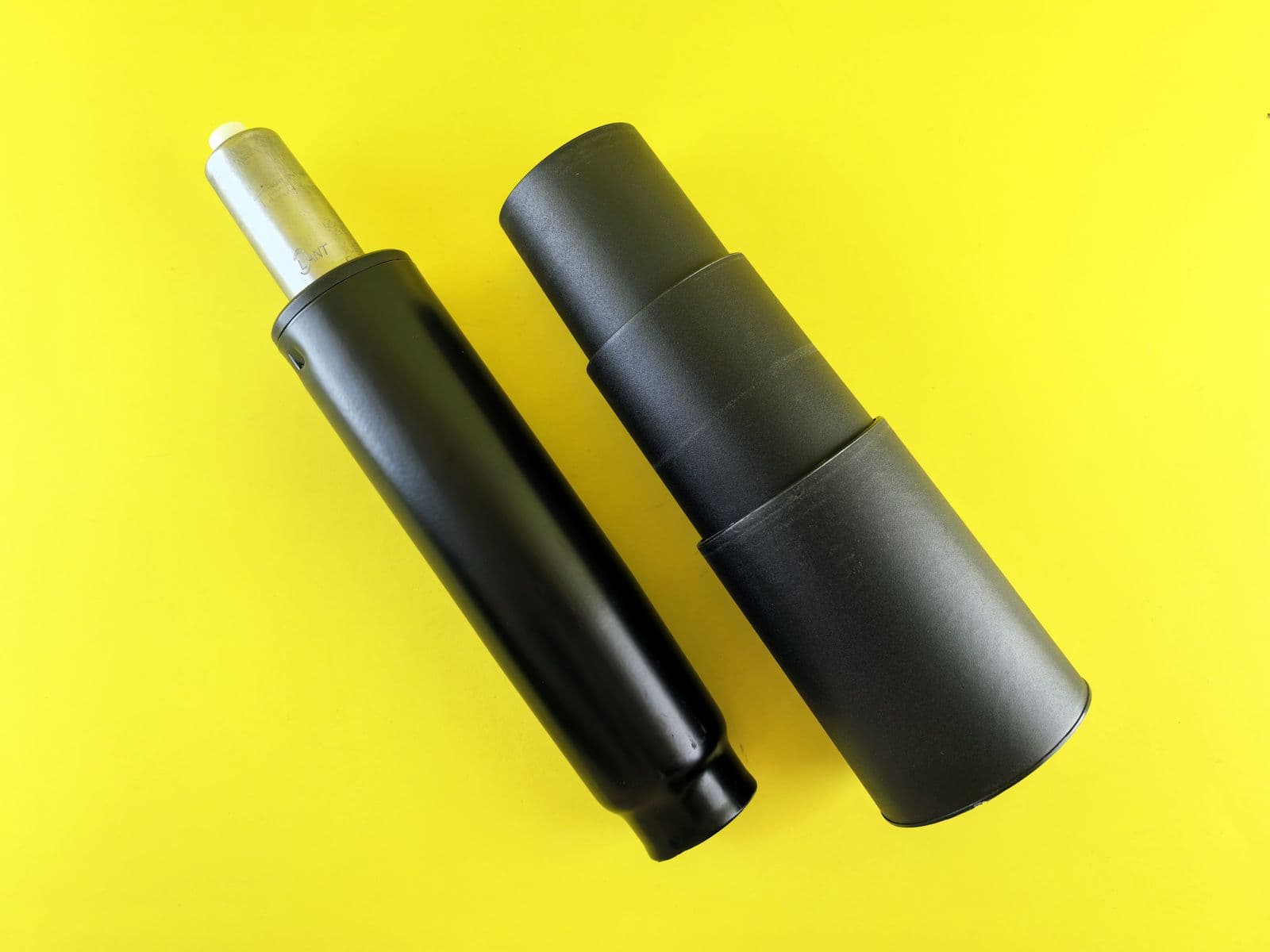
The part between the seat pan and the five-star base is a pneumatic gas lift cylinder: a sealed piston charged with pressurized nitrogen. Press the lever and a valve opens, letting the piston move against the gas pressure until you release it and the valve reseals, locking the seat at whatever height the piston stopped. It is the same basic mechanism as a car's hatchback strut, sized for body weight instead of a hatch door.
That seal is the part that fails. Over thousands of sit-down, stand-up cycles the internal seals dry out and wear, and pressurized gas migrates from the high side of the piston to the low side. Once enough gas has crossed over, the piston can no longer hold your weight against gravity, and the seat sinks under load even though the lever, the tilt mechanism and everything else on the chair still works normally. Branch's own repair guide and Desky's teardown of the same failure both describe the identical mechanism, and both name the same accelerants: sitting down hard instead of lowering into the seat, and running a chair consistently near or over its rated weight capacity. Neither is abuse in any normal sense. Both add cycle stress the cylinder has to absorb.
What BIFMA actually tests here, and what it does not
ANSI/BIFMA X5.1, the general-purpose office chair durability standard, has no test called out as a "gas lift test." The closest thing is Section 11, the seating durability cyclic tests: a 125 lb bag is dropped onto the seat for 100,000 cycles, followed by 165 lbf applied and released at each front corner for 40,000 cycles total. That repeatedly loads and unloads the seat through the column and cylinder from an off-center position, which is a reasonable proxy for how people actually sit, lean and shift. The acceptance criterion is simply "no loss of serviceability."
What the standard does not do is isolate the cylinder and certify its lifespan on its own. Section 7's base test explicitly removes the height-adjustment mechanism before testing the base structure, and the standard states an estimated product life of ten years under single-shift use while stating plainly that passing the test "does not necessarily guarantee" that ten years. A chair that meets X5.1 has survived a defined stress pattern. It has not been promised a specific number of years before the cylinder needs replacing, which is exactly why the warranty terms below matter more than the certification badge on the listing.
Check the warranty before you buy anything
This is the step people skip, and it is the one most likely to save the whole repair.
| Brand | Cylinder coverage | Term |
|---|---|---|
| Steelcase (Think, Leap, Reply, SILQ) | Named explicitly: pneumatic cylinders, mechanisms, casters, glides | 12 years |
| Herman Miller | "Everything, including electrical components, casters, pneumatic cylinders, tilts and all moving mechanisms" | 12 years, parts and labor |
| Secretlab (2020 Series, NEUE) | Gas lift named explicitly | 3 years standard, 5 with warranty registration |
| Branch Ergonomic / Multitask | Full chair warranty; third-party cylinder replacement voids it | 7 years |
Two things follow from that table. First, on any chair from a brand that names the pneumatic cylinder specifically, a sinking seat inside the warranty window is a support ticket, not a repair project: you are describing a covered failure, not asking for a favor. Second, installing a third-party cylinder yourself on a chair still under warranty can void that warranty, so it is worth filing the claim before you buy a replacement part, even if the claim takes a week longer than an Amazon order would.
Autonomous's warranty length varies by model and purchase window, and its published policy does not break out a cylinder-specific term the way Steelcase and Herman Miller do, so if you own one of their chairs, read the current policy rather than assuming lifetime coverage extends to this part.
If the warranty has run out
A universal gas lift cylinder replacement kit is a real, established aftermarket category, not a workaround. The parts come in a handful of standardized diameter classes, sold with the seal puller needed to remove the old cylinder, and swapping one is a documented DIY repair rather than a specialty job. It is also, by a wide margin, cheaper than a new chair: a replacement cylinder runs a fraction of what even a budget chair costs.
The one thing worth being careful about is what is inside the cylinder you buy. The failure mode that actually makes headlines is not a slow leak, it is an uncertified, cheap cylinder charged with compressed air instead of sealed nitrogen — air is compressible in a way that behaves badly under sudden mechanical failure, which is the actual mechanism behind the rare "chair exploded" stories that circulate online, as explained in hbada's breakdown of the safety physics. Buy a Class 3 or Class 4 rated cylinder from a listing that states the rating, matched to your chair's diameter, and this is a low-risk, half-hour repair.
When the repair is not worth making
A $150 chair with a sinking cylinder is usually not worth a $20 repair kit and half an hour, because the cylinder was rarely the only thing wrong with it. Budget chairs in that range typically also skip height-adjustable lumbar support and seat depth adjustment, which are the two adjustments that decide whether a chair actually supports you, regardless of whether the gas lift holds. If you are already diagnosing a mechanical failure on a chair that was undersupporting you anyway, that is a reasonable point to shop the $400-and-under tier properly rather than spend money extending the life of a chair that was never fitting you well in the first place.
The math flips on a chair that cost $300 or more and is otherwise doing its job. There, the cylinder is a $15 to $30 part behind a warranty claim or a simple swap, on a chair whose seat height range, weight capacity and adjustment list were worth paying for in the first place. Fixing the one worn part is the obviously cheaper option, and it is also the more common outcome: a cylinder is a wear item on an otherwise sound chair far more often than it is a sign the whole chair is failing.
Buying time before the part arrives
None of this fixes the chair today, and a chair that sinks to its lowest setting is a chair with your knees above your hips and your screen too low, which is its own posture problem while you wait on a warranty claim or a part. Setting the seat back to a working height with a firm cushion is a stopgap, not a fix, but it beats sitting in the wrong position for the two weeks a warranty claim can take to process. Once the cylinder is actually replaced, it is worth running back through the full adjustment sequence rather than assuming the chair remembers its old settings, because a new cylinder resets the height range and the seat depth relationship changes with it.
Questions people actually ask
Why does my office chair sink when I sit in it?
The pneumatic gas lift cylinder inside the column has worn seals, letting pressurized nitrogen migrate from the high side of the piston to the low side. Once enough gas has crossed over, the piston can no longer hold your body weight against gravity and the seat drops under load. It is a specific, well-documented mechanical failure, not general wear on the whole chair.
Is a sinking office chair covered under warranty?
Often, yes. Steelcase and Herman Miller name pneumatic cylinders explicitly in their warranty terms (both around 12 years), and Secretlab covers the gas lift for 3 to 5 years depending on registration. Check your specific brand's current warranty page and purchase date before buying a replacement part, since installing a third-party cylinder on a chair still under warranty can void that coverage.
Can I replace a gas lift cylinder myself?
Yes. Universal replacement cylinders are sold in standardized diameter classes with the tool needed to remove the old one, and it is a documented DIY repair. Buy a cylinder that states a Class 3 or Class 4 rating and matches your chair's column diameter; uncertified cylinders filled with compressed air rather than sealed nitrogen are the failure mode behind the rare stories of a cylinder failing violently.
Is a sinking chair dangerous?
A gradually sinking seat is an ergonomics problem, not a safety one. A chair that drops suddenly and violently, or where you can see or feel movement at the seat plate itself, is a different and more serious failure: the weld connecting the seat to the gas lift breaking, which the CPSC has recalled chairs for after reports of falls and injuries. Stop using a chair with that symptom rather than treating it as a slow gas leak.
Should I repair or replace a sinking office chair?
On a chair that cost $300 or more and otherwise fits you well, a $15 to $30 cylinder is the cheaper and more common fix. On a budget chair that also lacks height-adjustable lumbar support and seat depth adjustment, the cylinder failure is a reasonable prompt to shop the next tier up rather than extend the life of a chair that was undersupporting you regardless.
Sources
- Branch Furniture: "Sinking Office Chair? 5 Tips to Fix It"
- Desky: "How To Fix A Sinking Office Chair"
- ANSI/BIFMA X5.1-2011, General-Purpose Office Chairs — Tests, full standard text
- Steelcase Global Product Warranty
- Herman Miller warranty and service terms
- Secretlab warranty terms
- Branch Furniture warranty page
- hbada: "Can Office Chairs Explode? The Truth About Gas Cylinder Safety"
- CPSC: Office Depot Recalls Desk Chairs Due to Fall Hazard (2012)
- CPSC: Office Depot Recalls Gibson Leather Task Chairs (2014)
As an Amazon Associate we earn from qualifying purchases. We earn a commission on some links, at no extra cost to you. It never changes which products we recommend or how they score. Full disclosure

Who wrote this
Editor, hardware and workstation geometry
Ellis Warner edits A Better Posture and writes the hardware side of it: desks, chairs, monitor arms and the measurements that decide whether any of them help. He reads the specification sheet, the warranty and the returns policy in full before he reads a single review, because that is where the differences between two apparently identical products actually live.
More from EllisThe standard
How this guide was built
- Manufacturer specification sheets and warranty terms, read in full rather than summarised from a listing.
- Published clinical trials and standards bodies where they exist, cited by name and linked.
- Owner reports at volume, including the one-star reviews, which is where failure modes live.
- Every price checked against the live listing on the date printed beside it.